
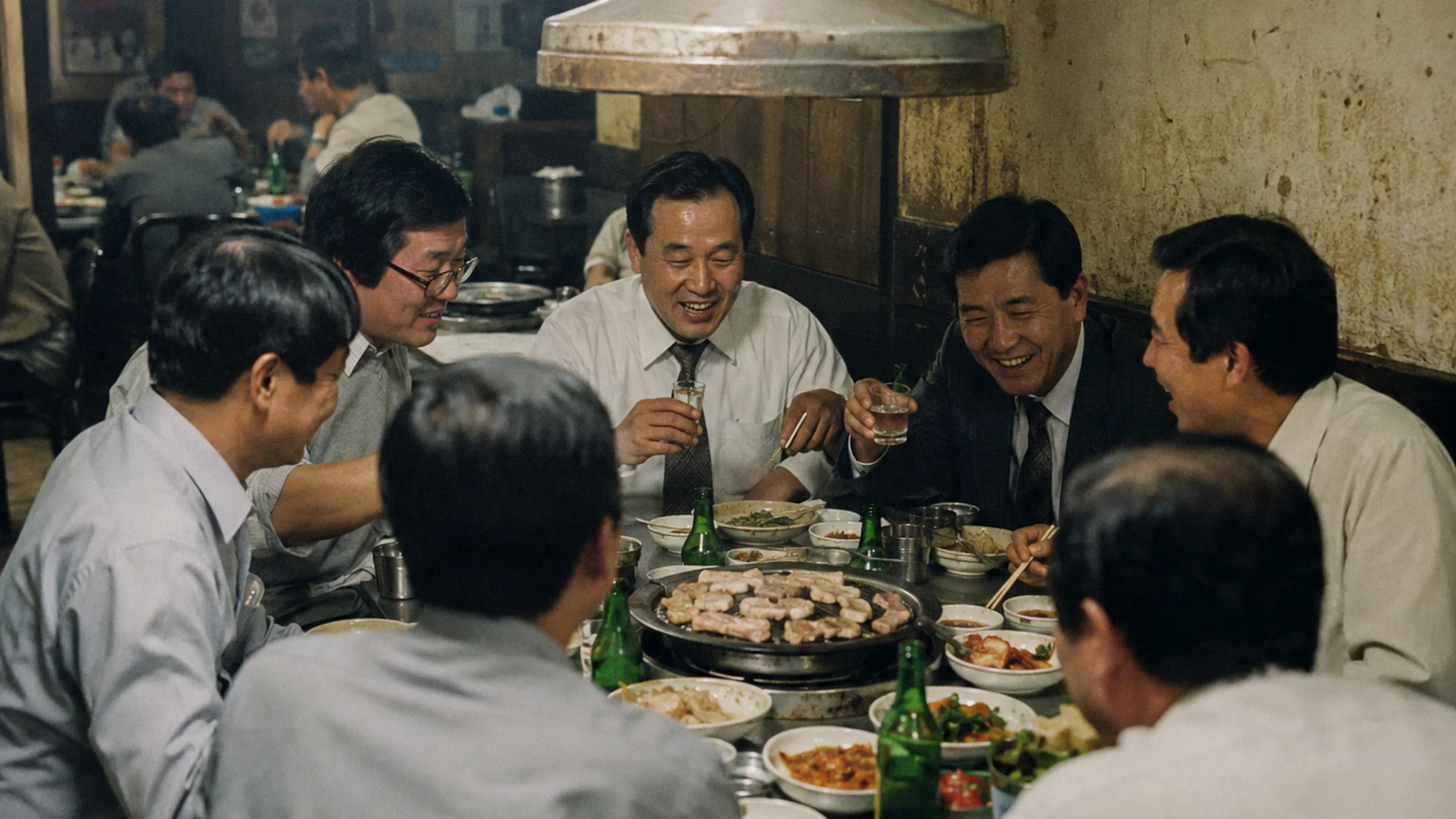
Walk into almost any Korean restaurant and you will see the same object: a green bottle of soju. It sits in barbecue restaurants, sashimi places, gopchang shops and neighborhood restaurants serving kimchi stew. A bottle costs only a few thousand won. It is not extremely strong, intensely aromatic or aged for years like whisky, yet it has such a dominant presence that almost every Korean drinker has tried it at least once.
A visitor encountering Korean alcohol for the first time might think, “So this is traditional Korean soju.” But traditional soju was originally very different. It was a distilled spirit made by fermenting grain and then distilling the fermented liquor. Rice and nuruk were fermented and distilled in a traditional sojugori still, preserving aromas from the raw materials and fermentation, and the flavor varied by region and producer. The common green-bottle diluted soju is made by a fundamentally different process. So what alcohol did Korea originally have, and why did the green bottle become the national drink? Follow the story and modern Korean history appears before the liquor does.
Korea originally had a huge variety of alcohol
Today people often reduce Korean alcohol to soju and makgeolli, but historically it was far more diverse. Drinks varied by region and family. There were liquors for ancestral rites, feasts and guests, as well as drinks made with medicinal herbs, flowers and fruit. Korea had takju, yakju and cheongju, and soju distilled from fermented liquor. As markets expanded in late Joseon, professional breweries called suldoga grew and their products circulated through regional markets.
Korean drinking culture was never simply “Koreans drink this one alcohol.” It was local, personal and varied. Home brewing, or gayangju, was strong. The drink changed depending on who made it, which grain and nuruk were used, and where it was brewed.
Traditional soju was completely different from today’s common soju
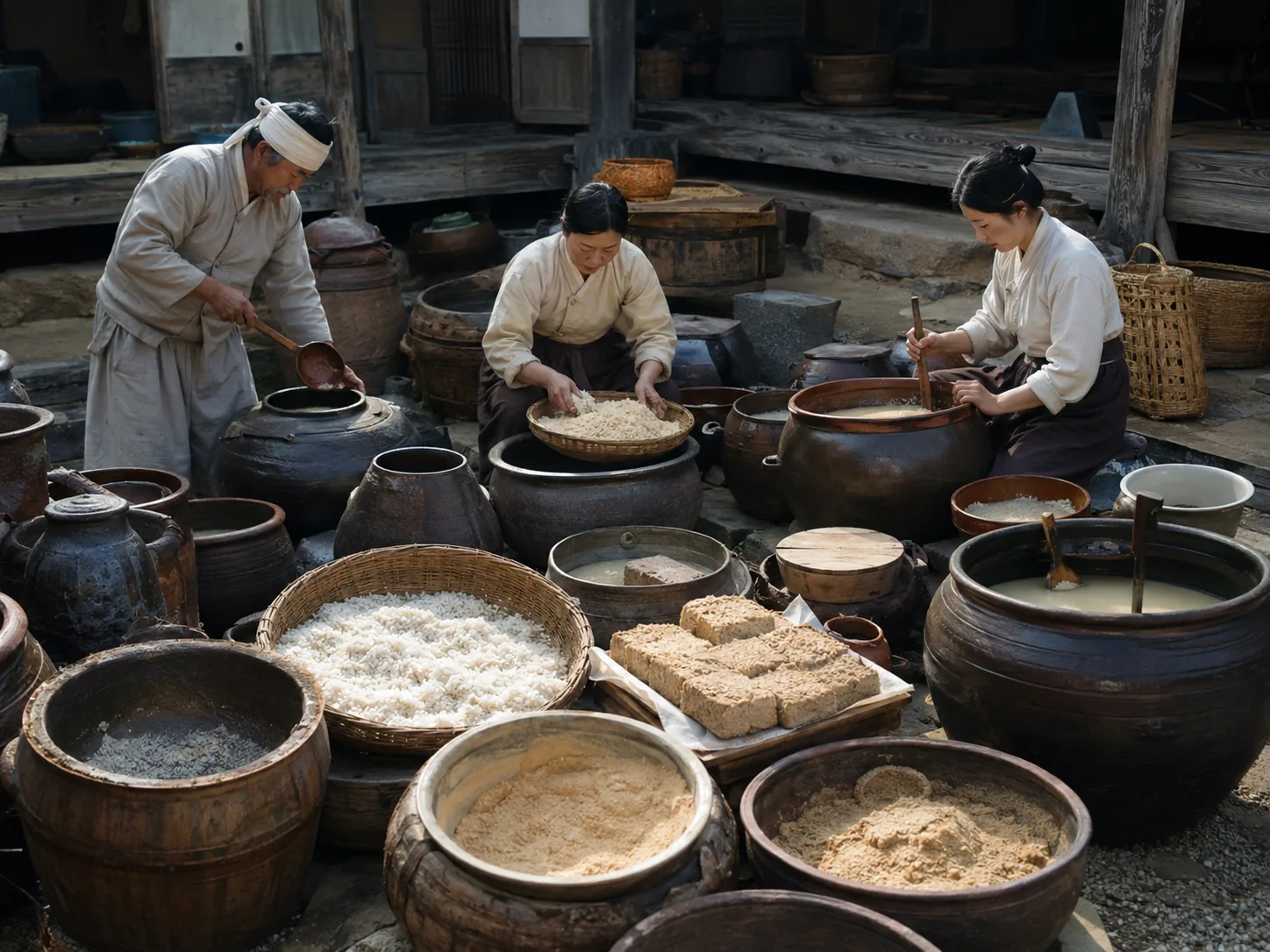
Traditional soju starts by fermenting grain and then distilling the resulting liquor. Korea’s Ministry of Agriculture describes traditional soju as a distilled spirit made by fermenting grains such as rice with nuruk and then using a single-pot still such as a sojugori.
Single distillation carries not only alcohol but also flavor compounds from the grain and fermentation. So even spirits all called soju can taste different depending on rice, barley, nuruk and the distillation method. Traditional distilled soju such as Andong soju has aroma, texture and usually a higher alcohol content than the common green bottle, so it is often sipped more slowly. Distillation also reduces the final volume, which historically made it anything but a cheap drink.
The first major blow: Japanese colonial rule
In 1909 the Japanese colonial authorities introduced a liquor tax law, followed by a stricter liquor tax ordinance in 1916. The key mechanisms were taxation and licensing. Brewing and selling alcohol shifted toward a system in which licensed producers made alcohol and paid taxes. The Encyclopedia of Korean Culture notes that household brewing and local breweries were hit hard during this period.
Alcohol traditions do not survive merely because factory equipment or a written recipe exists. Someone must brew every year, remember the taste and pass the technique to the next generation. If one generation stops brewing, some recipes disappear. Nuruk, water, temperature and hand techniques matter, so a written formula alone cannot perfectly recreate the drink. Alcohol survives through repeated practice, and that chain began to break badly.
Liberation came, and then the country was devastated
Japanese colonial rule ended in 1945, but Korea had little room to rebuild its drinking culture. The Korean War broke out soon afterward, damaging the country, industry and agricultural production. Above all, food was scarce. Alcohol required grain while people themselves lacked enough grain to eat.
Even in 1946, shortages led to restrictions on using rice to make alcohol, and controls on grain continued afterward. Korean traditional alcohol was hit repeatedly: once under colonial rule, again by post-liberation shortages, and again by war. Then came the decisive change of the 1960s.
1965: do not turn food grain into liquor
Korea was still poor in the 1960s, and eating plenty of white rice was not a given. Securing food was a national concern. Around 1965, grain policies prohibited the use of grain for producing traditional distilled soju.
The Ministry of Agriculture explains that after this measure some distilled-soju facilities shifted to producing neutral spirit and most moved toward diluted soju, severely breaking the technical and product lineage of traditional distilled soju. Producers had to make something else to survive. This is where the drink Koreans now regard as an everyday national liquor truly took hold: diluted soju.
The name is still soju, but the process is entirely different
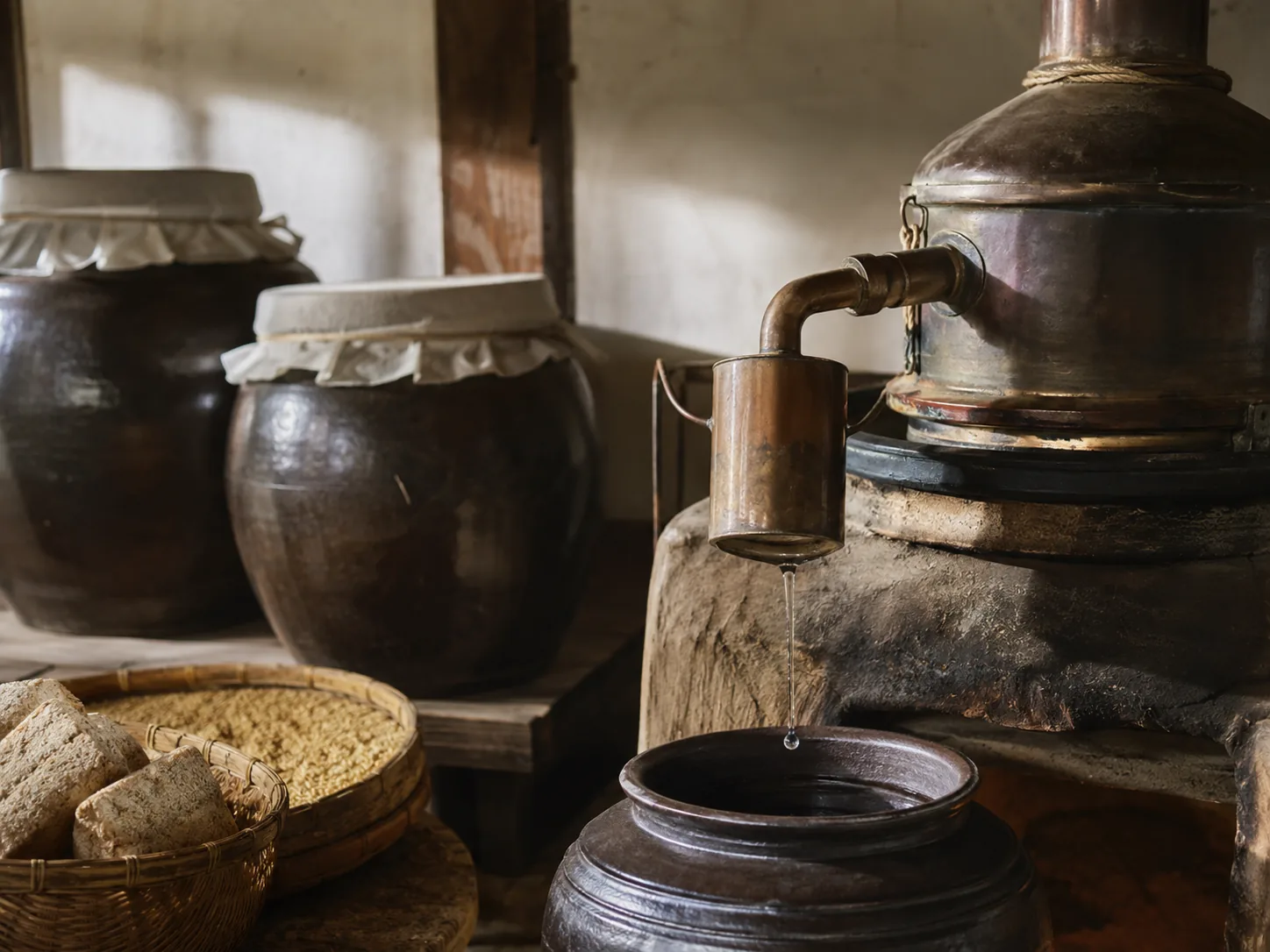
Traditional distilled soju roughly follows grain → nuruk → fermentation → distillation → soju. Diluted soju starts with a high-purity neutral spirit made by fermenting starch sources such as barley, sweet potato or corn and repeatedly distilling them in a continuous still. That spirit is then diluted with water to the desired strength and, depending on the product, adjusted with sweeteners or other ingredients.
High-purity neutral spirit from continuous distillation retains far less of the original ingredient’s flavor than a traditional single-distilled spirit. In traditional soju, “what grain was used and how was it made?” strongly affects the taste. Diluted soju is closer to creating a clean, uniform alcohol base and adjusting it to a consistent profile. It varies little from place to place, is easy to mass-produce and, crucially, is cheap.
It became the alcohol people needed, not necessarily the finest alcohol
Distilled soju requires grain, fermentation and another distillation that reduces the final volume; aging adds even more time. Diluted soju can use mass-produced neutral spirit and deliver highly consistent quality nationwide at much lower cost. In a poor Korea, that difference mattered enormously.
A spirits enthusiast might ask which bottle has better aroma, better raw materials or longer aging. A worker who has finished a long day and sat down at a neighborhood restaurant asks different questions: “How much is one bottle?” and “Will one or two bottles get us drunk?” Diluted soju answered those questions very well. The Korean Food Promotion Institute also describes how its low price and easy availability helped it become known as the drink of ordinary people.
And somehow it fit Korean food extremely well
What looks like a weakness of diluted soju became an advantage in Korea. It has relatively little aroma or raw-material character and, served cold, tastes simple and clean. Korean food, meanwhile, includes plenty of rich, spicy, salty and strongly flavored dishes: samgyeopsal, gopchang, jokbal, spicy pork, kimchi stew, budae-jjigae, maeuntang, raw fish and chicken feet.
The alcohol does not also need to shout, “Look at me, my aroma is huge.” Diluted soju does not fight the food head-on. Eat a bite, take a shot, and the heat and grease are interrupted for a moment. A cheap, relatively neutral liquor born from an era of food shortages ended up pairing surprisingly well with strongly flavored Korean food.
Why is there almost always a soju bottle beside samgyeopsal?
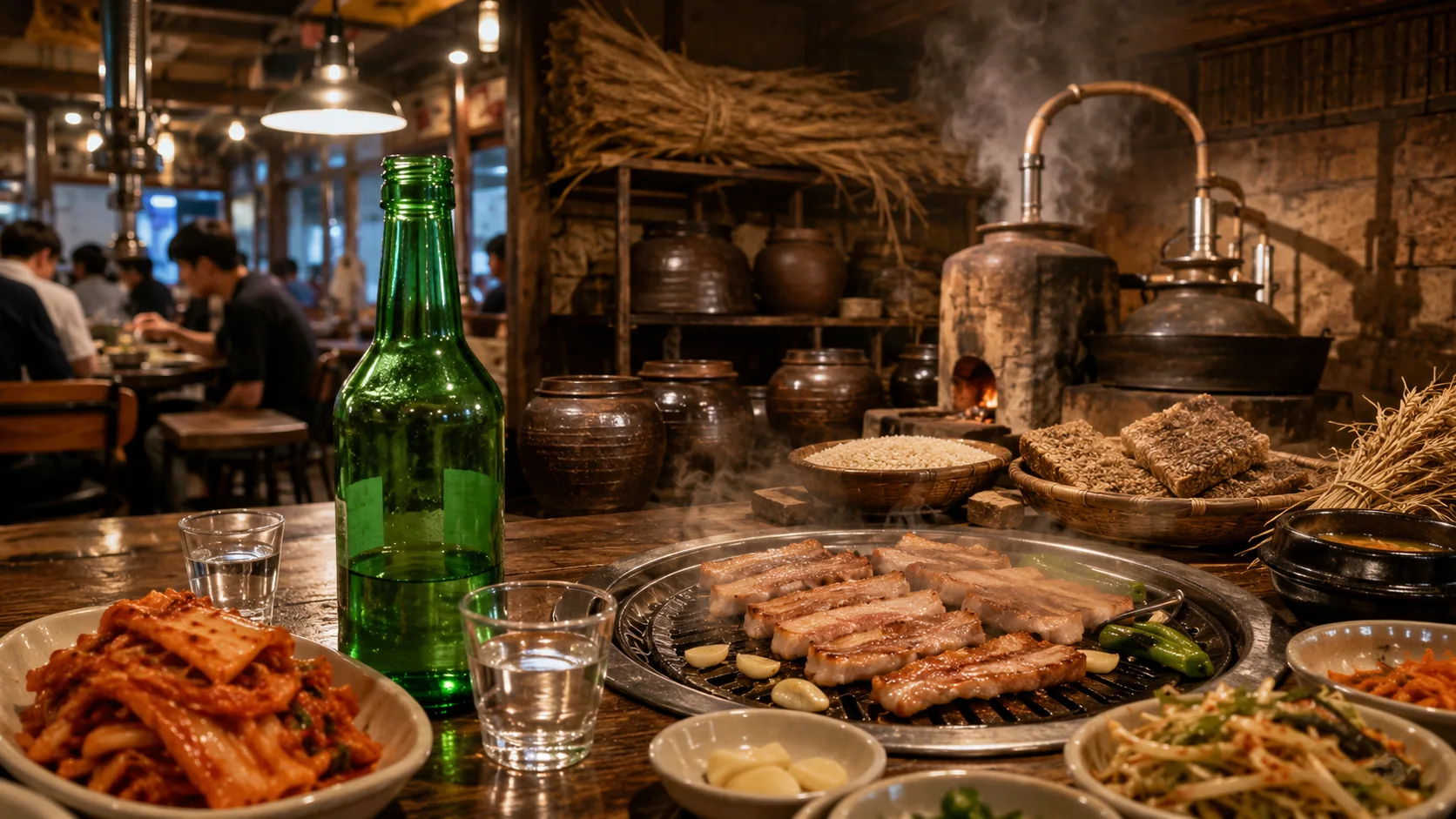
One of the most iconic Korean drinking scenes today is a grill, pork belly, kimchi, garlic, lettuce and a green bottle of soju. It feels ancient because it is so familiar, but it is actually a relatively modern food culture popularized through industrialization and urbanization.
As diluted soju was mass-produced nationwide, drinking culture among urban workers and office employees expanded, and eating meat at restaurants became more common, samgyeopsal + soju became a classic affordable dining combination. It was not because better distilled spirits did not exist. A few thousand won bought a bottle in a neighborhood restaurant and made a casual drinking session with friends easy. Accessibility was overwhelming.
The green bottle never needed to be “the best liquor”
Many people may prefer good whisky, wine, traditional distilled spirits or distinctive makgeolli. Expensive alcohol can offer more complex aromas. Diluted soju was never really competing on those terms.
Its strengths were elsewhere: it was everywhere, cheap, consistent, rarely clashed with Korean food, and got people drunk efficiently. As a working people’s drink, that is almost a perfect specification. Even in a city with bars selling very expensive bottles, the alley restaurant next door can still serve a bottle of soju for only a few thousand won.
Then Korea became prosperous again
As Korea’s economy grew, the era of food shortages ended. Once turning rice into alcohol no longer threatened the food supply, alcohol regulations were gradually relaxed. Controls eased around the 1988 Seoul Olympics, and from the 1990s efforts to discover and restore traditional liquors accelerated.
People began asking again, “What did we used to drink?” Lost home-brewing recipes were researched, regional liquors restored, distilled spirits such as Andong soju reexamined, and new alcohol was made from local rice and fruit.
Makgeolli is no longer just one kind of makgeolli
Makgeolli once evoked a simple image: white liquid, plastic bottle, cheap price and pajeon. Today the market is much more varied. Producers emphasize specific rice varieties or local rice, make stronger or more sparkling versions, add fruit, age the liquor longer and redesign the packaging entirely.
Yakju, cheongju and distilled soju are also receiving renewed attention. Producers combine traditional methods with modern fermentation and distillation, use oak aging and emphasize local agricultural ingredients. The goal is no longer merely to reproduce an old drink exactly, but to use old techniques to create new alcohol.
In 2017, online sales changed the market again
From July 2017, traditional alcohol meeting certain legal requirements was allowed to be sold online. The Ministry of Agriculture has reported that interest and everyday consumption grew afterward, particularly among people in their twenties and thirties.
For regional breweries, this was a major change. Previously consumers often had to visit the area or the brewery had to secure traditional distribution and big-retail placement. Online sales meant someone in Seoul could order from a small Jeolla brewery and someone in Busan could buy alcohol from Gangwon. A bottle seen on social media could be searched and ordered immediately.
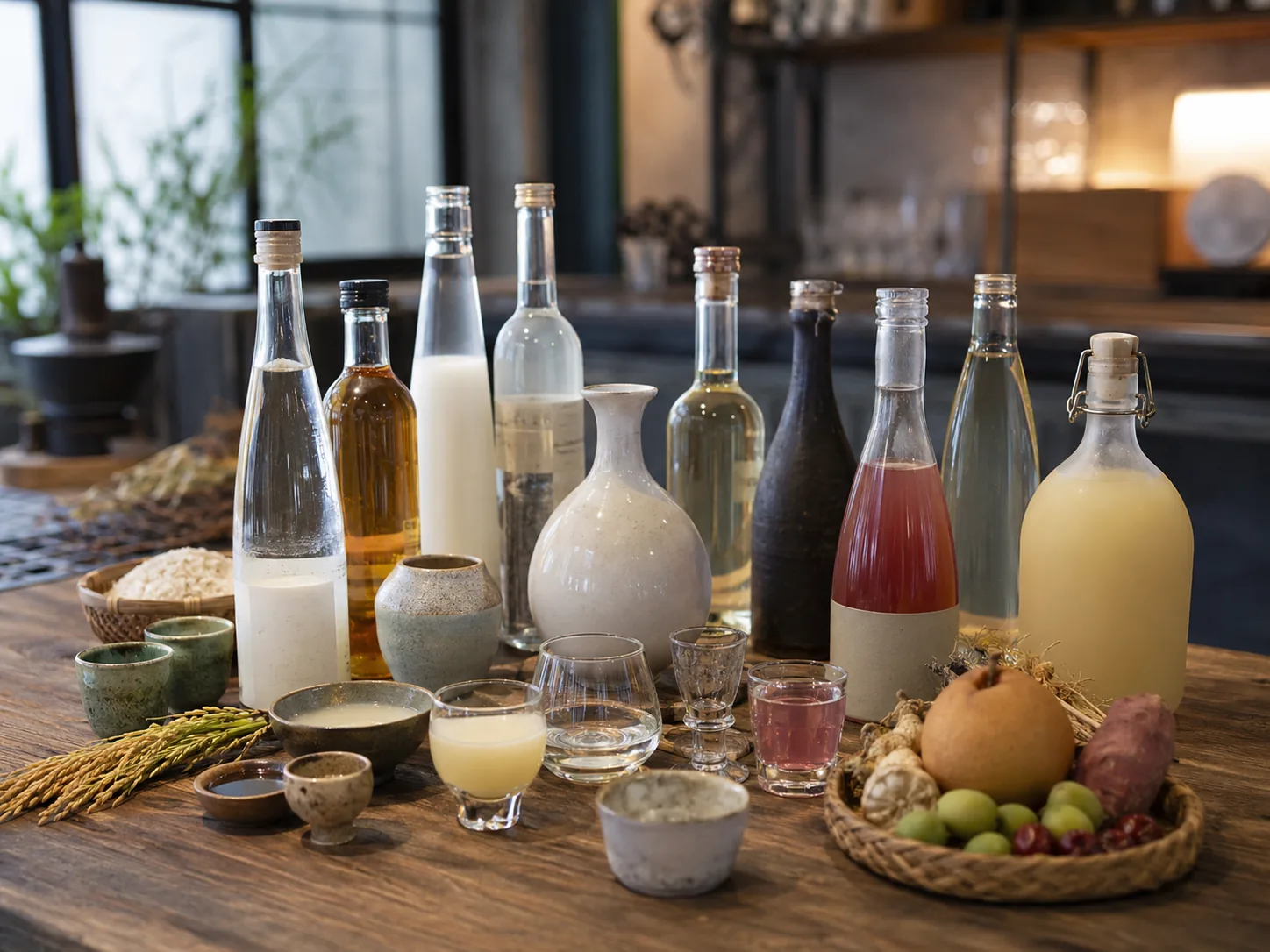
Hundreds of Korean liquors are competing again
At the 2025 Korea Sool Awards, 402 products from 246 breweries nationwide were entered. They competed in six areas: lower-alcohol takju, higher-alcohol takju, yakju and cheongju, fruit wine, distilled spirits including distilled soju, and liqueurs/other alcoholic beverages.
There was a time when regional breweries and household brewing collapsed and grain-based distillation was restricted, making Korean alcohol seem as if it would be reduced to a few mass-market products. Now hundreds of breweries again make different drinks. Korea has not returned to a society where every household brews, but regions are once again developing their own alcohol.
That does not mean the green bottle is disappearing
The revival of traditional alcohol does not require diluted soju to vanish. They serve different roles. Some days are for excellent distilled soju, new makgeolli, wine or whisky. Other days four friends sit at a pork-belly restaurant, someone asks “Soju?” and everyone says yes. That table does not require a 15-year-old whisky. Green-bottle soju already occupies its own place as food culture.
The most Korean-looking liquor is not Korea’s oldest liquor
The alcohol a foreign visitor is most likely to see in a Korean restaurant—the drink office workers consume in dramas, the bottle beside pork belly and the rows in convenience-store refrigerators—is not Korea’s oldest liquor. It is closer to a modern product shaped by poverty, food shortages, industrialization, mass production and urban working-class drinking culture.
Long before it, Korea had far more diverse alcohol, and traditional soju was an aromatic spirit distilled from fermented grain. That culture was struck by colonial tax and licensing controls, then by post-liberation shortages and war, and then again by 1960s grain restrictions. Diluted soju grew in that gap. Cheap, uniform, available everywhere and compatible with Korean food, it became a national drink. Now that Korea is wealthier, makgeolli, yakju, cheongju, distilled soju and regional breweries are returning.
Neither side has to disappear. One represents alcohol traditions Korea carried for centuries; the other represents a liquor created while Korea endured a desperately poor period. Both are Korean alcohol. Inside the glass sit Joseon home brews, colonial liquor taxes, the Korean War, food shortages, industrialization, office workers in pork-belly restaurants and a younger generation seeking regional breweries again. Follow Korean alcohol and you end up following Korean history. Tonight, another green bottle will open in a small restaurant. “One bottle, please.” It costs only a few thousand won. It is neither Korea’s most glamorous nor its oldest liquor. It may, however, be the liquor that has swallowed the most modern Korean history.
Sources
- Encyclopedia of Korean Culture, “Brewing workers” — late-Joseon breweries and the contraction of household/local brewing after the 1909 and 1916 liquor-tax systems.
- Ministry of Agriculture, Food and Rural Affairs, Liquor Market Survey — traditional distilled soju and the shift toward diluted soju after grain restrictions.
- Ministry of Agriculture, Food and Rural Affairs, Introduction to Distilled Spirits — production methods and modern soju industry changes.
- Korean Food Promotion Institute, Changes and Growth of Distilled Soju — food shortages, grain controls, popularization of diluted soju and restoration of traditional alcohol.
- Ministry of Agriculture, Food and Rural Affairs, Traditional Liquor Consumption Trends — online sales from 2017 and consumer change.
- Ministry of Agriculture, Food and Rural Affairs, 2025 Korea Sool Awards — 246 breweries, 402 products and six categories.