
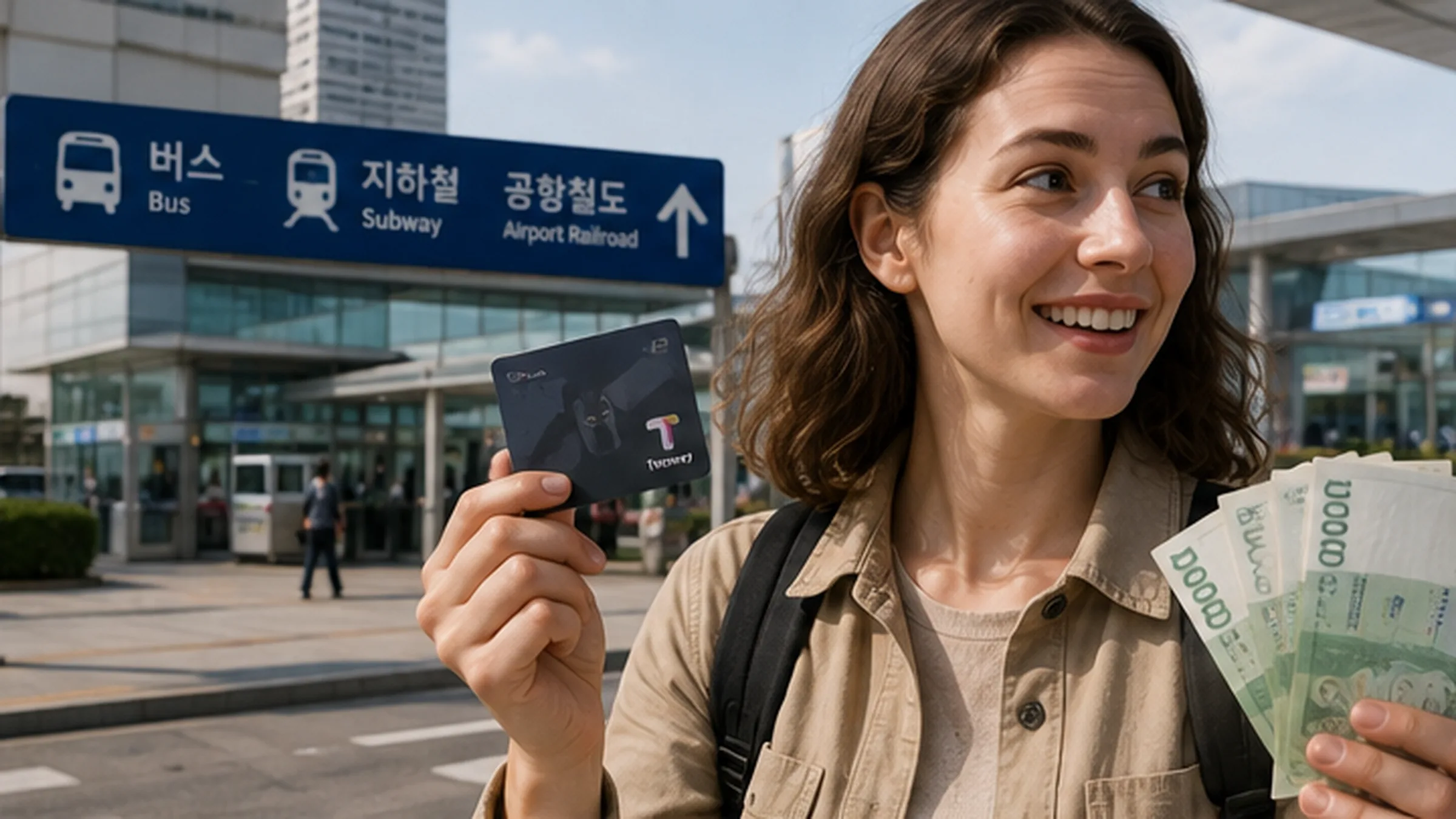
A foreign traveler has just arrived at an airport in Korea. Now it is time to get into the city.
How do you ride the subway? Where do you buy a bus ticket? Can a transit card bought in Seoul work in Busan? Do you need cash every time you board a bus? An app? A Korean phone number?
Do not overcomplicate it. First, get a little Korean won. Then go to a convenience store.
Tell the clerk, “Tmoney card, please.” Once you have the card, hand over cash and say, “Please put 30,000 won on it.”
That is basically it. With that one card, you can start using Korean buses and subways. It really is almost that simple.
Foreign visitors can use what Koreans use
Korea also has tourist transit products designed for foreign visitors, and some can be useful depending on the trip. But if your goal is simply to ride local buses and subways for a few days, one of the simplest choices is an ordinary Tmoney card.
VISITKOREA describes Tmoney as a prepaid transit card that can be topped up without a bank account and bought at convenience stores and many subway stations. The price of the physical card varies by type and design.
The important point is that this is not a special system reserved for foreigners. Koreans have used transit cards like this for years. It is so ordinary that locals rarely think it needs explaining.
So a visitor can use it just like a local. No membership, Korean bank account or Korean phone number is required. The card simply needs money on it.
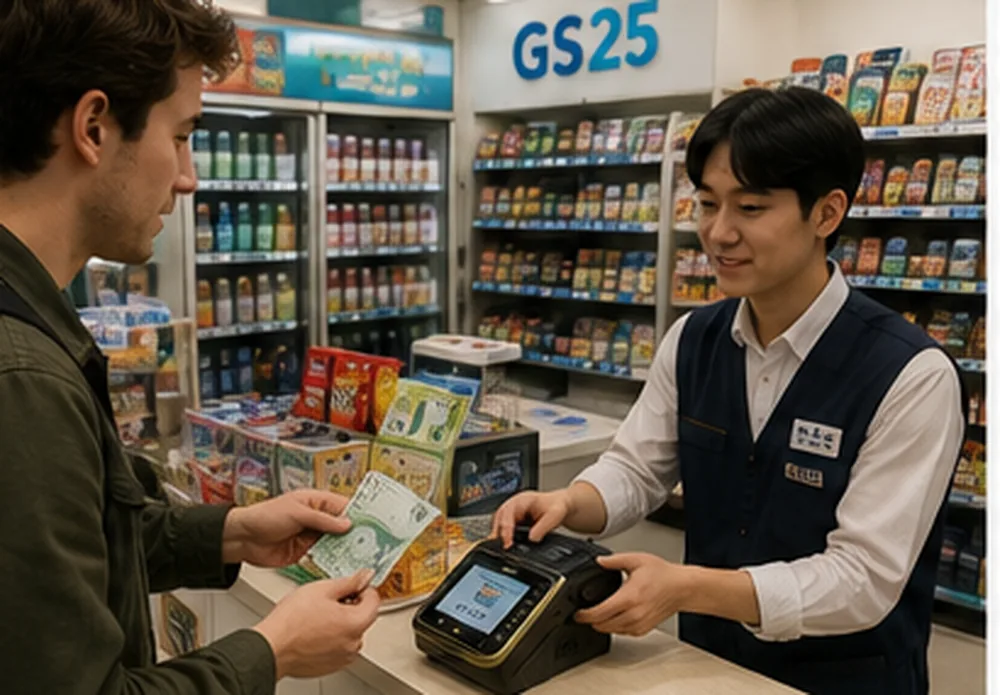
First step at the airport: get some won
There is one Korean quirk foreign travelers should know. For an ordinary Tmoney card, cash is still the most reliable way to buy and top it up. Official travel guidance warns that foreign-issued credit cards may not work for ordinary transit-card purchases or top-ups and recommends carrying cash.
It is a highly advanced transit system, yet cash is still the safest option for loading the card. Slightly odd, but practical. So after arriving in Korea, it helps to exchange or withdraw enough won for the card and its first top-up.
You do not need to carry your whole travel budget in cash. Just keep enough won to buy the card and load it. For example, buy a Tmoney at a convenience store, hand over 30,000 won in cash and ask the clerk to load that amount.
Major convenience stores such as GS25, CU and 7-Eleven sell or top up Tmoney, and subway stations also have transit-card charging machines. You do not need a huge balance from day one. When it gets low, add more.
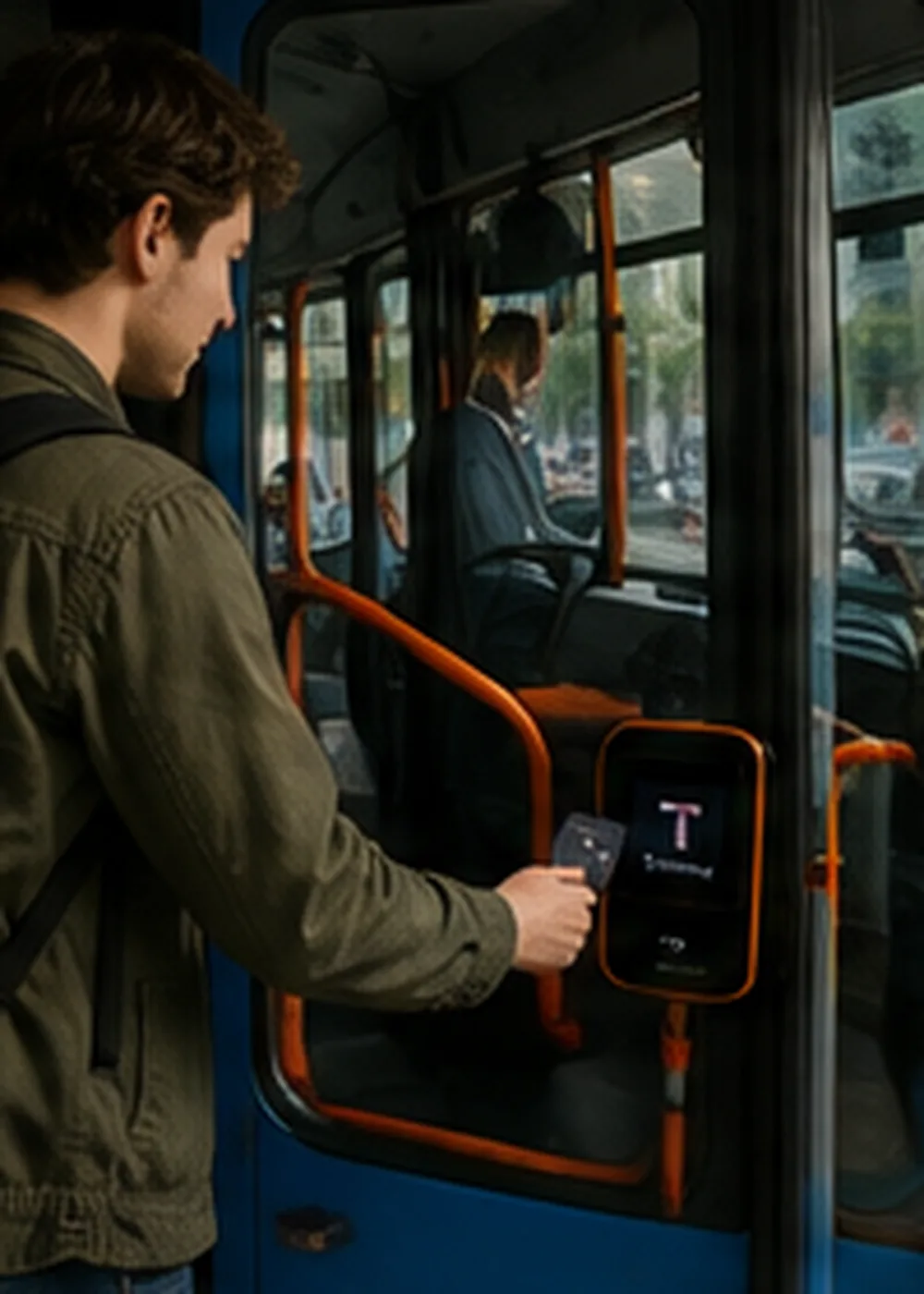
On a bus, just tap
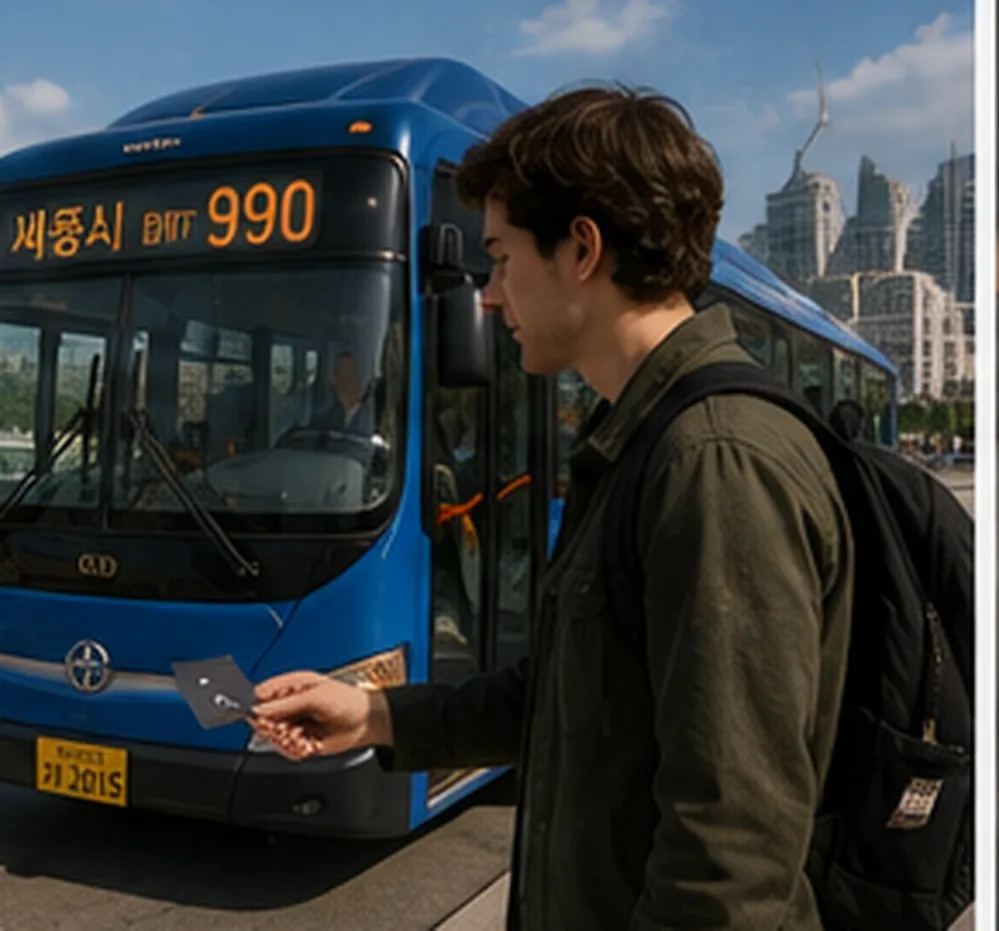
The bus arrives. Board through the front door and you will see a card reader near the driver. Touch your Tmoney to it. Beep. Payment is done.
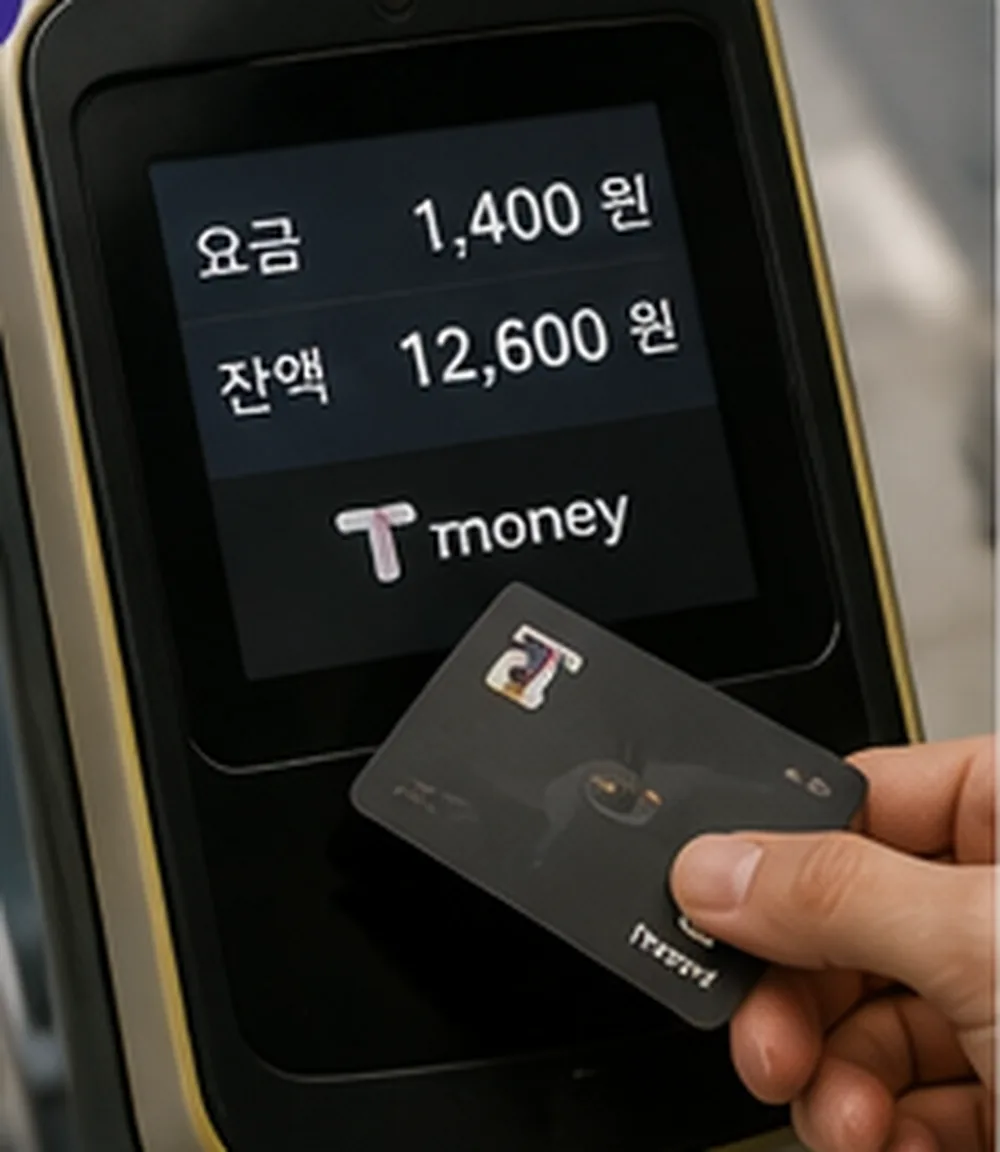
The reader shows the fare charged and the remaining balance. That means travelers rarely need to calculate the balance separately. You can simply glance at it when you tap.
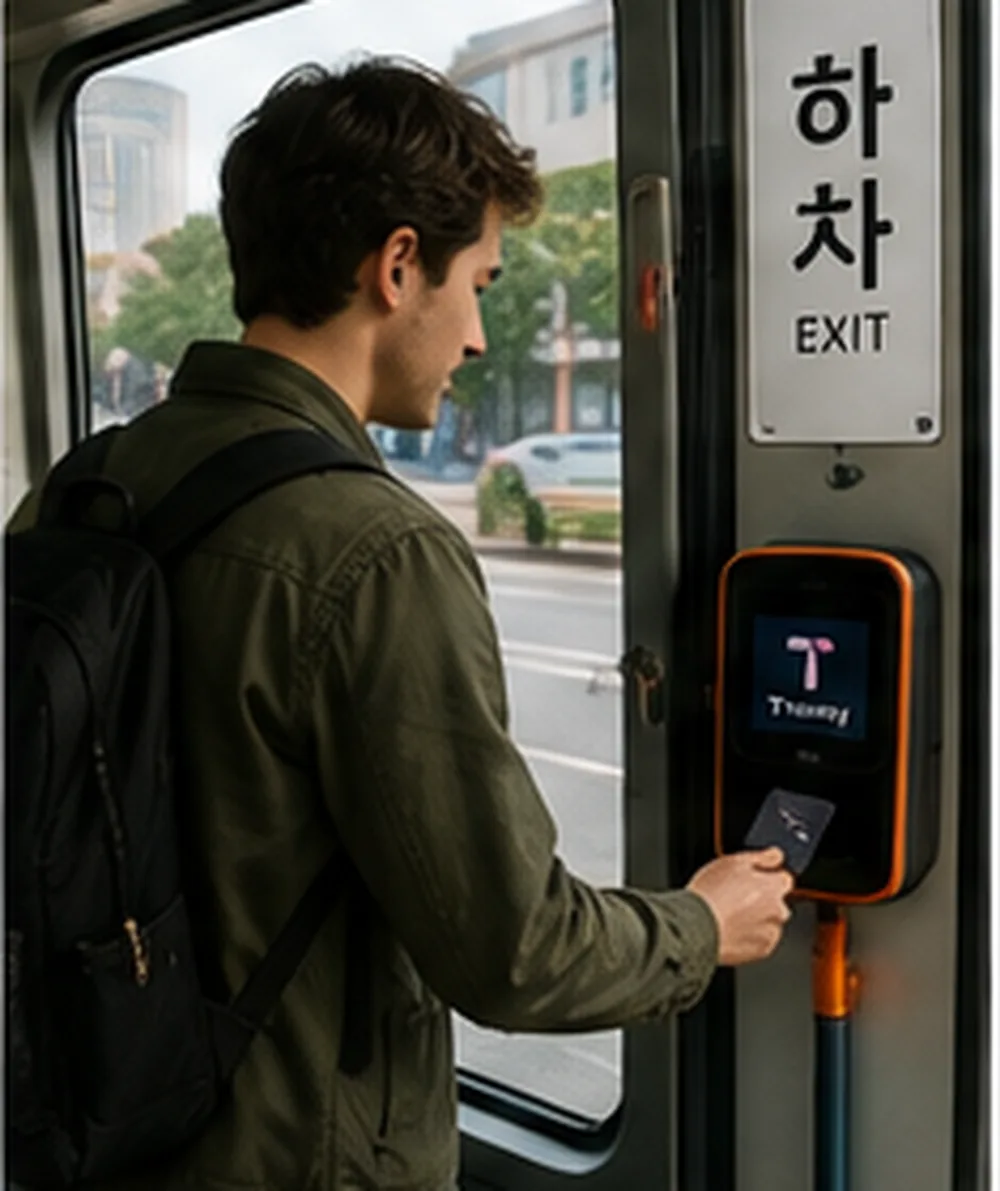
But there is one thing to remember on buses. Tap when you get off too. At your stop, touch the card to the exit reader. Beep. Then leave.
Seoul’s official transit guidance also tells riders to tap when getting off if they want transfer benefits. The system needs the exit record to calculate distance and transfers.
The card calculates a bus-to-subway transfer
The real convenience of Tmoney is not merely that you can avoid cash. It is the transfer system.
Ride a bus to a subway station, tap out when leaving the bus, walk into the station, and tap the same Tmoney at the gate. The system connects the previous bus trip with the next subway trip when calculating the fare.
You are not buying one bus ticket and then another subway ticket. If you transfer correctly within the allowed time, the integrated transfer fare applies. In the Seoul metropolitan area, the permitted transfer window is generally measured from the tap-out and can vary by time of day.
As a traveler, you do not need to memorize the whole fare formula. Ride normally, tap out, and tap again on the next mode; the system does the calculation.
The subway is even easier
Enter the station and tap Tmoney at the gate. Beep. At your destination, tap again on the way out. Beep. Done.
You do not need to speak Korean. You also do not need to stand at a ticket machine and buy a single-use ticket for every journey. Once you know where you are going, keep using the same card.
VISITKOREA likewise explains that rechargeable transit cards remove the hassle of buying a ticket or paying cash for every trip and can also provide transfer discounts.
Do you need another card in Busan?
Usually not. In some countries each city has a completely different fare card, but Tmoney is accepted across a wide range of Korean bus and subway systems.
So moving to another city does not normally mean buying a new transit card. Take out the Tmoney you bought in Seoul and try the same familiar beep.
Transit operators and settlement systems differ by region, but travelers do not need to understand the back end. The card handles it. A small number of regions, routes or specialized services can have different acceptance, so this should not be read as “literally every vehicle in Korea.”
You can take it out in many taxis too
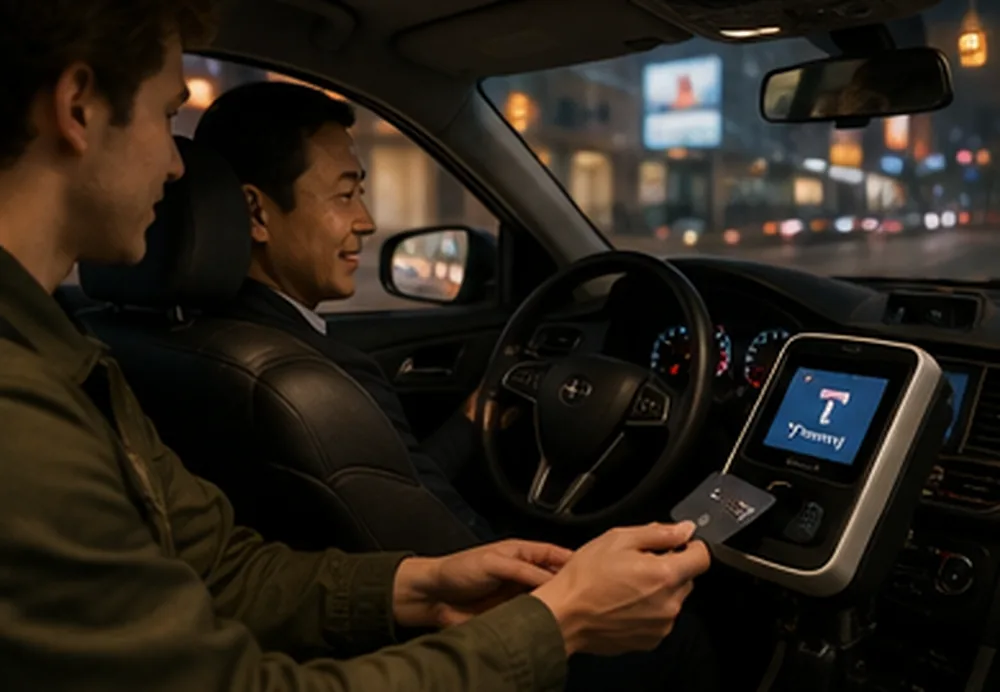
Tmoney is not limited to buses and subways. In taxis that support Tmoney payments, you can pay the fare with the transit card when you arrive.
That creates a very simple pattern for everyday travel in Korea: bus — Tmoney; subway — Tmoney; another bus — Tmoney; taxi — Tmoney. The vehicle changes, but the payment method usually does not.
What if the balance runs out?
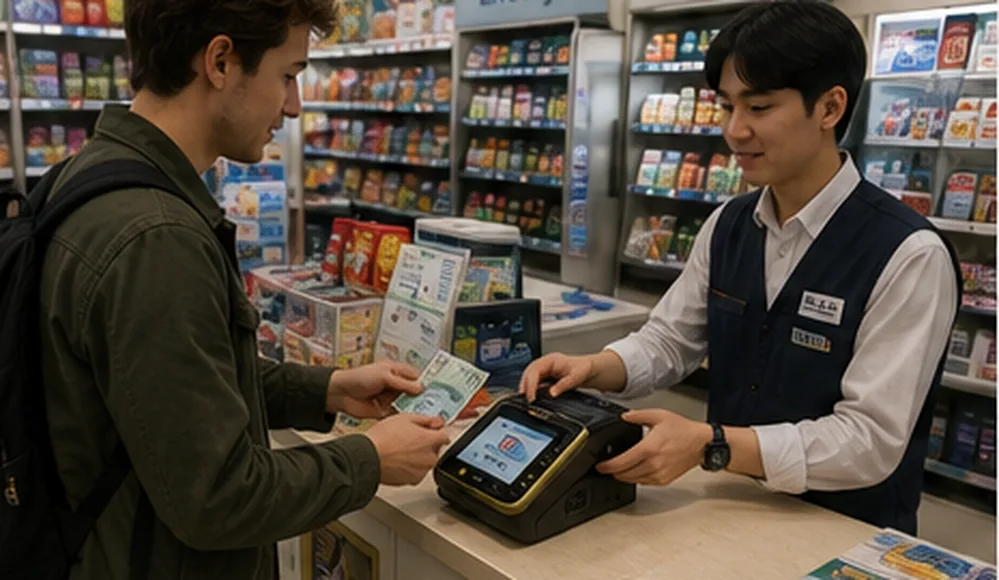
One day you tap and the balance is too low. It is not a crisis. Walk into a nearby convenience store, hand over the Tmoney card and cash, and ask the clerk to add another 20,000 won.
You do not need a new card. Once the first balance is used, keep topping up the same card. Major convenience stores and subway charging machines can do it.
If a small balance remains at the end of the trip, refunds are available at designated locations under certain conditions. That is another reason it can be more convenient to add money gradually rather than loading a large amount all at once.
Koreans use it this casually too
When Korean public transport is explained to a foreign visitor, terms such as integrated fares, distance-based pricing, transfer discounts and settlement between bus and subway operators can make it sound extremely complicated.
But Koreans do not calculate all of that on the way to work every morning. They tap. Beep. Tap when getting off. Beep. Transfer to the subway. Beep. And go home.
That is why transit cards became the everyday standard. The system handles the complicated fare calculation and settlement while the passenger simply taps. In daily Korean life, even the idea of “buying a bus ticket” now sounds somewhat old-fashioned.
Your first steps in Korea are surprisingly simple
If you have just arrived in Korea and are nervous about local transit, remember only this: get some won at the airport, buy a Tmoney at a convenience store, and top it up with cash.
Tap when boarding a bus. Tap when getting off too. Tap when entering and leaving the subway. Check the balance on the reader. Top up again at a convenience store when it gets low. Try the same card in other cities. If a taxi accepts Tmoney, use it there too.
At some point you may think, “Was using Korean public transport really this easy?” Yes. An extremely complicated network and fare-settlement system is working behind the scenes, but a traveler does not need to understand it.
Do what Koreans do every day: carry one card and go beep.
Sources
- VISITKOREA, Transportation Cards — Tmoney sales locations, prices, top-ups, transit use and transfers.
- VISITKOREA, Korea Transportation Guide — cash purchase and top-up guidance for foreign travelers using ordinary transit cards.
- Seoul Metropolitan Government, Bus / Modes of Transport — tapping on and off buses and integrated transfer rules.
- Tmoney Mobility, taxi payment business — Tmoney-based taxi payment network.
- Tmoney, transit-card usage materials — transit-card payments and usage in Korean public transport.