
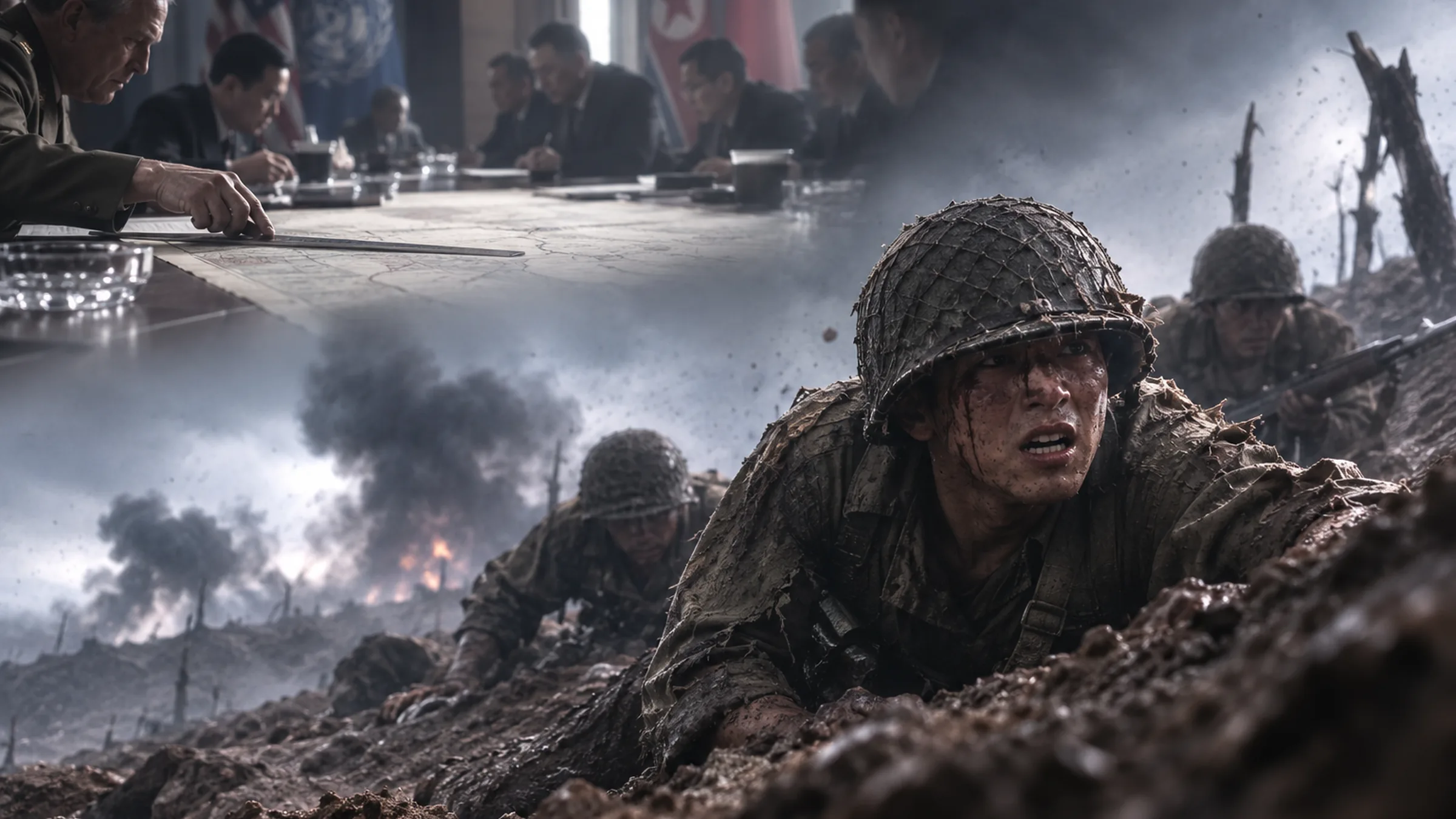
While negotiators drew lines across a map with a ruler, young soldiers kept dying at the front.
Armistice talks in the Korean War began in July 1951. They were meant to end the war. But the opening of negotiations did not silence the guns.
At Panmunjom, meetings over the terms of the armistice continued, while fighting continued at the front.
The talks began, but the war did not stop
According to the National Archives of Korea, the talks began on July 10, 1951 and continued until July 27, 1953. They were initially expected to end relatively quickly, but disputes over issues including the military demarcation line and prisoner repatriation dragged them out.
The negotiations lasted for more than two years.
During those two years, the war continued too.
Much of the central and eastern front ran through mountainous terrain. Many late-war battles were fought over one hill, one ridge, one piece of high ground.
Capture the hill
“Capture the hill.”
Soldiers climbed under artillery fire.
They took the position.
A hill won at the cost of lives could be lost again only days later.
Then they climbed again.
They took it back, and lost it again.
The National Institute of Korean History describes how hill battles intensified while fighting continued until the armistice was signed, with large forces and heavy firepower repeatedly used in exhausting battles to seize and retake high ground.
This is also the historical setting behind the film The Front Line. Its Aerok Hill is fictional, but the repeated struggle over hilltops reflects the reality of the war’s final phase.
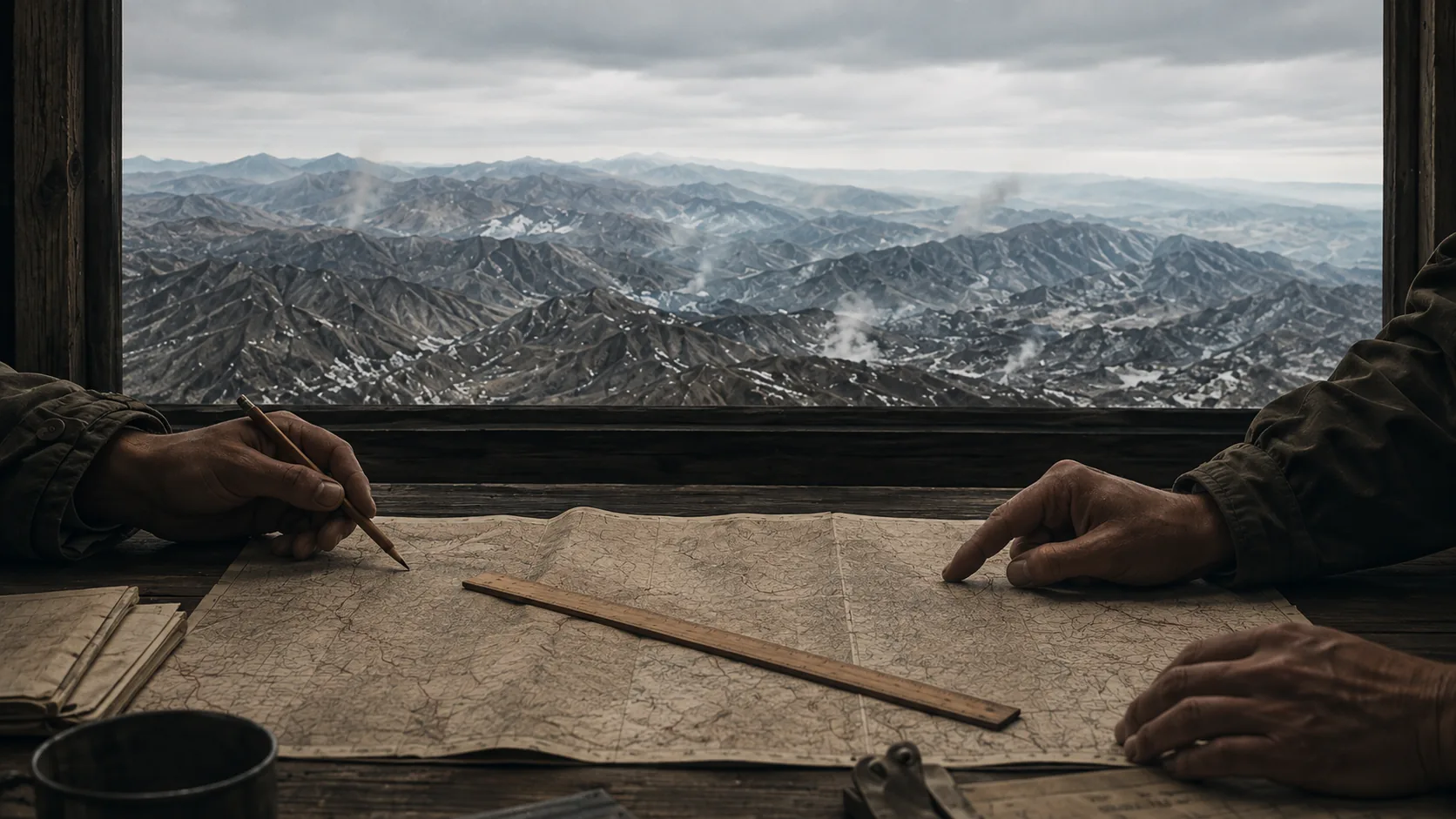
A few centimeters on a map
There was no iron mine on those hills.
No gold mine.
No great city.
They were simply mountains.
On a map, they could be reduced to a few centimeters.
A hill taken today could be lost tomorrow, and soldiers would climb it again. While the overall front changed little, people kept dying over the same ground.
Meanwhile, the armistice talks continued.
A day passed at the negotiating table, and a day passed at the front as well.
For one person, an extra day could mean another day of meetings.
For a frontline soldier, it meant another day of war.
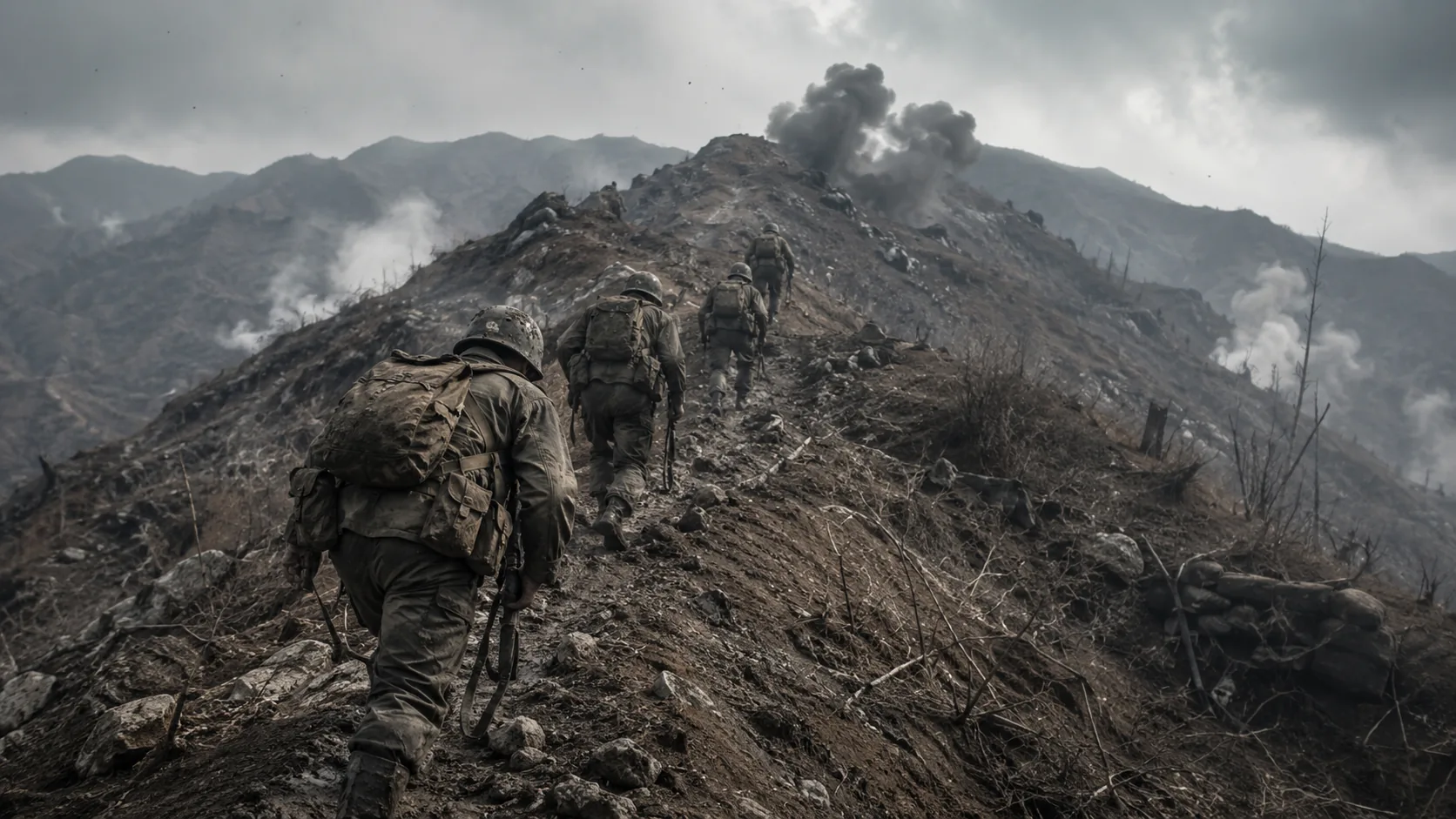
What if the negotiators had fought on the hills by day?
There is one thing to consider here.
What if the armistice negotiators had been required to fight on the hills during the day and sit at the negotiating table at night?
What if failing to reach an agreement today meant they themselves would have to pick up a rifle and climb the same mountain tomorrow morning?
What if they had watched a comrade die during the day and then returned to the map that night?
Would the talks have lasted as long?
Would a few centimeters on the map have looked the same?
Because negotiations were not actually conducted that way, there is no way to verify the answer. This question shows one thing.
The people making decisions and the people paying for those decisions with their bodies were not the same people.
The Republic of Korea’s signature is not on the Armistice Agreement
The Armistice Agreement was signed on July 27, 1953.
And the Republic of Korea’s signature is not on that agreement.
The agreement preserved by the National Archives of Korea bears the signatures of UN Commander Mark Clark, North Korean Supreme Commander Kim Il Sung, and Chinese People’s Volunteers Commander Peng Dehuai. The government of the Republic of Korea opposed an armistice without unification and did not sign the final agreement.
Military representatives of the Republic of Korea had participated in parts of the negotiation process, but the final Armistice Agreement carries no signature from the government of the Republic of Korea or a Republic of Korea military representative.
The war was fought on Korean soil.
Young Koreans climbed those hills.
They kept fighting while negotiations dragged on.
They took the hills.
They lost them.
They climbed again.
And the Republic of Korea’s signature was not on the final agreement that stopped the war.
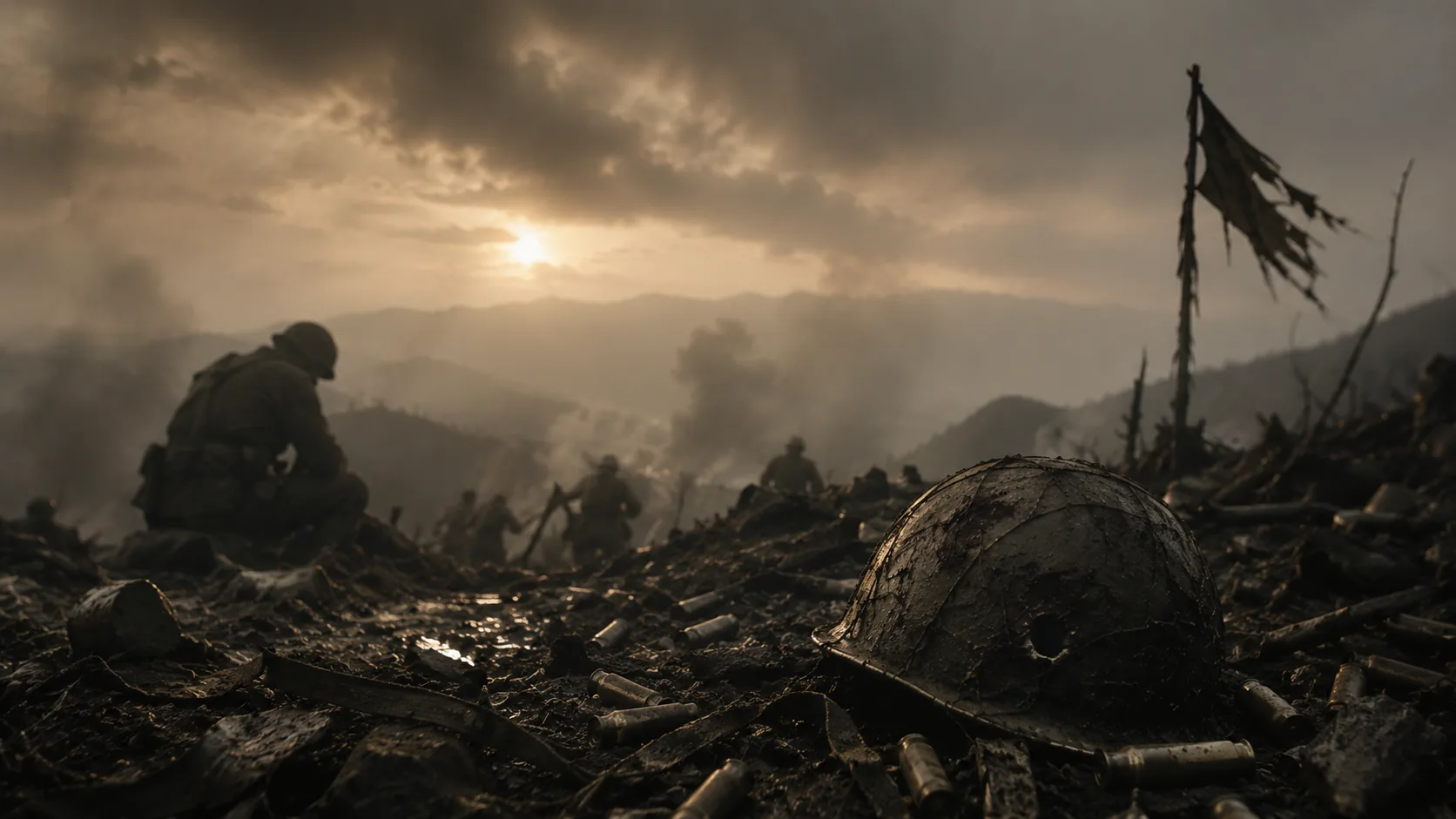
In the end, a line remained
Today the armistice line looks like a line on a map.
It is a line that rises a little, dips down, and rises again.
As that line was being drawn, people died over a single hill.
The negotiations dragged on.
The hills changed hands.
The front itself barely moved.
Only people kept dying.
And the people who endured that time with their bodies were not sitting at the negotiating table.
Today’s Korean Expression
Expression: 고지(高地)
Meaning: High ground, terrain that is higher than its surroundings. In war, it can become a combat objective because it is advantageous for observation and defense.
Meaning in this article: In the latter half of the Korean War, attritional fighting continued as the occupation and recapture of individual high ground repeated.
Sources
- National Archives of Korea, Armistice Negotiations — duration of talks, major disputes, and South Korea’s refusal to sign / accessed 2026-08-19
- National Institute of Korean History, From Talks to Agreement — repeated hill battles and attrition before the armistice / accessed 2026-08-19
- National Archives of Korea, Korean War Armistice Agreement — signatories and South Korea’s absence from the signatures / accessed 2026-08-19
- Korean Film Archive KMDb, The Front Line — film setting and Aerok Hill / accessed 2026-08-19