
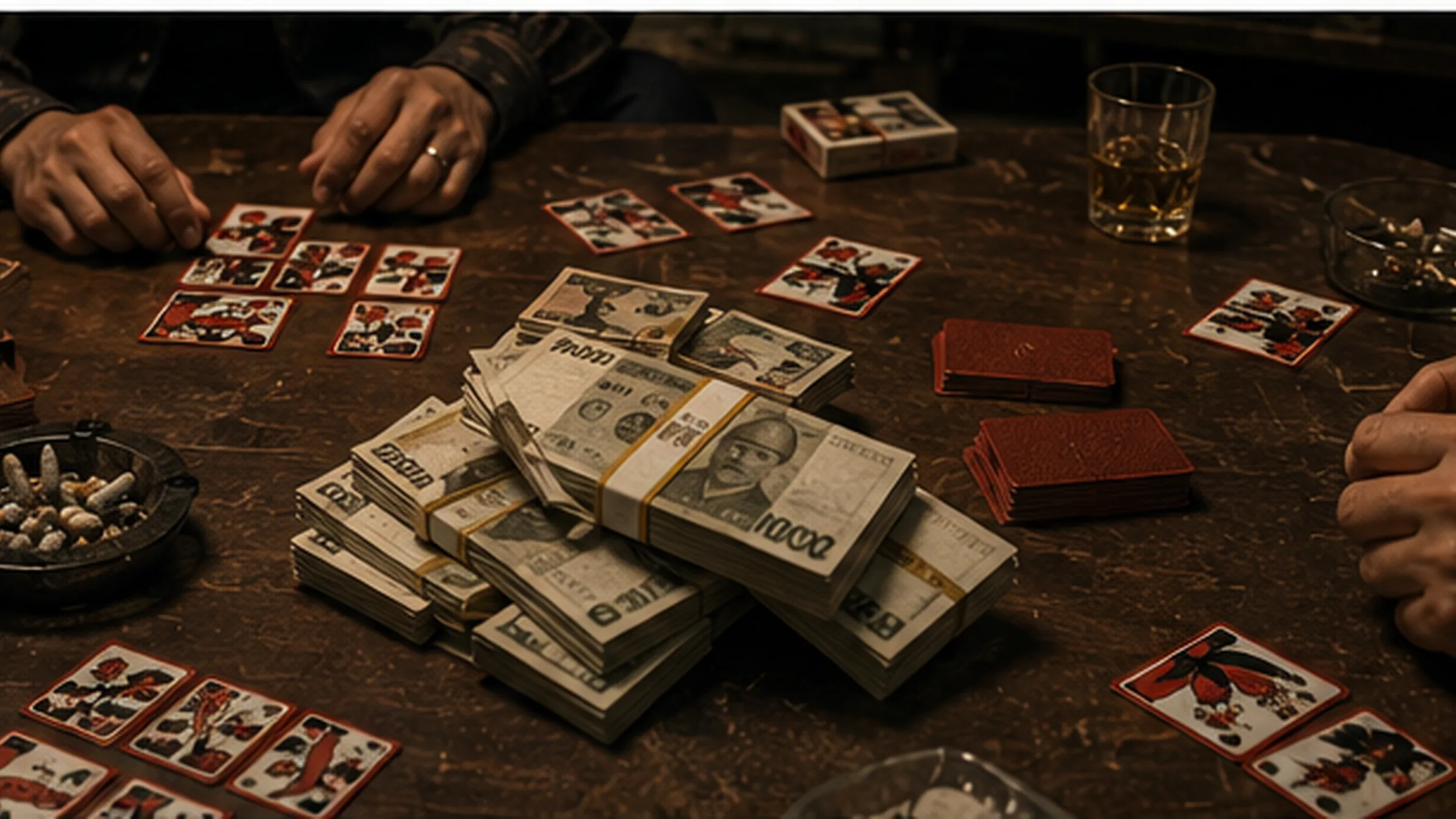
“묻고 더블로 가!” — Leave it in. Double it.
“나 이대 나온 여자야.” — I’m an Ewha woman.
“동작 그만, 밑장 빼기냐?” — Stop. Are you dealing from the bottom?
Even people who have never watched 《타짜》 know some of its lines. But when you revisit the film, something else keeps catching your ear: words the characters throw around without explanation.
Tazza, hogu, apjeon, ppakkom, gongsa, kkongji, giri, tan, gaepyeong, oring, syodang.
The film never pauses to define them. It assumes the people in this world already know what they mean. The first time through, you can survive on tone and context. Once you know the words, entire scenes sharpen.
There are more people between a tazza and a hogu
The title word tazza (타짜) is already gambling jargon. It does not simply mean someone who likes to gamble. It refers to a professional gambler who lives by card-handling skill and by reading the table. Jang Byeong-yoon, a former professional gambler who advised the film, described himself as both a professional gambler and a gambling technician.
On the other side is the hogu (호구).
Today, “hogu” is also used for someone who often gets the short end of the stick or cannot refuse other people’s requests, but at a gambling table it is much more specific. Jang Byeong-yoon described a hogu as someone with money who likes gambling and becomes prey for tazzas. In 《타짜》, a hogu is not simply someone who is bad at gambling. He is someone who has already been chosen by somebody.
Then there is the apjeon (앞전). Madam Jeong says Park Moo-seok is working as Kwak Cheol-yong’s apjeon player. It is the person who actually sits at the table, holds the cards, and plays the visible game. The person funding the table, the person arranging it, and the person physically playing do not have to be the same person.
Kwak Cheol-yong’s people also call Park Moo-seok ppakkom (빠꼼). It means less “the greatest master of sleight of hand” than someone who has been around this world long enough to understand its signals and circumstances—in simple terms, someone who knows the table.
That is why hearing the repeated words player and technician in 《타짜》 as simply “someone who is good at hwatu” gives you only half the picture. Someone sets up the table, someone brings people in, someone puts up the money, and someone sits in front and holds the cards.
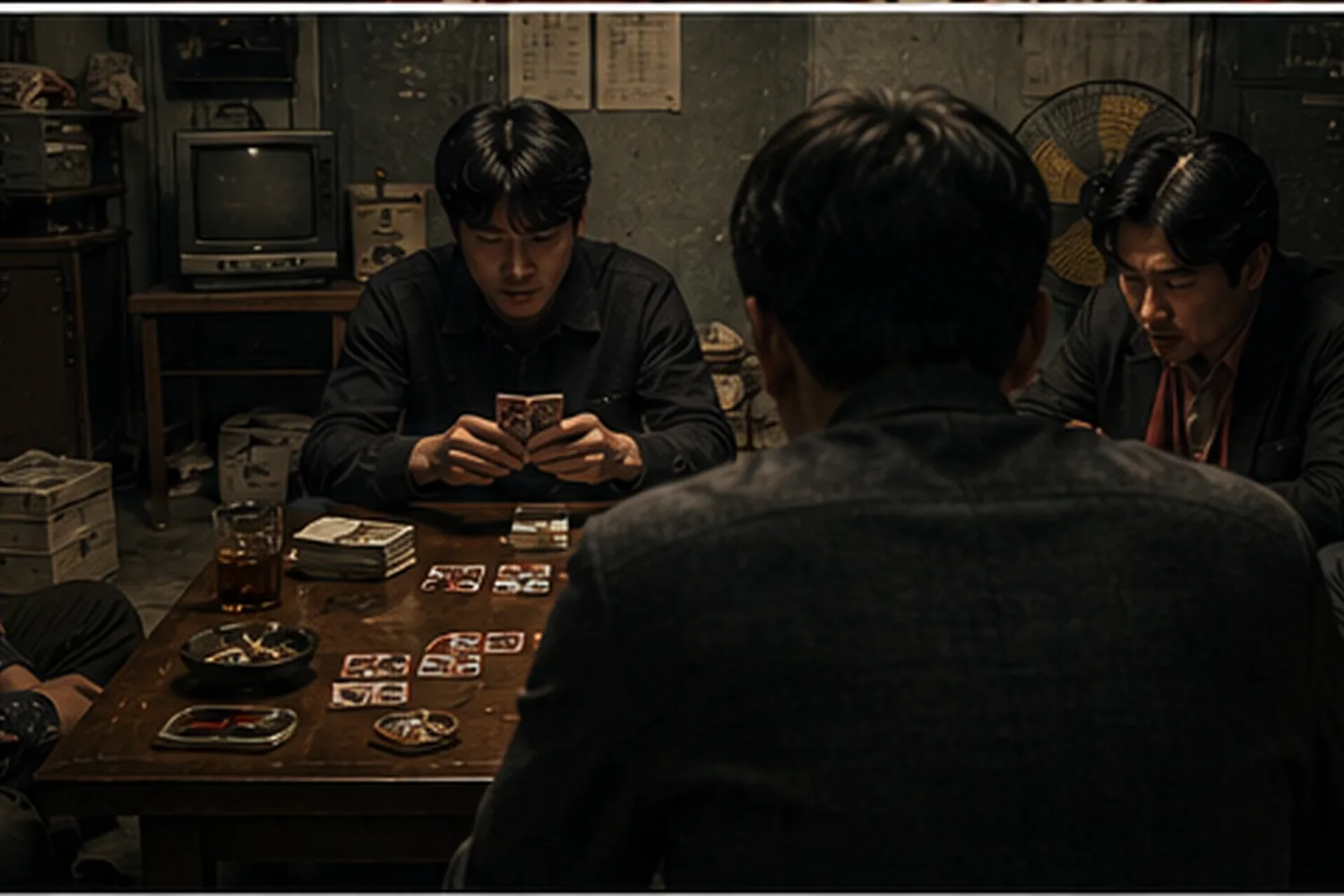
A table does not appear by accident
Madam Jeong tells Goni.
She says she has started a gongsa (공사) in the Jeonju–Gunsan area but has no technician.
This is not construction work. At a gambling table, gongsa (공사) means an operation in which several people divide roles and move together to seat a hogu at the table and take his money. Jang Byeong-yoon testified that in real tables, a gongsa could involve eight to ten people, including a seolgyesa (설계사) like Madam Jeong.
So seolgye (설계) is the side that creates the people and the situation, while gongsa is the side that actually runs the table created that way.
The place where that table runs on an ongoing basis is the house (하우스). It is not simply a room where friends play hwatu once, but a professional gambling venue with money, people, an operator, and a source of funds attached to it. Jang Byeong-yoon described the person responsible for overall operation, guard duty, and security as the house-jang (하우스장).
Running out of money does not mean it is over, either.
The hogu in the film asks whether he can borrow kkongji money. Ko Gwang-ryeol shoots back, “여기가 하우스예요? 꽁지가 있게” — “Is this a house, that there would be a kkongji here?”
A kkongji (꽁지) is a lender who supplies gambling money inside a house at high interest. Kkongji money is the money borrowed from that lender. Jang recalled that the pressure to repay could become so intense that some borrowers simply ran.
That is what makes the film’s structure—Madam Jeong lending money to the hogu, that money circling through the table back to Madam Jeong, and then being lent to the hogu again—so chilling. It is not that some separate person has won the money; the money keeps circulating and only the debt grows.
The film also uses the word pantaegi (판때기), as in saying that someone wiped out Kwak Cheol-yong’s pantaegi. It does not mean a grand casino. It is a rough way to refer to the whole table that currently has money at stake and people gathered around it.
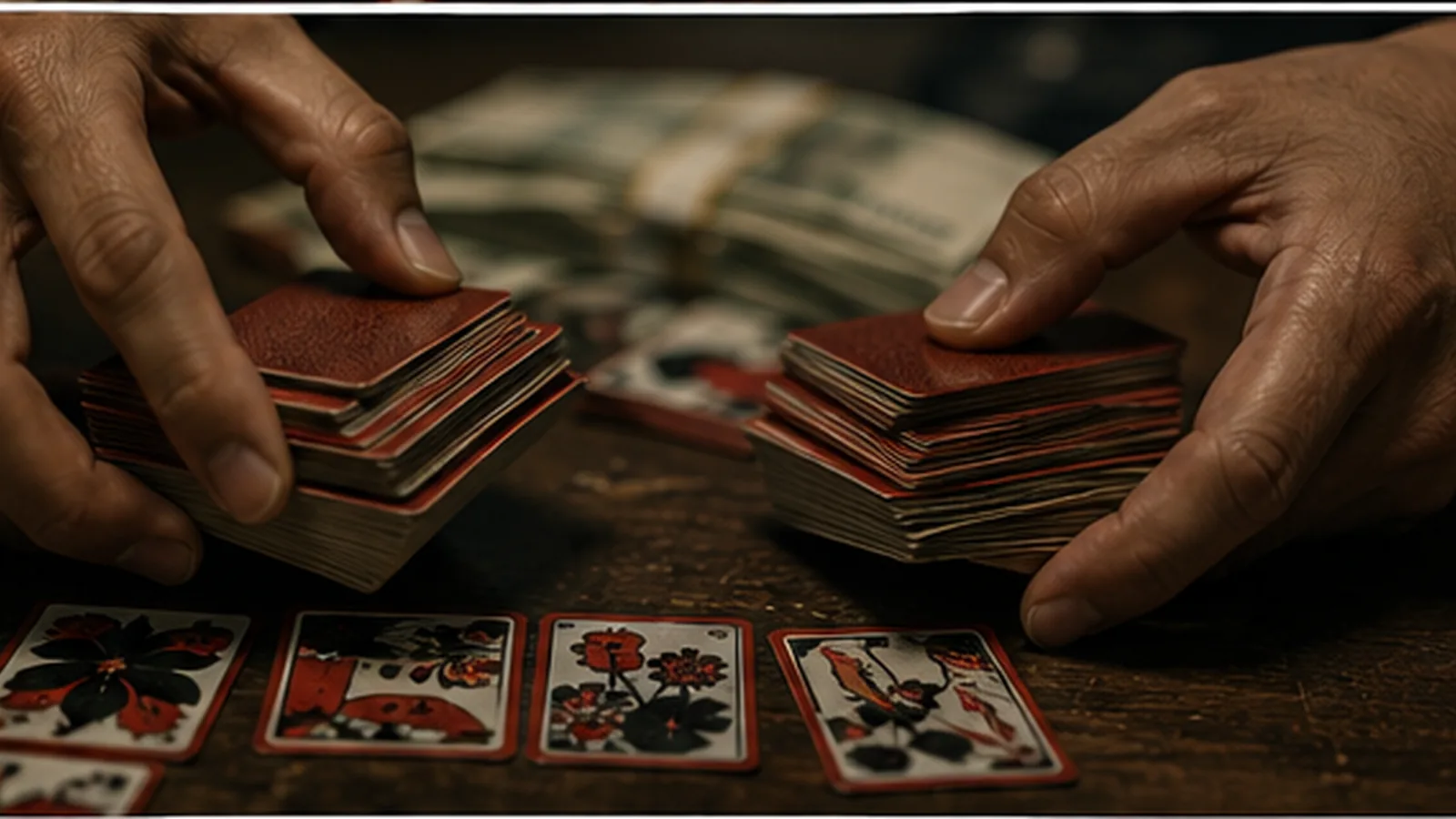
The hands are fast, and the words are shorter
Once the hwatu cards come out, the vocabulary gets even stranger.
Giri (기리).
At Kwak Cheol-yong’s table, someone says, “기리하시죠.” It refers to cutting the deck after it has been shuffled. The expression has long been used around Korean hwatu tables.
Tan (탄).
Tan does not mean a good hand. It means a pack of hwatu cards whose order has been arranged in advance so that a desired result will appear. It is used with the same meaning in real cases of cheating at gambling and in advisory materials for 《타짜》.
And then there is that line from Agui.
“동작 그만, 밑장 빼기냐?”
Mitjang-ppaegi (밑장빼기) is a technique in which someone pretends to deal the top card while pulling a card from the bottom. Jang Byeong-yoon explained that it was also called mising or mitsik. Along with bottom dealing, he named natjang-chigi (낱장치기) and bakkwo-chigi (바꿔치기) as basic tazza techniques.
In the film, this kind of deception is also broadly called gura (구라). The word on the other side is jayeon-ppang (자연빵): a table played straight without sleight of hand or a prearranged setup. That is also why Goni says he will play jayeon-ppang before his final match with Agui.
What matters is that 《타짜》 does not show this off like a magic show. Being good at one technique is not enough to take the table. When to use the hand, who beside you draws the eyes away, and how to keep a person from becoming suspicious are all part of the table.
You die, call, bury, and burn money
Once the betting starts, ordinary Korean verbs acquire table meanings.
To die (죽다) means to fold and leave the hand.
To receive/call (받다) means to match the bet and stay in.
To burn money (태우다) means to put more money into the pot.
Oring (오링) is the state of having lost all the gambling money you brought with you. The hogu in the film also looks for kkongji money after going oring.
Gaepyeong (개평) is money that a winner peels off and gives in a small amount to people around the table or to someone who lost. Jang Byeong-yoon also said that a real tazza would look at the table and calculate “how much gaepyeong to give.” So when the film says “no gaepyeong,” it means there is not even a share to peel off from today’s winnings.
Patu (파투) means a hand or round ends without a normal result or is voided.
And that is where Kwak Cheol-yong delivers the line:
“묻고 더블로 가!”
Here mutda (묻다) does not mean “to ask.” It means leaving the money from the previous hand on the table instead of taking it back. Add the next stake on top and the pot gets bigger.
In dry language, it means:
Leave that money there. Next round, double it.
But when Kim Eung-soo says it, somehow it sounds less like economic terminology and more like a threat.
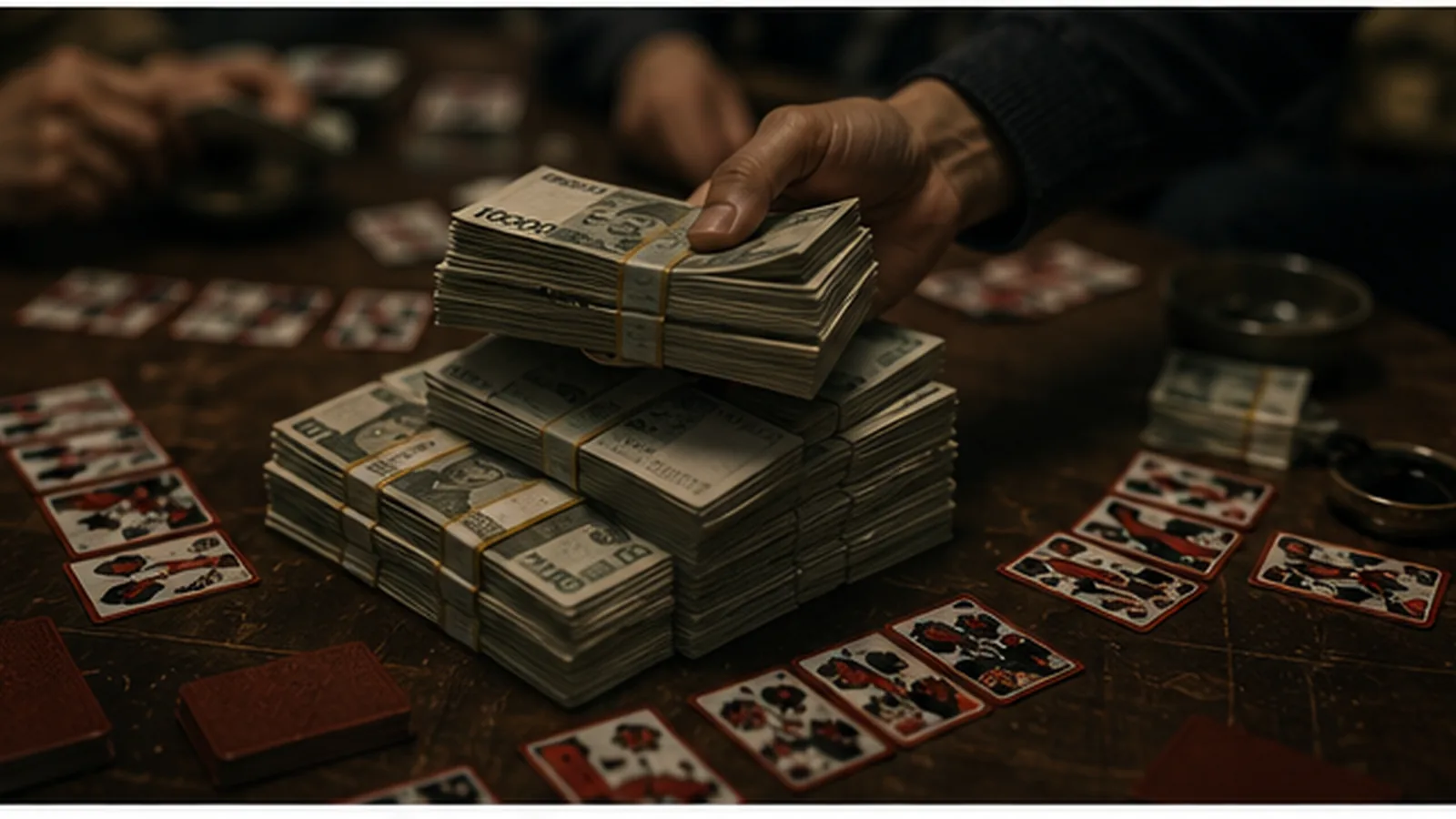
Even negotiations get table slang
When Kwak negotiates with Goni, he says:
“이 경운 원래 쇼당이 안 붙지.”
Syodang (쇼당) is a word used at a hwatu table in situations where players negotiate with the other side about how to settle the table. In the film, that same word is carried straight into a deal and negotiation between people. The nuance is: “With the terms you have offered, the negotiation itself does not even come together.”
And 《타짜》 is not made only of gambling vocabulary.
The dalgeoni (달건이) Kwak Cheol-yong talks about is backslang formed by reversing geondal, a backstreet word for a gangster, while mudepo (무데뽀), which Ko Gwang-ryeol uses to describe Goni, is old slang for the tendency to push ahead without weighing what comes before or after.
That is why the film’s language is not just one kind of language.
Hwatu-table terminology, slang from organized cheating groups, gangster speech, Busan and Jeolla ways of speaking, and everyday slang of the period are all mixed together. That is one reason the dialogue in 《타짜》 has that strangely “bitter” taste.
“I’m an Ewha woman” is not gambling slang
And then comes Madam Jeong’s famous line.
“나 이대 나온 여자야.”
It is neither slang nor gambling terminology.
Yet there is hardly a line that explains Madam Jeong faster. Even while standing in the middle of an illegal gambling table, she does not let go of the sense of class and pride she carries inside. Even as she is being taken away by the police, the first shield she reaches for is her educational pedigree.
That is why the good lines in 《타짜》 are not good merely because the terms themselves sound cool.
What is precise is why each person uses those words.
Kwak Cheol-yong makes even talk about money sound like a threat, Ko Gwang-ryeol tosses table slang around like jokes, and Madam Jeong builds her world with a single line about her educational pedigree. The moment Agui names one technique, he makes you worry first about people’s wrists.
The film never stops to say, “This word means…”
It simply calls a hogu a hogu and an apjeon an apjeon; when the table breaks down, it calls it patu; money is left in, more is added, and the people who are going to “die” simply die.
That is why it is fun even when you watch without knowing the meanings, and when you watch again after learning them, you hear another layer in the dialogue.
And the person who wraps up all those words most briefly is, of course, Kwak Cheol-yong.
묻고 더블로 가.
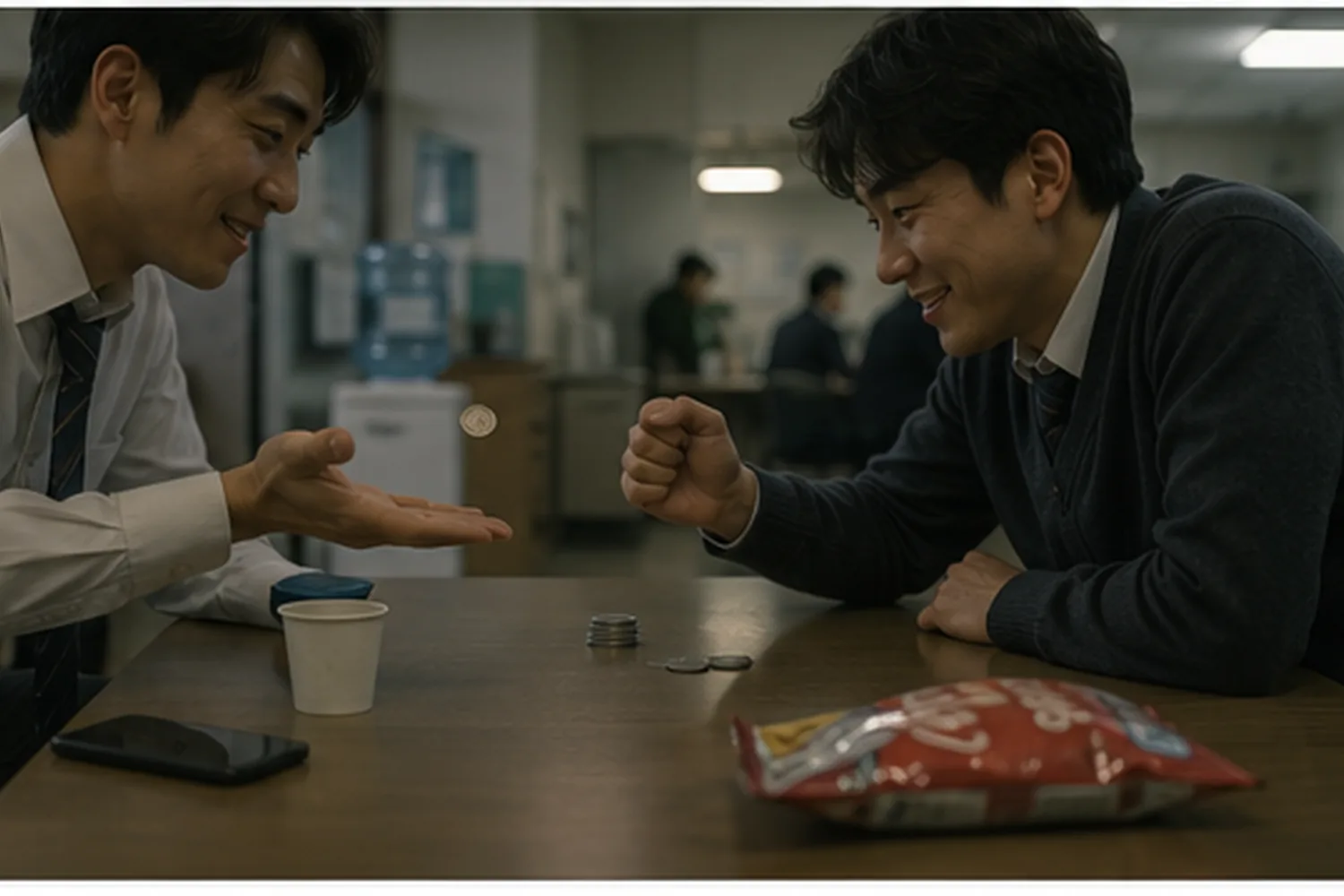
Today’s Korean Expression
Expression: 묻고 더블로 가
Romanization: mutgo deobeullo ga
Meaning: Leave the money already staked in place and continue the next round with a larger bet.
Current use: Much more widely than its literal gambling meaning, it is used as a joke or meme meaning “bet even more heavily on a choice already made” or “go one step harder.”
Note: The original context is the gambling table. In everyday life it is mainly used as exaggerated humor or a meme.
Sources
- Korean Film Council / KoBiz — Tazza: The High Rollers — official English title and basic information about the film / accessed 2026-08-15
- 오마이뉴스 — “영화 <타짜>의 90%는 실제 도박세계” — interview with film adviser Jang Byeong-yoon; explanations of tazza, hogu, kkongji, house-jang, seolgyesa, gongsa, gaepyeong, bottom dealing, and switching / 2006-09-27 / accessed 2026-08-15
- 필름메이커스 — 영화 《타짜》 시나리오 자료 — HWP screenplay resource / 2018-03-01 / accessed 2026-08-15
- 영화와 세상이야기 — 영화 《타짜》 시나리오 전재본 — confirmation of actual screenplay uses including apjeon, gongsa, kkongji money, house, and pantaegi / 2018-05-05 / accessed 2026-08-15
- 울산제일일보 — 당선은 기리(切)를 잘해야? — example of giri meaning the act of cutting the hwatu deck / 2013-03-04 / accessed 2026-08-15
- 중부매일 — 화투와 고스톱 — example of syodang usage in Go-Stop / 2003-10-07 / accessed 2026-08-15