
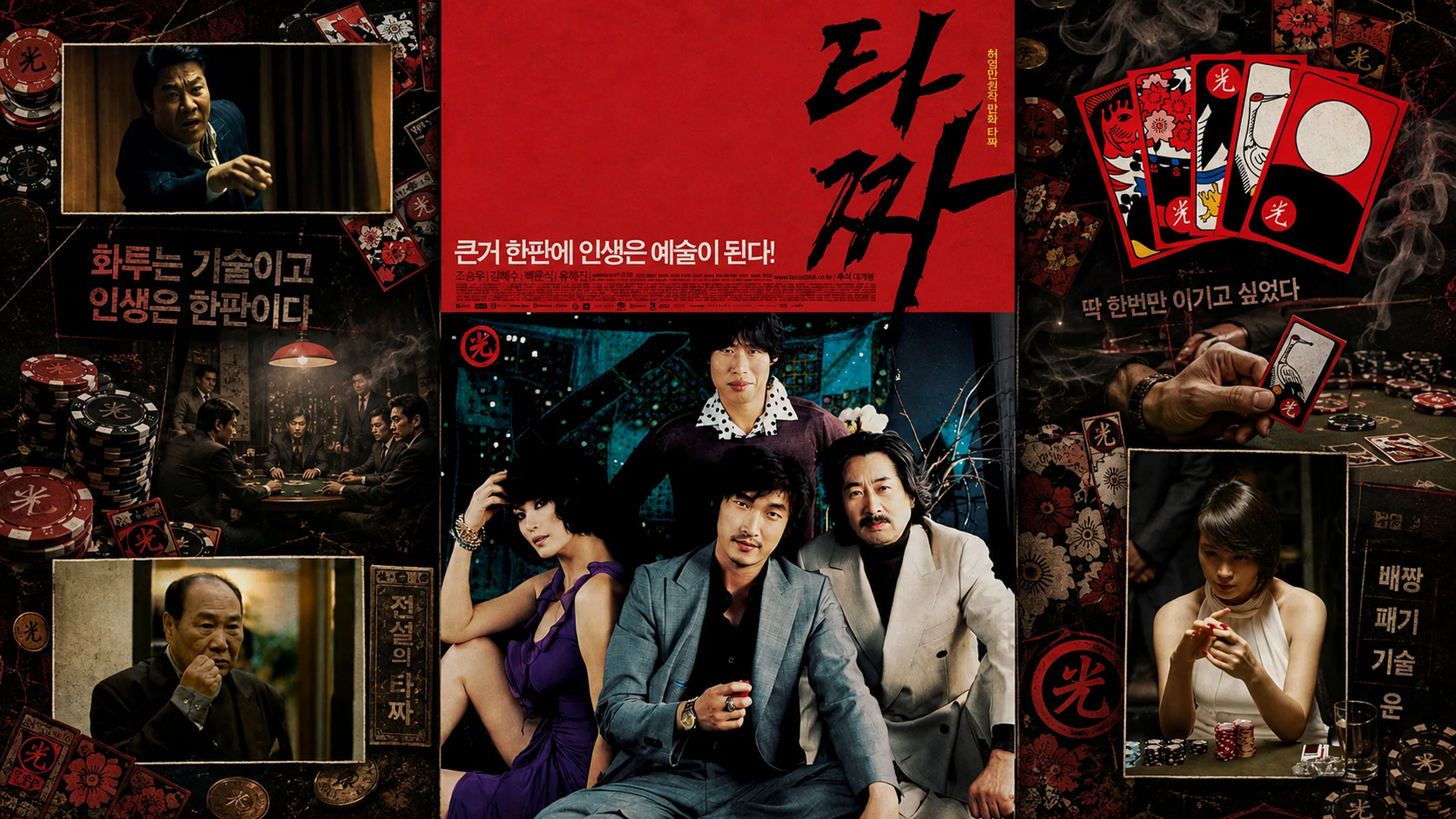
Goni did not lose his money simply because he was bad at hwatu.
It was not just bad luck either.
Goni was the only real customer at that table.
Early in Tazza, Goni sits down with several people to gamble with Korean hwatu cards. One person wins, another loses. From the outside, it looks like an ordinary gambling game. Goni believes he is playing the same game as everyone else.
Then he learns the truth.
Everyone except Goni was on the same side.
That scene is the best doorway into the world of Tazza. The film is not only about card tricks. It shows a specifically Korean underground gambling culture: the private gambling “house,” the moving game, and a room where trusting the wrong person may be more dangerous than holding a bad hand.
Korea had casinos, but they were not casinos for ordinary Korean gamblers
The film moved the original comic’s setting into 1990s Korea.
Casinos already existed in Korea, but they were not places where Korean citizens could simply walk in and gamble legally. Historical Tourism Promotion Act regulations in the 1990s already contained sanctions for casinos that admitted Korean nationals.
And Goni is not playing baccarat or blackjack anyway.
He is playing hwatu.
The professional Korean hwatu gambling world shown in Tazza did not live at a glittering hotel casino table.
Yet hwatu itself was not an underground object.
Quite the opposite.
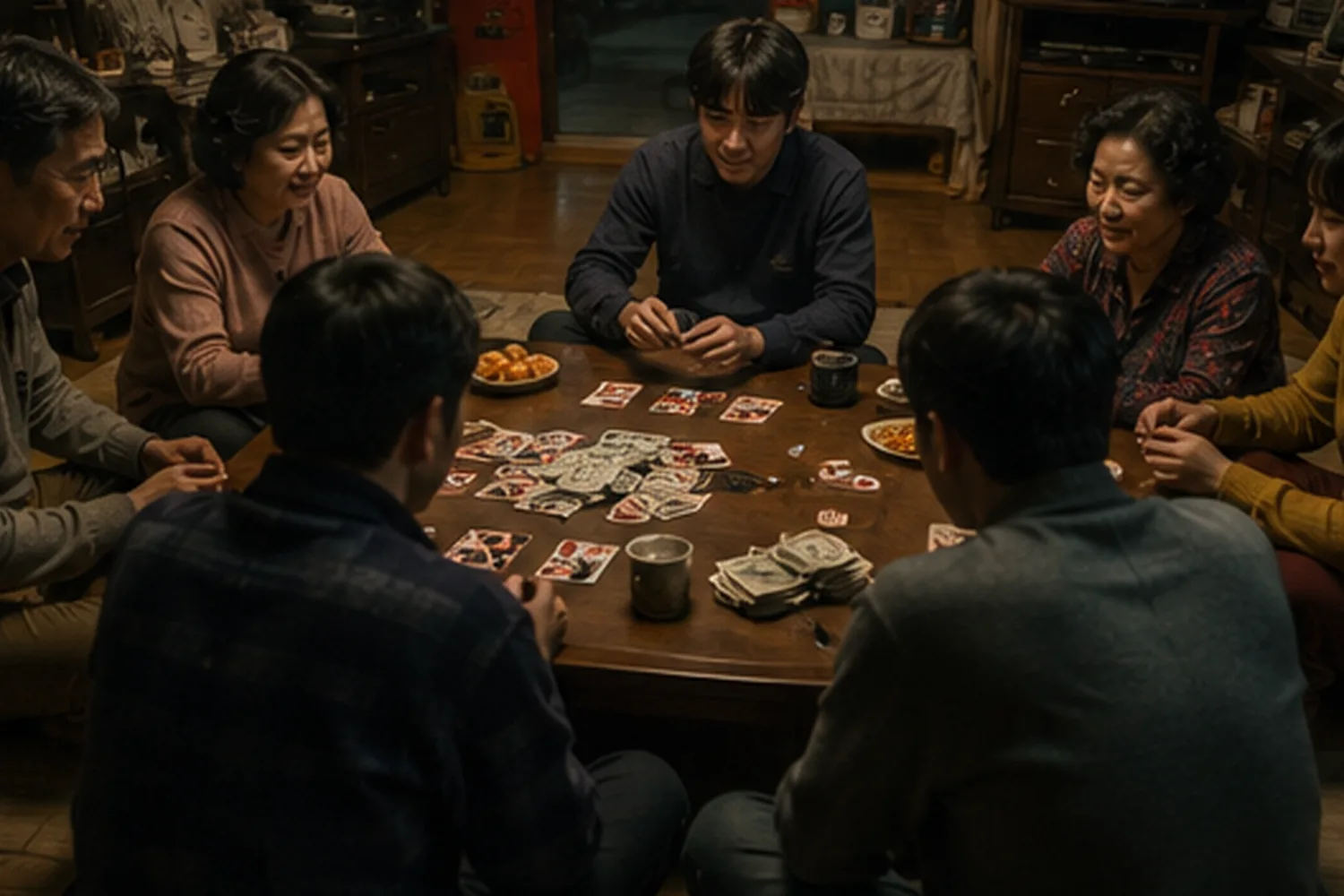
Hwatu was close to everyday Korean life
Hwatu is a set of 48 small cards.
The National Folk Museum of Korea’s encyclopedia describes hwatu as an entertainment tool commonly used during holidays such as Seollal and Chuseok and even at funeral houses.
Families played it when relatives gathered.
Friends or neighborhood acquaintances might play go-stop for small stakes over drinks.
One person lost a few thousand won; another won enough to pay for food.
That kind of hwatu belonged to everyday leisure.
The cards in Tazza are the same kind of cards.
What changes is the scale of money and the purpose of the people around the table.
The 48 cards that were just a game when laid on a living-room floor,
become a pan where someone’s entire fortune can change hands when professional gamblers gather.
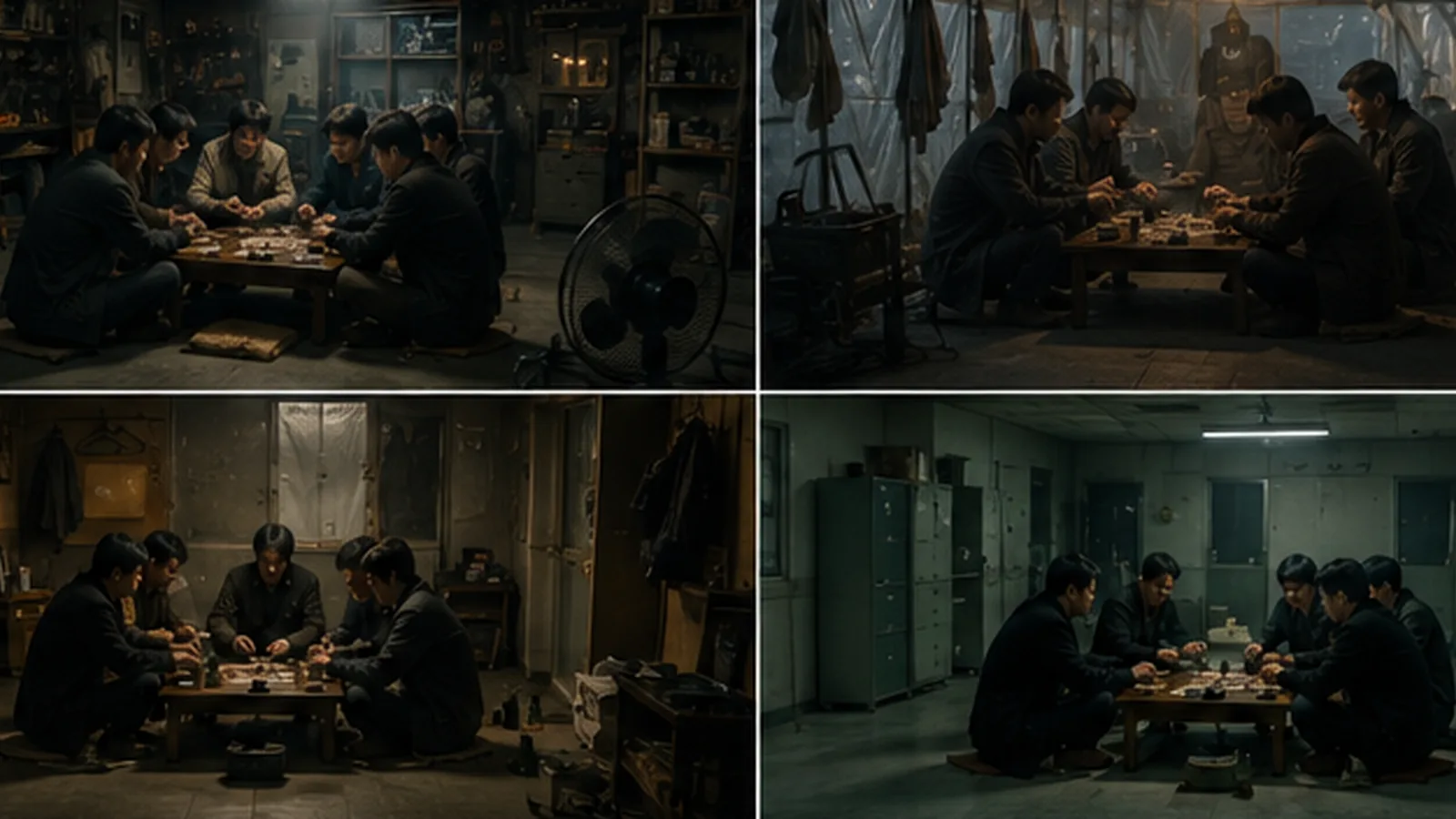
Professional gamblers had the “house”
High-stakes professional gambling games moved into private spaces.
These places were commonly called a house.
But imagining a house as a Korean version of a fixed casino building misses the point.
There was no required look.
It could be a back room in an auto repair shop.
A remote vinyl greenhouse.
A cheap motel room or a tiny rented room.
A restaurant back room, an empty house, an office, a pension, even a spot in the mountains.
Later real-world illegal-gambling cases repeatedly show hwatu games moving between empty houses and vinyl greenhouses, or being held while moving among several mountain locations.
So a house was less a building at a specific address than
a term for the private space where the pan was being run.
If the game opens behind an auto shop tonight, that is tonight’s house.
If the table moves to a greenhouse tomorrow, the house moves with it.
A casino is a place first; gamblers go to it.
In this world, the logic can run the other way:
people follow the pan wherever it opens.
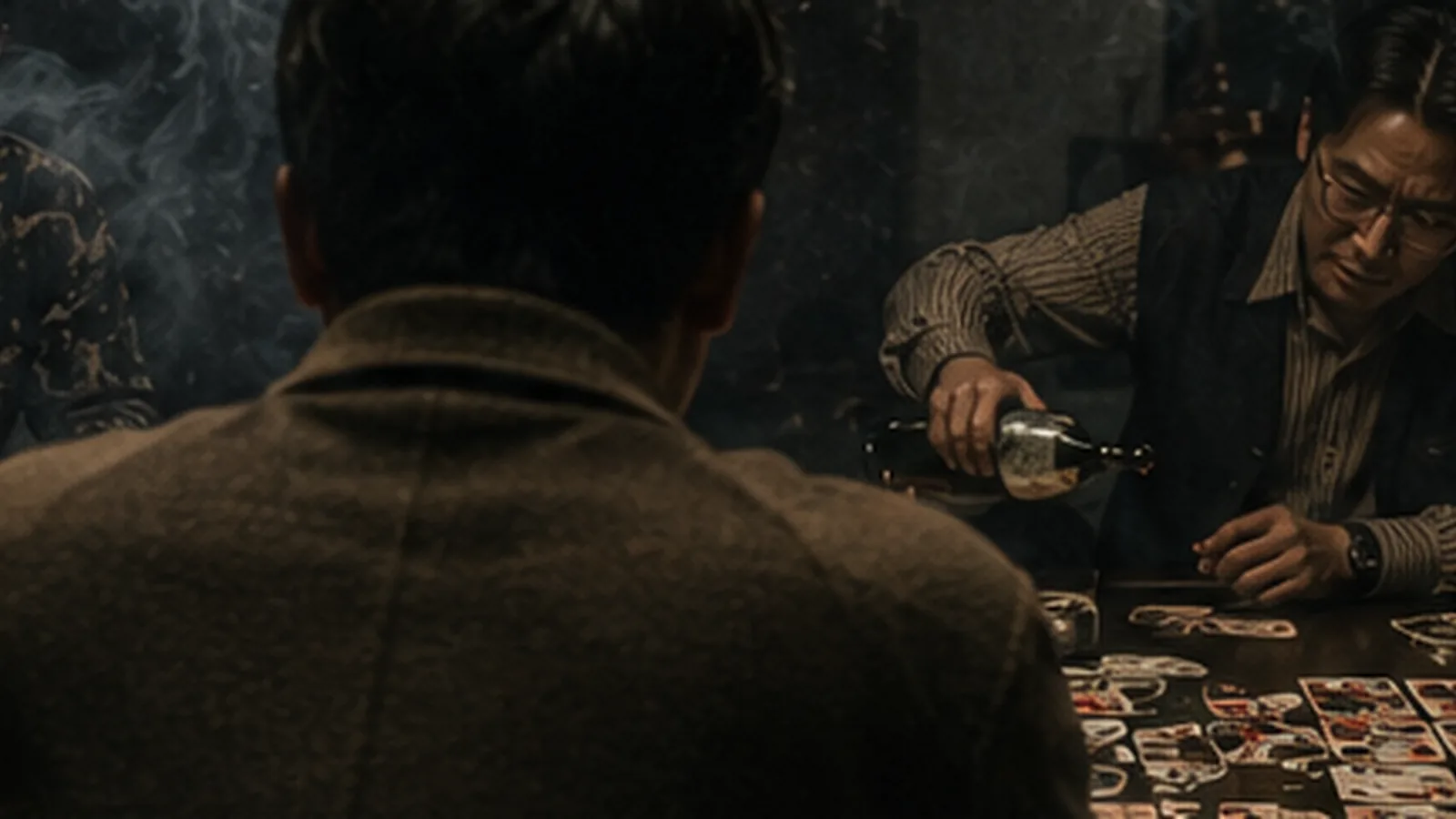
Inside the house, everyone looks like a customer
This is where Tazza becomes tense.
Several people sit around the room.
One keeps losing money.
One drinks and talks loudly.
Someone says it is their first time there.
Someone else acts friendly toward you.
They all appear to be unrelated gamblers.
A newcomer naturally assumes:
“They came here to gamble just like I did.”
But what if that assumption is wrong?
What if the person losing next to you is there partly to make the game look normal?
What if the acquaintance who brought you already knows the other side?
What if the person who is happiest when I win money is actually trying to make me raise the stakes?
That is what makes the house dangerous.
A person’s visible role and actual role do not have to be the same.
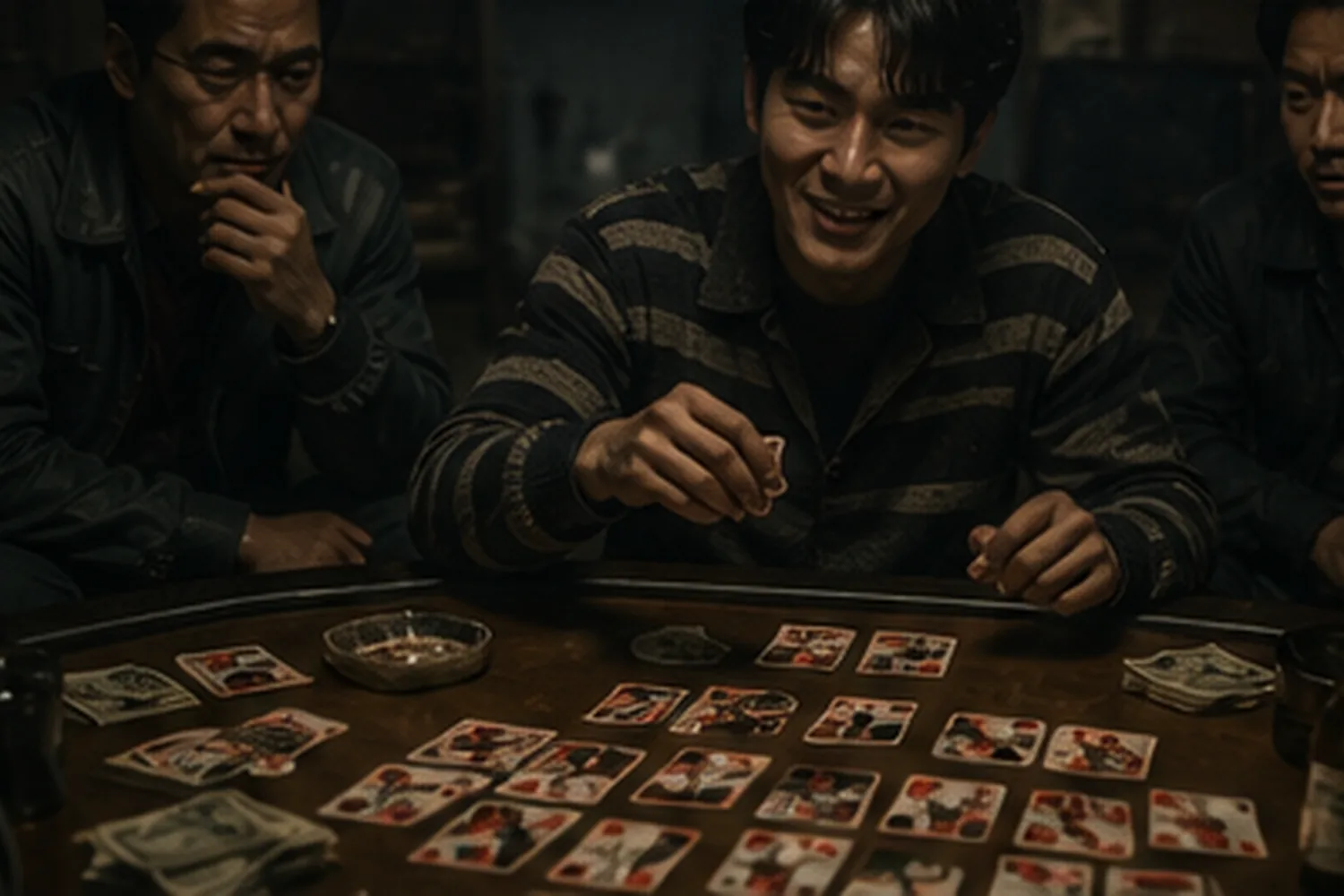
That is exactly what happens to Goni
Goni thinks he is competing against several individual gamblers.
A good hand wins.
A bad hand loses.
Someone else appears to be losing too, so he assumes the game itself is legitimate.
But the important thing at that table is not Goni’s cards.
It is the fact that Goni trusts the table.
The Korean Film Archive’s synopsis of Tazza begins with Goni being deceived by professional gamblers at a hwatu game and losing his money.
In other words, he does not simply lose a game.
He thinks everyone is participating in a fair contest.
The others had not been playing the same game from the beginning.
Goni is gambling.
The others were working on Goni.
A good rigged game should not look rigged
Imagine losing heavily three hands in a row the moment you sit down.
Most people would become suspicious.
“Is this fixed?”
Then they leave.
The operation ends.
That is why organized gambling fraud is not only about secretly delivering a winning hand to one player.
First, the victim has to go through a process that makes them believe it is a normal game.
The target may be allowed to win.
Another person may lose even more.
Someone gets angry.
Someone makes a mistake.
Someone says they are about to quit.
All of that can make the table feel more authentic.
Later real-world Korean fraud cases have shown teams dividing roles among people who bring in the target, gambling technicians, mood-setters or shills, and people who provide money.
It shows why the structure in Tazza is not pure fantasy.
In a well-built rigged game, the first thing manipulated may not be the cards.
It may be the victim’s trust.
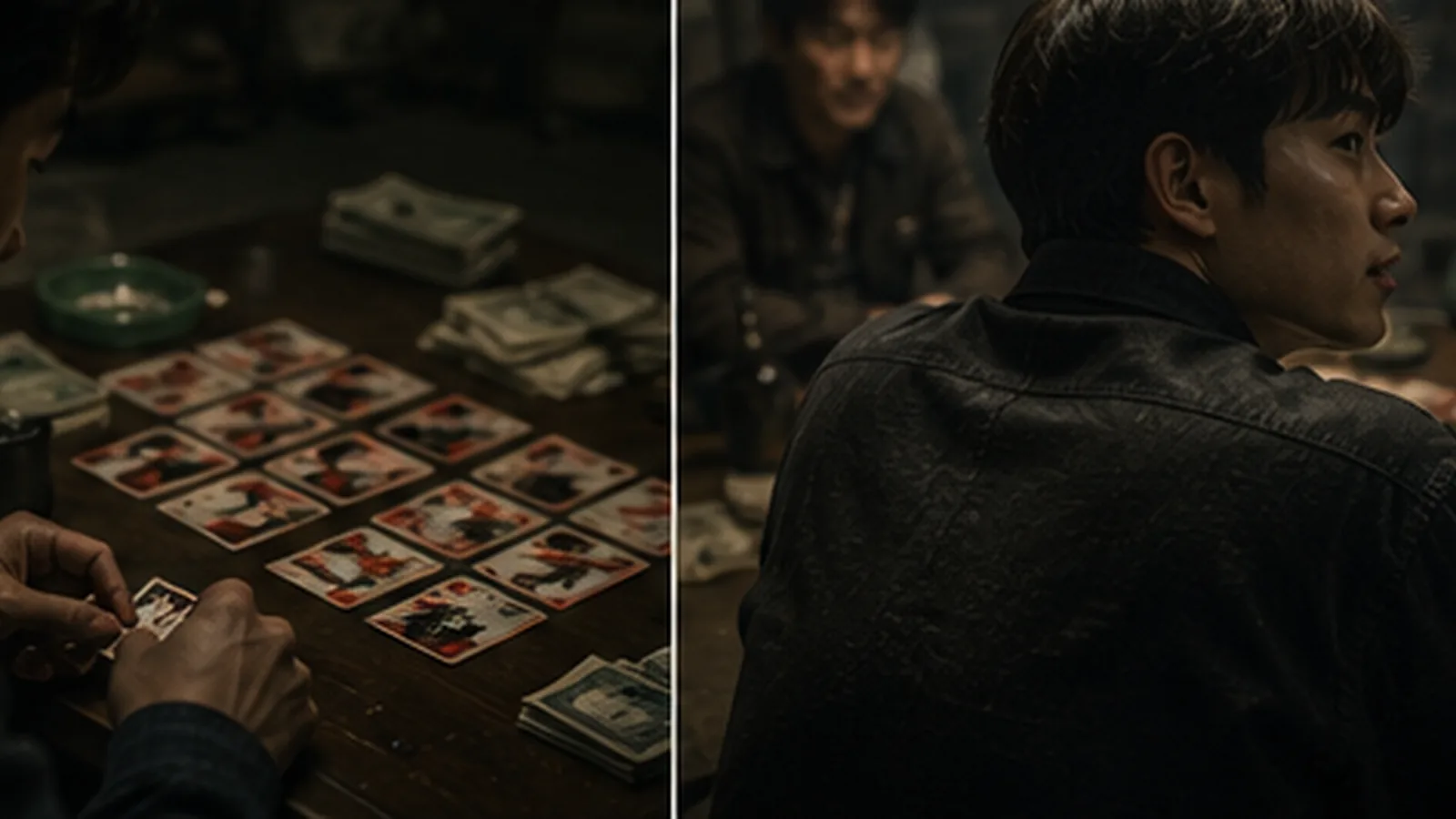
Nobody can be completely trusted
That is why people are harder to read than cards in Tazza.
Even if the person who brought me here is an older friend I have known for years,
I still cannot know whether he is really on my side.
The person losing more money than you may look like a fellow victim.
That does not prove anything either.
Someone lends you money when you run out.
It looks generous.
But that generosity may help put more money back on the table.
The friendliest person is not automatically the safest.
The angriest person is not automatically the biggest loser.
There are no name tags in a house.
Who is a customer,
who is a professional gambler,
who is on whose side,
cannot be seen from the outside.
At least a hwatu card reveals its face when you turn it over.
You cannot simply turn a person over.
A tazza cannot read only the cards
When people first watch the film, their eyes naturally go to the hands.
The shuffle.
The fast fingers.
The hidden move.
The technique.
That is an important pleasure of Tazza.
But when you look at the whole gambling pan, technique alone cannot explain everything.
Who brought this person?
Why this location tonight?
Why did the stakes suddenly rise?
Why does that man keep losing but never leave?
Why does someone appear with a loan exactly when the money runs out?
Why does everyone act as if they have just met?
Early Goni looks at the cards in front of him.
Is this a good hand?
A bad one?
Can I win this round?
As he goes deeper into the world of professional gambling, there is more to read:
faces.
desire.
relationships.
the flow of money.
and finally the entire pan.
A house is not a building
The easiest way to understand the house in Tazza is this:
where the pan is, there is the house.
Tonight it may be an auto shop.
Tomorrow a vinyl greenhouse.
Next time a motel room or an empty office.
In a space that was ordinary until yesterday,
people gather tonight,
money piles up,
hwatu cards begin to circulate,
and the place becomes a different space.
When the pan ends, it returns to being an ordinary room.
A house does not need a glittering sign,
a casino lobby,
or permanent gaming tables.
It needs people, money, and a pan.
That is why it is hard to recognize from outside.
And sometimes even harder from inside.
Because you still do not know whom to trust.
Same hwatu, completely different pan
That contrast is what makes Tazza culturally interesting.
The hwatu played with relatives in a living room during a Korean holiday,
and the hwatu circulating in a Tazza house,
use the same 48 cards.
The tool is the same.
The pan is not.
In a family living room it can be leisure.
Among friends with tiny stakes, it can be a casual bet.
When professional gamblers gather serious money and people and arrange a pan,
the same hwatu can become a tool that shakes someone’s entire life.
So when trying to understand the Korean background of Tazza,
if you see hwatu only as a symbol of gambling, you miss half the picture.
Hwatu was close to everyday life.
The danger was not the cards themselves. It was the kind of pan those cards had entered.
Goni did not lose only money
At first, Goni watches only his own hand.
Good cards mean a chance to win.
Bad cards mean a loss.
But he did not see what kind of place he was sitting in,
who was connected to whom,
or why he had been brought into that seat.
So the process of Goni becoming a tazza
cannot be understood simply as a process of making his hands faster.
It is the transformation of someone who watched only the cards into someone who begins to read the pan.
Rewatch the opening of Tazza with that in mind.
It is not merely a scene where Goni loses money.
It is a scene in which one person believes he is playing a normal game,
while the entire network of relationships around him is moving in another direction.
So the moment he enters a house,
the first thing he should doubt is not the hwatu cards.
It is the people sitting across from you.
Sources
- Korean Film Archive KMDb — Tazza — film information and the basic setup in which Goni is deceived by professional gamblers and loses money
- Cine21 — Choi Dong-hoon’s Tazza — context for the film moving the original work’s 1950s–60s setting to the 1990s
- Korea Law Information Center — Tourism Promotion Act Enforcement Decree history — 1990s sanction rules concerning Korean nationals entering casino premises
- National Folk Museum of Korea Encyclopedia — Hwatutaryeong — the composition of hwatu and its use in everyday culture such as holidays and funeral houses
- YTN — Illegal hwatu gambling moving among mountain locations — an example of an illegal hwatu gambling operation that moved from place to place
- Kookje Shinmun — Gambling in empty houses and vinyl greenhouses — an example of hwatu gambling held in empty houses and vinyl greenhouses
- Kyunghyang Shinmun — Organized gambling fraud compared with Tazza — an organized gambling-fraud case with divided roles such as recruiters, gambling technicians, shills, and funding providers