
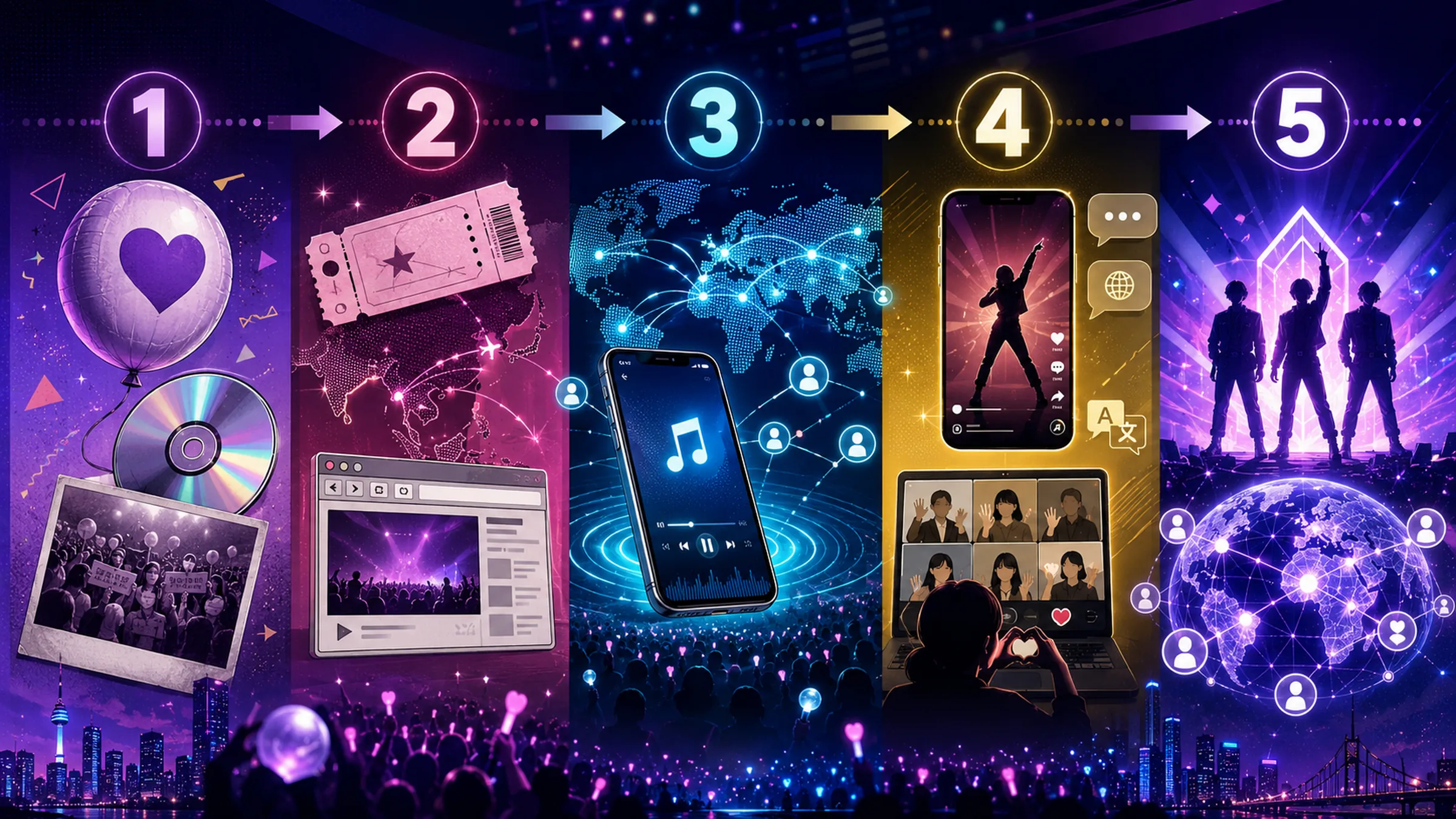
When you follow K-pop, strange numbers keep appearing everywhere.
First-generation idols. Second-generation legends. Third-generation girl groups. Fourth-generation boy groups. Fifth-generation rookies.
For someone seeing this for the first time, the obvious question is natural.
So exactly which years belong to which generation?
First, one important point.
There is no official rule.
There is no K-pop Generation Committee somewhere declaring, “The fourth generation starts on January 1, 2018.”
The industry, broadcasters, media and fans gradually start using a new generation label when new groups and the market feel different from what came before. That is why groups near the border can be placed in different generations depending on who you ask.
Treat the years here as rough guideposts, not exam answers.
First generation — the generation that created the “idol” scene in Korea
Roughly from the mid-to-late 1990s to the early 2000s.
Groups commonly associated with this era include H.O.T., Sechs Kies, S.E.S., Fin.K.L, Shinhwa and g.o.d.
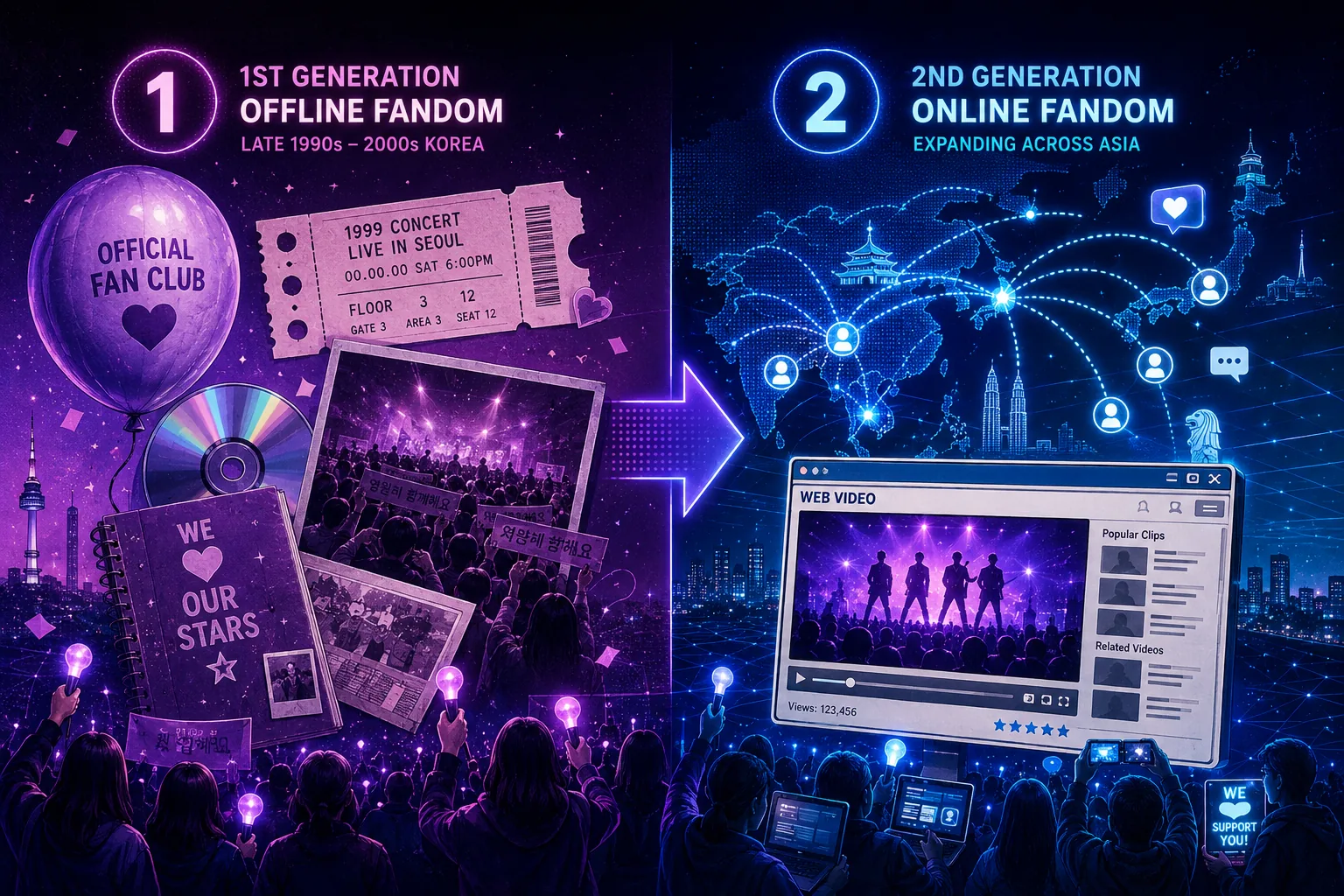
Agencies assembled members into teams and designed not only music but choreography, image and character. Fan clubs gained names and colors, and fans supported artists with colored balloons.
The basic formula of “idol group + organized fandom” took shape here.
And there were fandom fights too. That tradition goes back a long way.
Fans fought when official support colors overlapped, rival-group fandoms traded barbs, and they competed over music shows and award ceremonies.
The internet and smartphones were nothing like they are today, but being a fan was already being a fan.
Second generation — K-pop moves seriously beyond Korea
Roughly the mid-2000s to the early 2010s.
Typical examples include TVXQ!, SUPER JUNIOR, BIGBANG, Girls’ Generation, Wonder Girls, KARA, SHINee and 2NE1.
One important change in the second generation was that overseas activities became much bigger.
Korean idols began working in earnest especially in Asian markets such as Japan and China.
YouTube also appeared in this period. Before, if you wanted to watch Korean broadcasts, you had to find videos someone had recorded and uploaded; now people abroad could watch Korean music videos directly.
K-pop’s stage began expanding from Korean television to the wider internet.
Third generation — K-pop becomes truly global
Roughly around 2012 through the late 2010s.
EXO, BTS, Red Velvet, MAMAMOO, SEVENTEEN, TWICE and BLACKPINK are often grouped here.
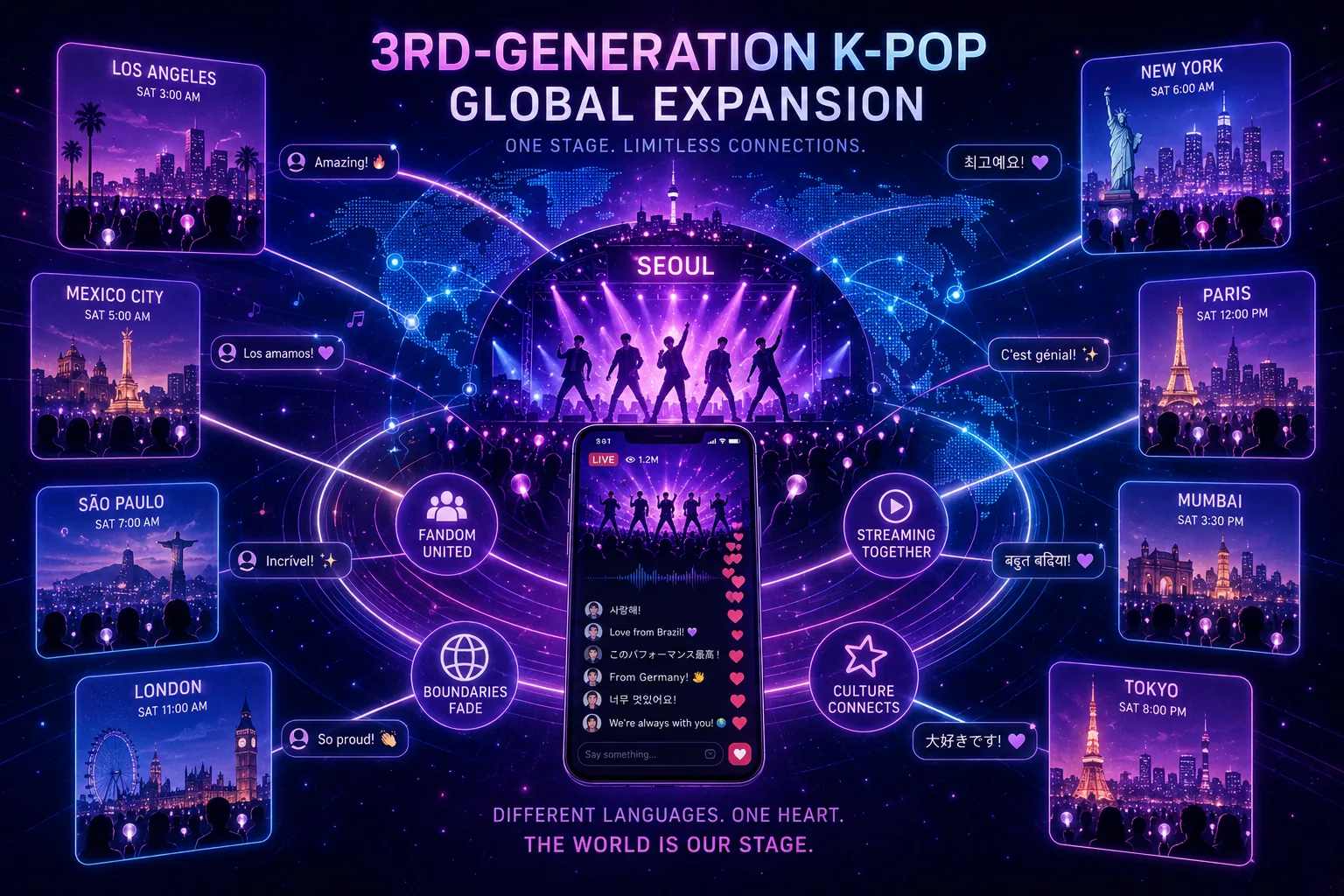
Through the global success of BTS and BLACKPINK in particular, K-pop became difficult to describe as simply Asian music followed by a small international niche.
YouTube, Twitter and streaming platforms became fully integrated into fandom activity, and overseas fans could watch a new music video almost at the same time as Korean fans.
Translation accounts appeared, a single remark from a member could spread around the world immediately on social media, and global fandoms moved together on album sales and streaming.
That is why the third generation is often remembered for K-pop’s full-scale global expansion.
Fourth generation — international fandom is the default from day one
A common rough range is around 2018 to about 2022.
Groups frequently placed here include Stray Kids, (G)I-DLE, ATEEZ, TXT, ITZY, aespa, IVE, NMIXX, LE SSERAFIM and NewJeans.
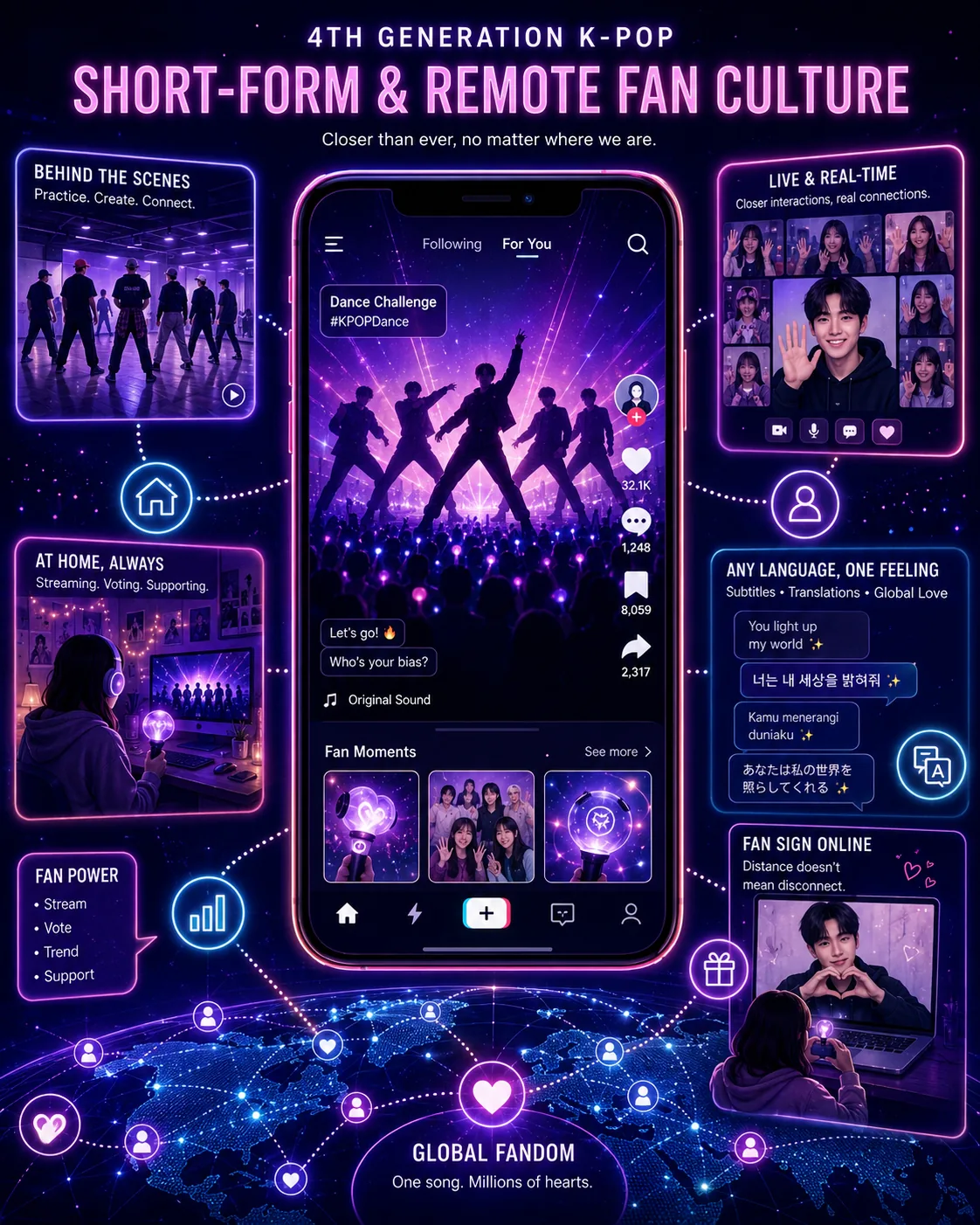
If the third generation opened the global market wide, the fourth generation debuted into a world where targeting international fans from the beginning was already normal.
As soon as a group debuts, subtitles appear in multiple languages, TikTok challenges come out, overseas video-call fan-sign events happen, and people talk about Spotify and YouTube results together.
It is not just about listening to songs; choreography videos, fancams, challenges and short-form clips all move as one activity.
The COVID-19 period also overlapped with the fourth generation. Many teams debuted when meeting audiences in person was difficult, and online content and remote fan activities took on even more weight.
So the fourth generation was not simply “younger idols who came after the third generation.” The way idols were promoted and fans were built changed once again.
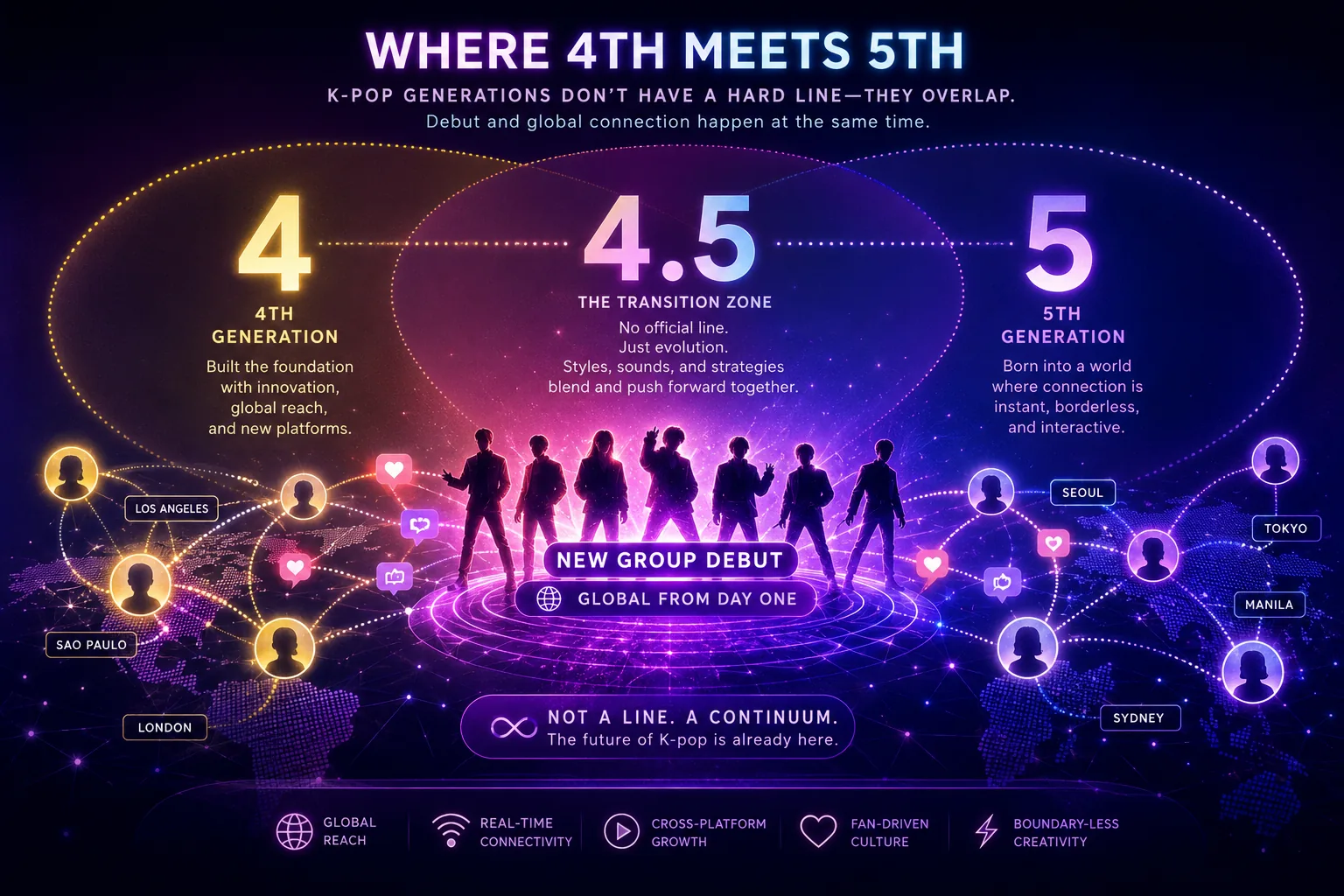
Fifth generation — wait, we are already on five?
The label is often used for rookie groups that debuted from 2023 onward.
Groups frequently described this way include ZEROBASEONE, BOYNEXTDOOR, RIIZE, TWS, NCT WISH and ILLIT.
This is where the problem begins.
“The fourth generation only just started. How are we already at five?”
In 2023, from the outset Mnet promoted ZEROBASEONE, the group that would be formed through BOYS PLANET, with the phrase “fifth-generation K-pop boy group,” and afterward the fifth-generation label quickly began attaching itself to other rookies too.
That is why opinions are especially divided over groups that debuted around 2023.
Some call them fifth generation, some call them generation 4.5, and some simply call them late fourth generation.
It is not that someone is wrong. There was never an official answer in the first place.
So what actually separates the generations?
It is not only debut year.
Which groups are at the center of the market.
How the way fans listen to and consume music has changed.
How large the overseas market has become.
How platforms such as YouTube, social media and TikTok are used.
How the strategies of the companies that create idol groups have changed.
These things move together.
Eventually people begin to feel that a new wave operates differently from the previous one, and a new generation label appears.
At first, people argue. Later, it settles to some extent.
So K-pop generations are closer to names that fans and the industry attach in order to organize the past than to period divisions in a history book.
So which generation is this group?
The safest way to remember it is roughly this:
1st generation — H.O.T., Sechs Kies, S.E.S., Fin.K.L
→ Idol system and organized fandom take shape
2nd generation — TVXQ!, BIGBANG, Girls’ Generation, Wonder Girls, KARA, SHINee, 2NE1
→ Korean Wave across Asia and online spread
3rd generation — EXO, BTS, TWICE, BLACKPINK, SEVENTEEN, Red Velvet
→ K-pop’s full-scale global explosion
4th generation — Stray Kids, (G)I-DLE, TXT, ITZY, aespa, IVE, LE SSERAFIM, NewJeans
→ Global fandom, social media and short-form are built in from the start
5th generation — ZEROBASEONE, BOYNEXTDOOR, RIIZE, TWS, NCT WISH, ILLIT and others
→ The current generation label for new rookie groups that have appeared since 2023
And if someone says, “No, that group is fourth generation”?
That can be true too.
Especially for groups on the boundary between generations, fans continue to disagree.
K-pop does not have an official family registry for generations.
In the end, the numbers are not maps but signposts
The easiest way to remember the first through fifth generations is not to memorize the years by rote.
Look at how K-pop changed.
K-pop built the idol system, moved into Asia, broke through the global market, made social media and global fandom the default, and now new groups are building the next phase.
So terms like third generation, fourth generation and fifth generation are closer to explaining “what kind of K-pop environment did this group debut in?” than “what year was this group born?”
So there is no need to be surprised if you find different generation charts.
Both can be right under their own criteria.
K-pop fans still argue about it.
That is normal.
Today’s Korean expression
Expression: 세대
Romanization: sedae
Meaning: generation
When it is used: In K-pop, it often groups idols who debuted and worked under a broadly similar industry and fandom environment.
Example: “이 그룹은 4세대야, 5세대야?”
Translation: “Is this group fourth-gen or fifth-gen?”
Sources
- Mnet BOYS PLANET / fifth-generation K-pop boy group introduction — official fifth-generation wording for ZEROBASEONE / checked 2026-08-14
- Korea JoongAng Daily — Has K-pop already entered its fifth generation? — non-official nature of generation boundaries and the fifth-generation debate / 2023-07-11 / checked 2026-08-14