
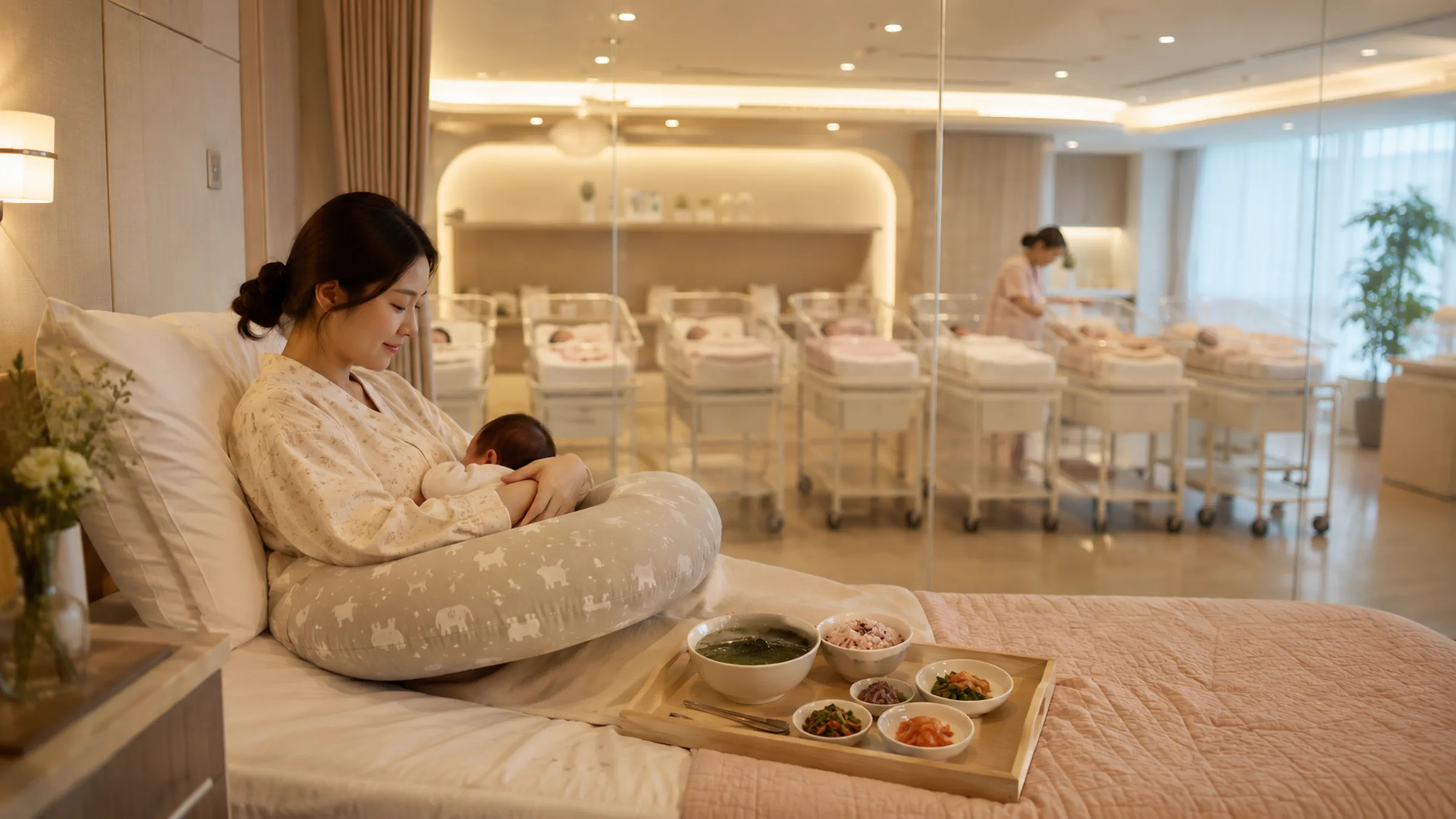
Many couples in Korea do not go straight home after having a baby. After leaving the hospital, the mother and newborn pack up and move somewhere else.
A sanhujoriwon — a postpartum care center. They usually stay for about two weeks. The mother eats, sleeps, receives body care, learns breastfeeding, and recovers from childbirth. The newborn is cared for in a nursery, while first-time parents learn bathing, feeding, diaper changes and basic warning signs.
In a 2024 survey by Korea’s Ministry of Health and Welfare, 85.5% of women who gave birth used a sanhujoriwon, with an average stay of 12.6 days. “Two weeks at the care center” is close to a standard course. Korean husbands also joke that “those two weeks are your last freedom after marriage.”
How did this kind of facility become so deeply embedded in childbirth in Korea?
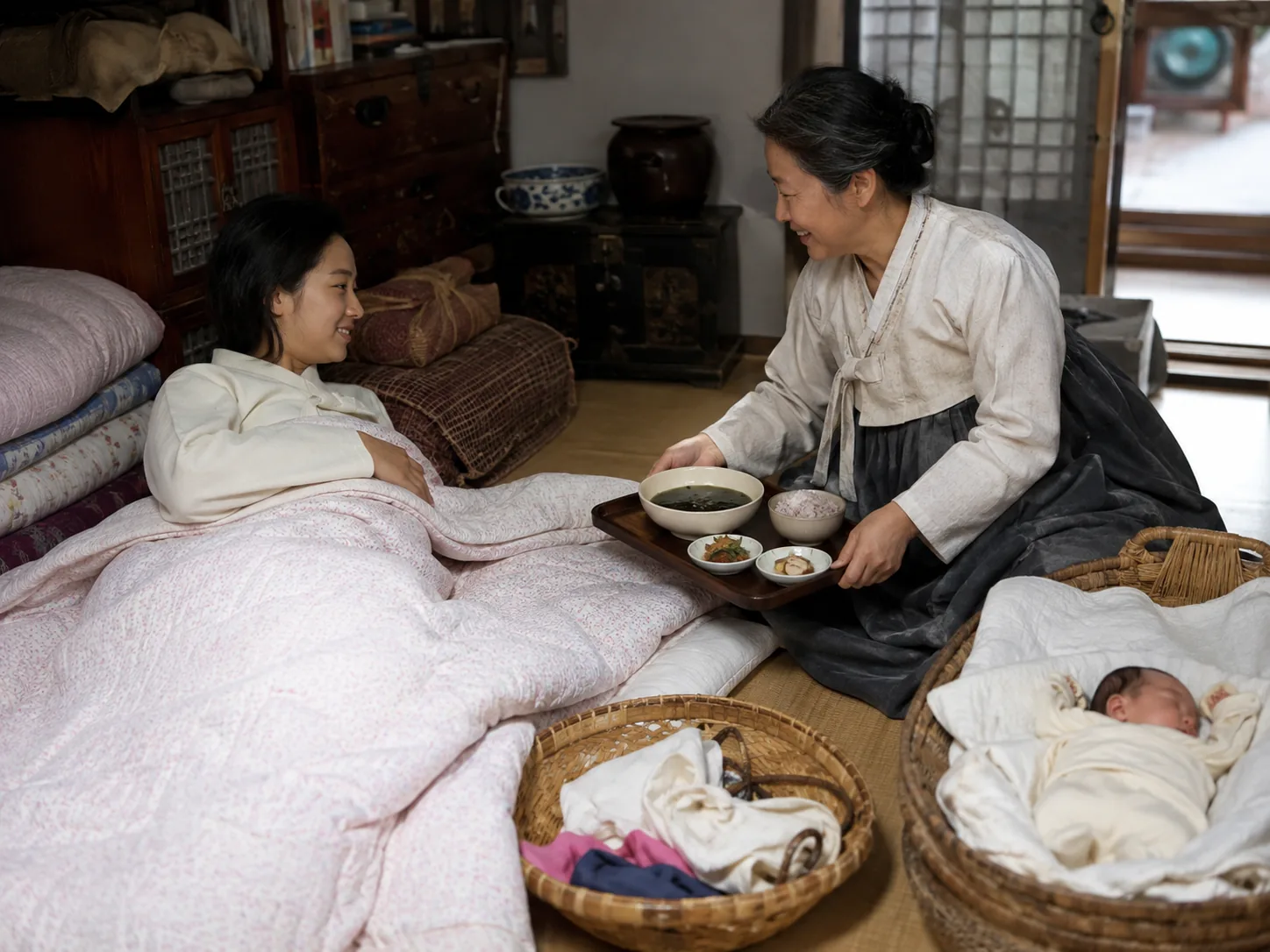
Korea already had a tradition called sanhujori
Giving a new mother a period of rest and care after childbirth was never unique to Korea. China and several other Asian societies have similar traditions. In Korea, the practice has long been called sanhujori, based on the idea that a woman should not immediately return to ordinary life after giving birth but should have time to recover.
Traditional Korean sanhujori usually took place at home. The mother stayed warm, avoided strenuous work, ate well, stayed away from cold water and drafts, and relied on relatives to handle housework and help with the baby. The almost automatic association between childbirth and miyeok-guk, Korean seaweed soup, is part of the same culture.
These traditional beliefs should not be treated as identical to every recommendation of modern medicine. What matters here is that Koreans have long regarded the period after birth as a protected recovery window. In the past, meals, laundry, cleaning, newborn care and lessons for a first-time mother were provided by family rather than a facility.
One especially familiar figure was the mother’s own mother, who might come over, cook seaweed soup, take over chores and help with the grandchild. In other words, the postpartum care center of the past was not a building. It was Mom.
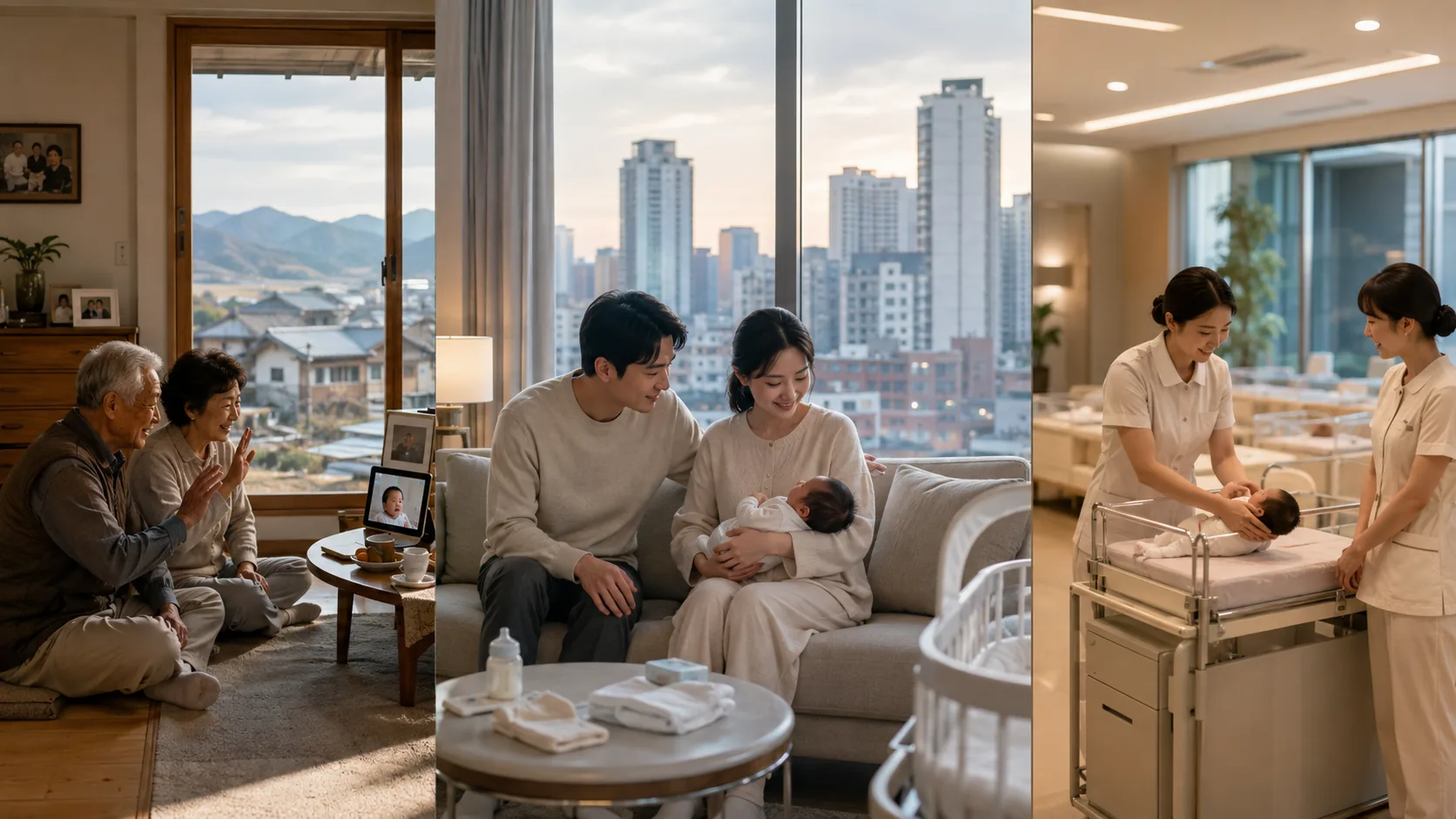
Then Mom disappeared
More precisely, mothers did not disappear; the structure of the family changed. Korea industrialized and urbanized rapidly, nuclear families became common, and young couples increasingly lived in cities away from their parents.
More women also entered the workforce. It became harder for a mother or mother-in-law to move in for several weeks and take over the household after a birth. But the need for postpartum care did not vanish. The person who used to provide it did.
The market quickly noticed the gap. Specialized businesses appeared to do, for a fee, the work families had once done. Commercial sanhujoriwon began appearing in Korea in the mid-1990s, and in roughly three decades became a service used by more than eight in ten women after childbirth.
An entire bundle of family labor had been turned into a commercial product.
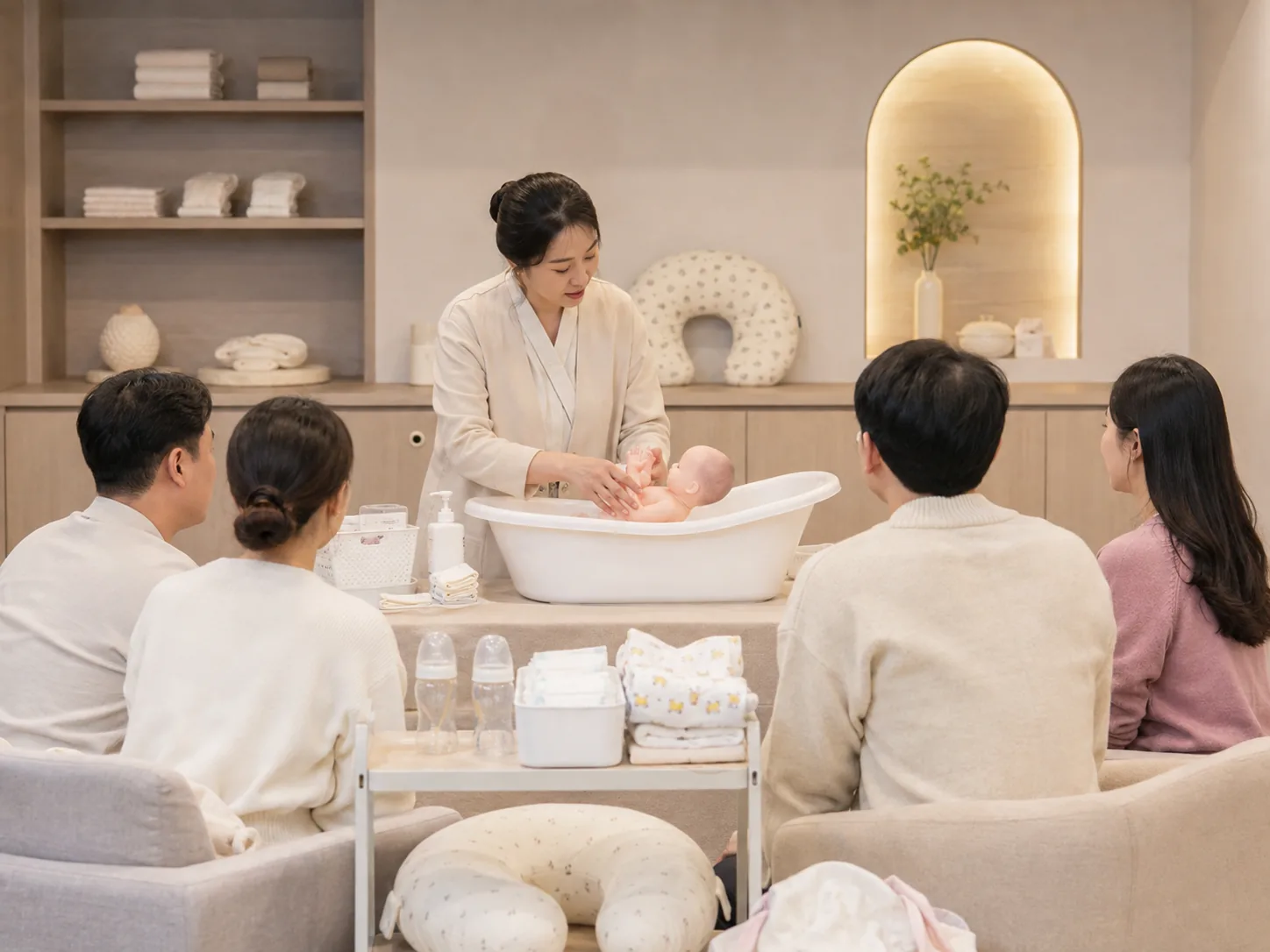
What does a sanhujoriwon actually do?
To someone seeing one for the first time, it is an odd hybrid: not a hospital, not a hotel, and not a parenting school, yet it combines elements of all three. The simplest description is postpartum recovery center + newborn care + first-time parent training + hotel.
Mothers receive three meals and snacks, while cleaning and laundry are handled for them. Depending on the facility, there may be exercise, yoga, massage or breast-care programs. Newborns can stay in a nursery, and parents learn breastfeeding, pumping, diapering, bathing, umbilical-cord care and newborn safety.
So it is not simply a place where someone pays to lie down. It is also a place to spend about two weeks practicing the question, “How are we going to take this baby home and actually live?”
It looks even stranger to mothers from countries without this culture
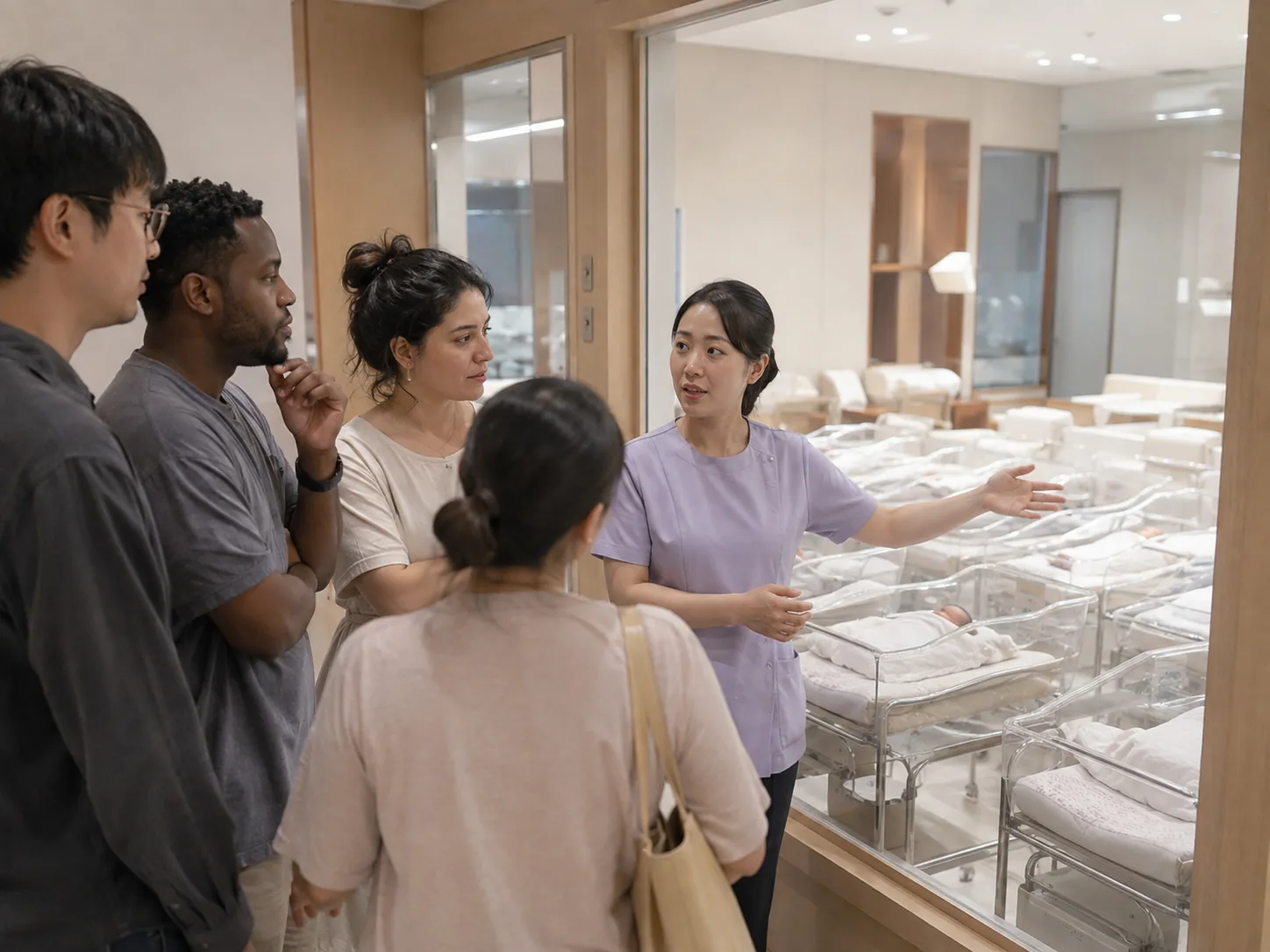
How specifically Korean the system has become is easiest to see through people who give birth in Korea after growing up somewhere where sanhujoriwon are not a normal part of childbirth. As international marriages and the foreign resident population have grown, reviews from foreign-born mothers have become easy to find.
One Japanese mother’s account describes moving from the hospital to a sanhujoriwon and following a routine of three meals and snacks, nursery care, breastfeeding instruction, first-aid classes and yoga. In videos where Canadian visitors see a Korean center, the initial reaction is often “we do not have a system like this,” followed by an understanding of why the facilities feel convenient.
There are also accounts from foreign mothers with experience in the United States who considered using a Korean sanhujoriwon for a later birth because professionals would help both mother and baby for several weeks. Korean media were already reporting cases in the early 2010s involving Chinese mothers, Korean Americans and women of several other nationalities.
Of course, not every foreign parent likes the model. Someone who strongly prefers continuous rooming-in and constant parent–newborn contact may find a nursery-centered system unfamiliar or uncomfortable. Korean parents also differ on this choice. Still, one contrast is striking: the mother is not expected to go straight from childbirth back into housework and round-the-clock newborn care.
Korea turned that roughly two-week gap into an industry of its own.
It is certainly not free
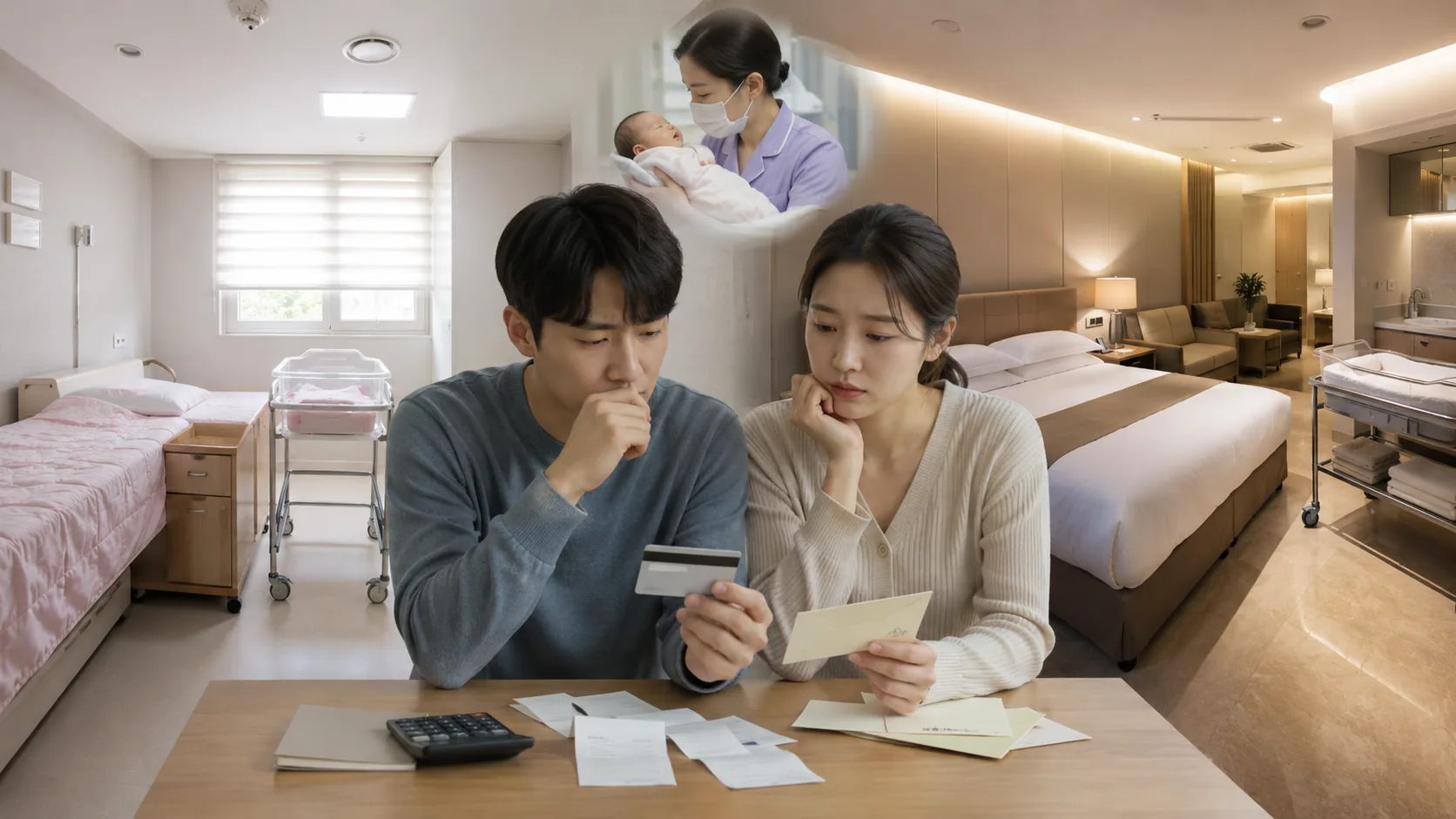
In the 2024 government survey, families spent an average of 2.865 million won on a sanhujoriwon, with an average stay of 12.6 days — roughly 3 million won for about two weeks. Seoul and premium centers can cost far more, and extreme luxury cases reach tens of millions of won, but those top prices are not the national norm.
There is an irony: Korea has fewer births, yet usage has risen — 75.1% in 2018, 81.2% in 2021 and 85.5% in 2024. Not every center thrives; some close and the number of facilities can fall, while popular centers may require bookings early in pregnancy and premium facilities become even more expensive.
The childbirth market has shrunk, while spending per baby can rise at the same time.
The government started paying too
As Korea’s low-birth problem deepened, the central and local governments expanded support for families with newborns. The First Meeting Voucher currently provides 2 million won for the first child and 3 million won for the second or later child, and except for restricted categories it can be used toward sanhujoriwon expenses.
As welfare, it clearly reduces some of the immediate burden after birth. But calling it directly a policy that raises the birth rate is a different claim. People worrying about sanhujoriwon fees are already pregnant and have usually decided to have the baby; support for a two-week stay is unlikely by itself to outweigh housing costs, education costs, career disruption or the time burden of childcare.
In other words, welfare that reduces costs after childbirth should be distinguished from a policy that directly increases fertility. The awkward part is that sanhujoriwon prices also kept rising while public support expanded, prompting the cynical question: “Did the government give money to parents, or to the postpartum care centers?”
It would be wrong to say subsidies alone caused the increases. Labor costs, rent, inflation and premium services all matter. But consumers can still feel that additional support does not reduce their real burden enough.
So why do people complain about the price and still go?
The answer is surprisingly simple: because it is convenient. The mother is recovering, sleep-deprived and often learning breastfeeding for the first time. At a sanhujoriwon, meals arrive on schedule, laundry and cleaning are handled, help is available, and she can learn basic childcare before going home.
In the 2024 survey, 91.2% named the mother’s health recovery as the most important purpose of postpartum care. At its core, the service buys the mother time to recover. And, frankly, it is convenient for the husband too, because the shock of caring for a recovering partner, a newborn, paperwork, meals and the household does not all hit at once.
If the couple brings a newborn straight home, 24-hour parenting starts that day. A sanhujoriwon lets the transition begin more slowly. That is why Korean husbands joke, “Those two weeks are your last freedom.” It does not mean two weeks of partying; compared with the childcare that follows, it is a relatively calm buffer period.
And two weeks later, the door opens
Over roughly two weeks, the mother recovers and learns feeding and newborn care, while the father learns diapering and how to handle a tiny baby. Then discharge day comes and the couple carries the baby home.
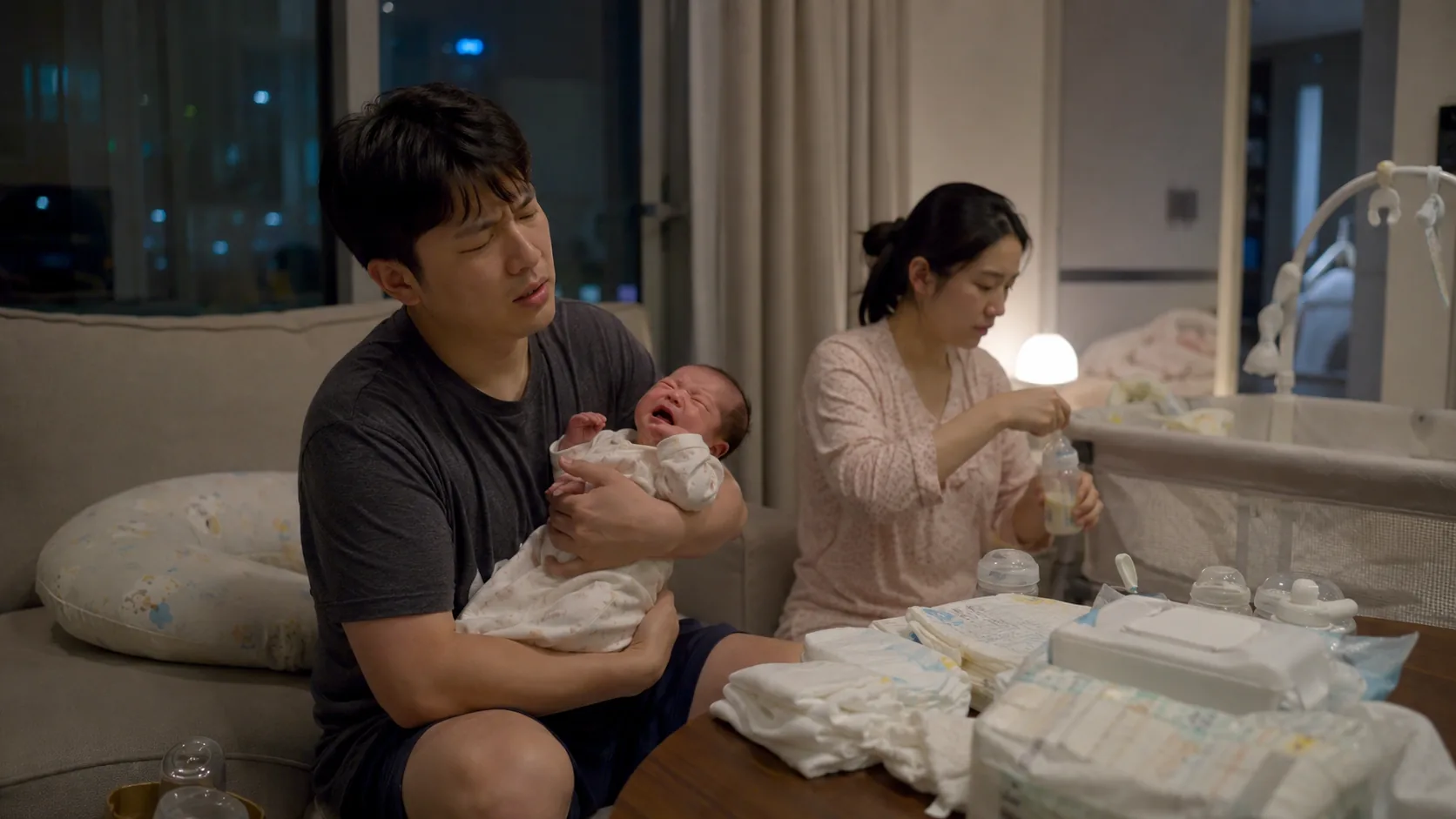
Now there is no one preparing meals, cleaning the room, rushing over when they press a bell, or taking the baby in a nursery for a short while. At 2 a.m. the baby cries, and at 3 a.m. the baby cries again. One parent holds the baby while the other prepares formula or gets ready to feed.
That is when many couples realize it: the sanhujoriwon was not the beginning of parenting. It was the short preparation period before parenting truly began. Two weeks for the mother to recover, two weeks for first-time parents to learn, and for some husbands, perhaps the last two weeks of freedom they will see for quite a while.
Congratulations. Sanhujori is over. Now the real parenting begins.
Today’s Korean expression
Expression: 산후조리
Romanization: sanhujori
Meaning: a period of rest, food, daily-life support and childcare assistance after childbirth so the mother can recover.
Use: Koreans say “산후조리를 하다” (to do postpartum recovery) or “산후조리원에 들어가다” (to enter a postpartum care center).
Example: 출산 후 2주 동안 산후조리원에서 산후조리를 했어요.
Translation: I spent two weeks recovering after childbirth at a sanhujoriwon.
Sources
- Korean Ministry of Health and Welfare, 2024 Postpartum Care Survey — 85.5% usage, 12.6-day average stay, 2.865 million won average cost and stated purposes of postpartum care.
- BMC Pregnancy and Childbirth, Korean postpartum parent-education study — traditional home-based sanhujori, nuclear-family change, emergence of postpartum care centers and parent education.
- Korean Ministry of Health and Welfare, First Meeting Voucher — 2 million won for the first child and 3 million won for the second or later child.
- Japanese–Korean international couple’s sanhujoriwon review — meals, nursery use, breastfeeding and first-aid education, and other daily experiences.
- SBS report on foreign mothers using Korean postpartum care centers — examples involving mothers from China, the United States and other countries.
- Korea Institute of Child Care and Education, market study on postpartum care centers — foreign-user cases and the domestic postpartum-care service market.
- Newsis, national sanhujoriwon price report for late 2025 — average standard and premium-room prices, Seoul and Gangnam costs, and top-end cases.
- Record of foreign visitors experiencing a Korean sanhujoriwon — Canadian visitors reacting that they do not have this system at home and touring the facility.