

Korea has a housing system rarely seen elsewhere in quite the same form. It is called jeonse (전세, 傳貰).
Jeonse is structurally different from an ordinary monthly rental. The tenant does not pay rent to the landlord every month. Instead, at the beginning of the contract, the tenant hands the landlord a very large lump sum called the jeonse deposit.
The size of the deposit varies by home, but it often exceeds half of the property’s value and, depending on market conditions, can approach 80% of the home’s price or even more. If an apartment is worth KRW 300 million and its jeonse deposit is KRW 240 million, the tenant gives the landlord that amount and lives in the home for the contract period.
There is no monthly rent. And when the contract ends and the tenant moves out, the landlord is supposed to return the entire KRW 240 million.
For anyone encountering jeonse for the first time, the obvious reaction is disbelief. If the tenant gives the landlord an amount close to the value of the home and later gets all of it back, what does the landlord gain? And why did such a system develop in Korea?
When did jeonse begin?
The exact origin of jeonse has not been definitively established. One explanation places the emergence of modern jeonse in the period after Korea’s ports opened, when urban populations grew. Other research looks further back to housing practices in the late Joseon period for a prototype.
In late Joseon records, a practice called semae (貰賣) appears. A homeowner received a large lump sum called sejeon (貰錢) from an occupant, transferred the right to use the house, and later recovered the house by returning the money.
Put simply: the house was not sold; the right to use it was transferred in exchange for a lump sum; later, the owner repaid that money and took the house back. It looks remarkably similar to modern jeonse.
The Housing Finance Research Institute of Korea Housing Finance Corporation examined late-Joseon sources including the Diaries of the Royal Secretariat and the diary of No Sang-chu. It found that semae shared debt and financial characteristics with modern jeonse and presented it as a plausible form of proto-jeonse.

The theory that exile helped create jeonse
One intriguing story about the origin of jeonse links it to exile, or gwiyang, a punishment that forced officials to live far from the capital.
A Joseon official could suddenly be exiled from Hanyang to a distant province. His house remained in the capital, but he could no longer use it. Selling it meant having to find another home if he ever returned, while leaving it empty wasted an asset. Collecting rent and managing tenants from hundreds of kilometers away would also have been difficult. Above all, he might need a large amount of cash to live at the place of exile.
That leads to the story that a deal like this emerged: “Live in my house while I am away. Give me a lump sum now. If I return and repay you later, give the house back to me.”
The surviving evidence does not prove that exile literally created semae. This remains an origin theory rather than an established fact. Still, the situation fits the economic logic of semae surprisingly well: the owner must leave for a long period, does not want to sell the home, and needs liquidity immediately.
Why could a lump sum be more useful than monthly rent in Joseon?
Joseon did have lending, borrowing and interest on money and grain. What it did not have was today’s financial infrastructure: mortgaging a house to a bank, instantly transferring money over long distances, and collecting rent automatically every month.
Agricultural tenancy worked differently. Most tenant-farming rent in Joseon was paid in kind, and systems such as byeongjak and dojo commonly required tenants to hand over a share or fixed amount of harvested grain after the crop season.
Farmland produces its own means of payment. Lease the land → grow crops → harvest → give the landlord part of the harvest. The arrangement could function even when cash was scarce.
A city house, however, grows no rice. If the owner moved far away and wanted regular rent, someone still had to manage the tenant, collect money or goods, and deal with arrears and repairs.
Joseon was also a strongly centralized bureaucratic state, unlike a Western European feudal order in which a hereditary lord could rule an estate through a local administrative structure. A yangban could certainly be a large landowner, but a house in Hanyang was not a political fief he governed. Losing office, returning to his home region or being exiled could physically separate him from that property.
Under those conditions, semae could be a rational way to turn the value locked in a house into cash without permanently selling the house. It was not merely a rental arrangement; it also had the character of private finance secured by the right to use a home.
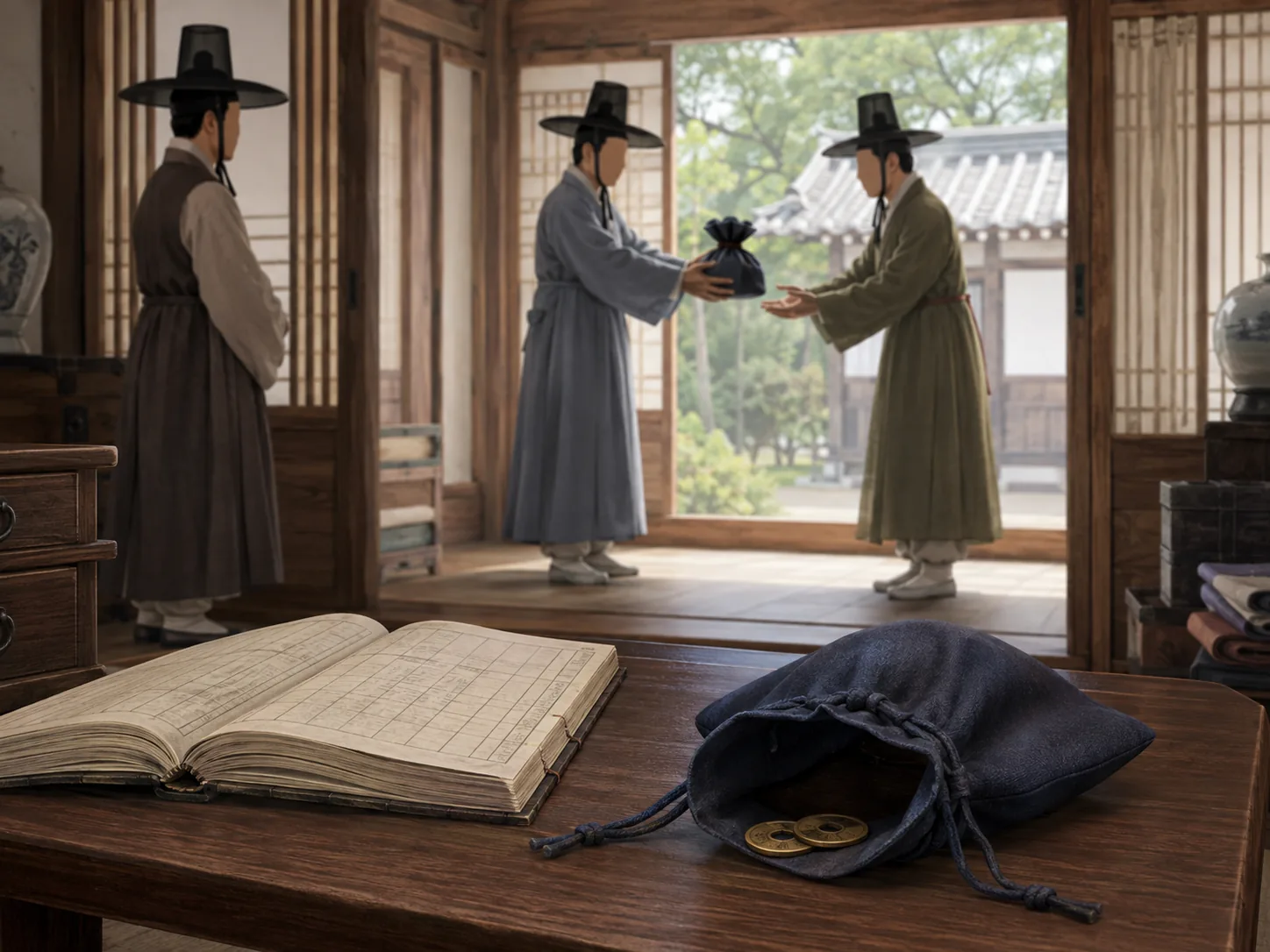
Joseon landlords also failed to return deposits
The oldest risk of jeonse is already visible in late-Joseon records: a landlord could spend the lump sum and then fail to have the money when the occupant wanted it back.
In 1796, during King Jeongjo’s reign, military official No Sang-chu rented a house in Seoul and paid sejeon. The landlord later tried to transfer the same space to another person for more money and pressured No to leave.
When No asked for his sejeon back, the landlord said he had already spent the money and had only 10 nyang left. The landlord later raised money for No by transferring another part of the property to someone else.
The Housing Finance Research Institute reads this diary as evidence that landlords could consume an existing tenant’s deposit and rely on money from a later occupant to return the earlier deposit.
The Diaries of the Royal Secretariat also contain cases from 1726, 1734, 1746 and 1760 in which people were punished for failing to return sejeon. Deposit non-return, in other words, did not suddenly appear in modern Korea.
A structure resembling jeonse has always carried one basic question: if the landlord spends the money today, will the landlord really be able to return it later?
Back to modern Korea
Why did a practice resembling late-Joseon semae survive into a modern economy with banks and developed financial markets? Modern Korea gave jeonse a new economic reason to continue.
After the Korean War, the country industrialized and grew rapidly, and for many years interest rates were far higher than they are today. To a landlord, a jeonse deposit was not merely security. It was a huge pool of interest-free capital.
If a landlord received KRW 50 million and could earn 8% a year on it, that meant KRW 4 million in annual returns; at 10%, KRW 5 million. Without collecting monthly rent, the landlord could place the deposit in a bank, use it in a business or invest it elsewhere.
Jeonse also had advantages for tenants. No monthly rent drained their income, and in principle they received the lump sum back at the end of the contract.
For a time, a familiar Korean housing ladder looked like this: earn a salary → build savings through installment deposits → save enough for a jeonse deposit → live under jeonse while saving more → eventually buy a home.
In the high-interest era, jeonse could therefore make sense on both sides: landlords obtained capital to invest, while tenants reduced monthly housing outflow and tried to accumulate the next lump sum.
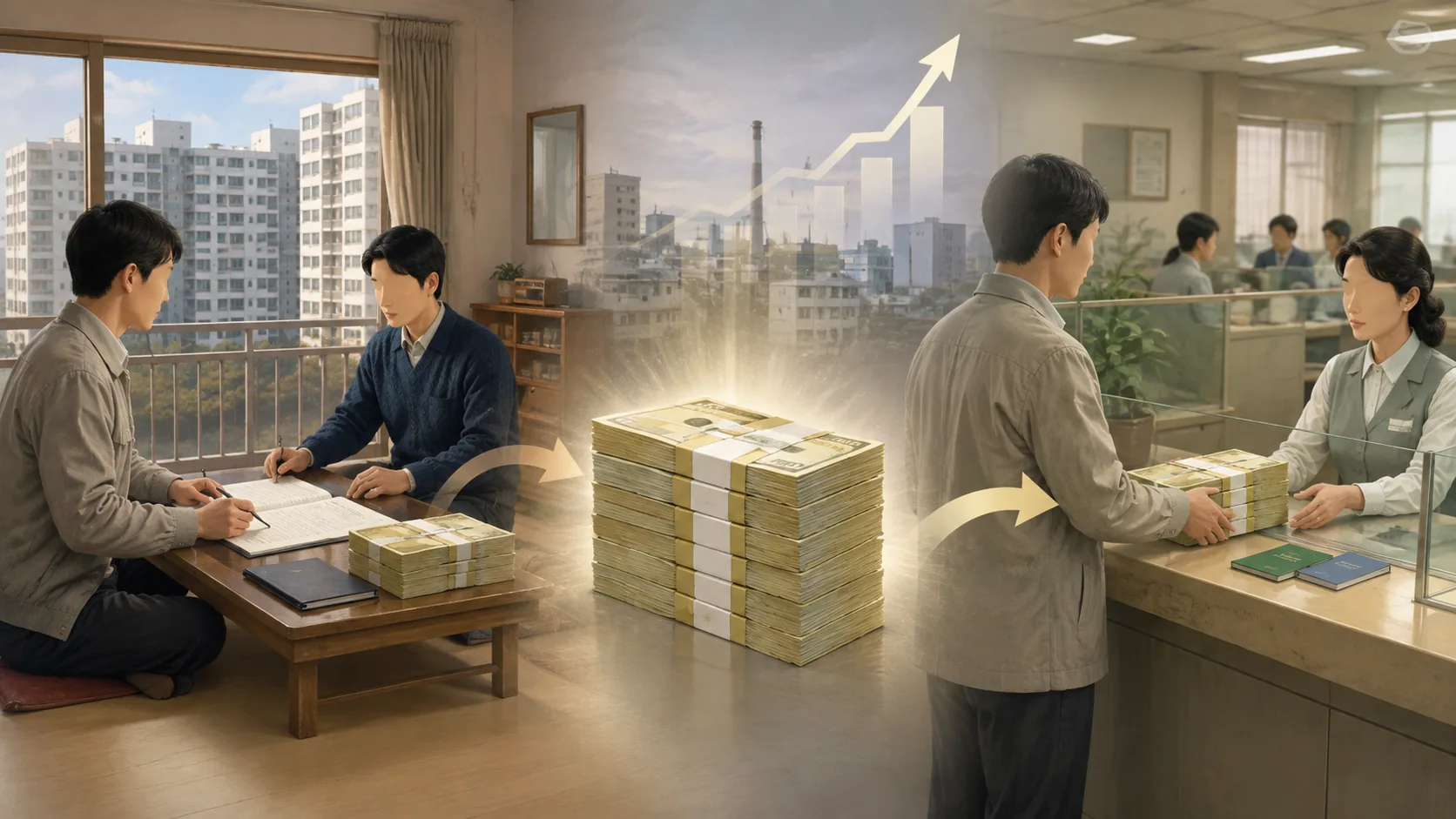
Then Korea went through “the IMF”
In the 1997 Asian financial crisis, South Korea received an IMF rescue package. Koreans still commonly refer to that whole period simply as “the IMF.”
Interest rates initially surged after the crisis. Bank of Korea data show that the average rate on newly accepted pure savings deposits was 13.38% in 1998. It then fell rapidly to 7.12% in 1999, 5.47% in 2001 and 4.15% in 2003.
As rates fell, simply parking hundreds of millions of won of jeonse deposits in a bank produced much less income. For landlords, the question increasingly became: “If a big deposit earns so little, wouldn’t collecting monthly rent be better?”
Yet jeonse did not disappear. Instead, new forms of finance entered the jeonse system itself.
Now tenants borrow the jeonse deposit too
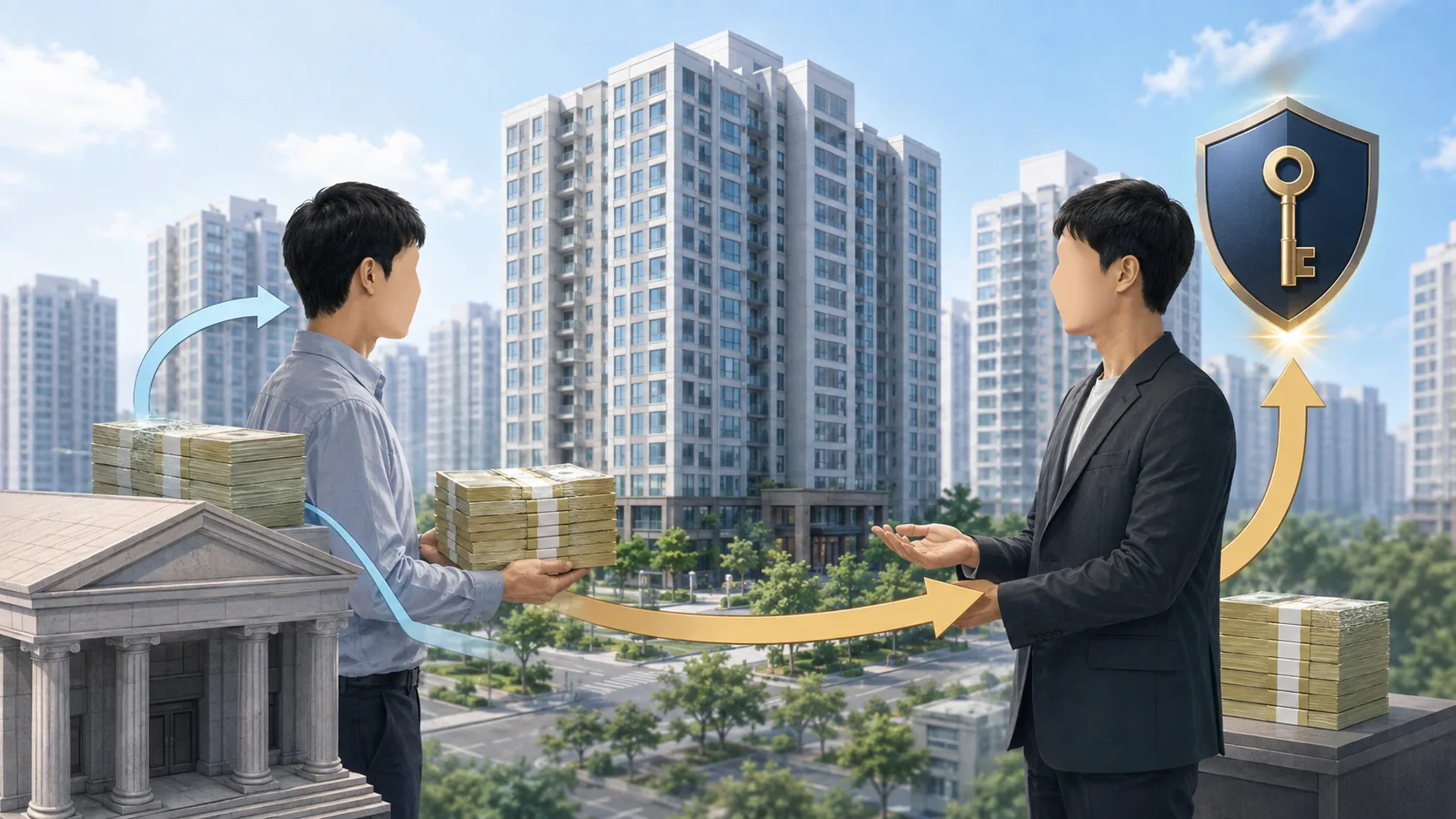
As jeonse deposits grew, banks and public guarantee institutions expanded loans and guarantees that allowed tenants to borrow money for their deposits.
Jeonse-loan guarantees supplied by Korea Housing Finance Corporation grew from roughly KRW 1.3 trillion in 2004 to about KRW 4.7 trillion in 2009. A tenant no longer had to build the entire deposit solely from personal savings.
Where the older flow was mainly money earned by the tenant → landlord, a new large-scale flow became bank → tenant → landlord.
Homebuyers could also use mortgages. Debt could therefore enter both sides of the arrangement: the person buying the home could borrow, and the person raising the jeonse deposit could borrow too.
A KRW 300 million home, with only KRW 60 million of your own money
Imagine an apartment worth KRW 300 million with a jeonse price of KRW 240 million. In this example, the jeonse-to-price ratio is 80%.
If someone buys the home and takes a KRW 240 million jeonse deposit from a tenant, simple arithmetic says the buyer may need only KRW 60 million of their own capital to control a KRW 300 million apartment.
Buying a home with only the gap between the sale price and the jeonse deposit as one’s own capital is commonly called gap investing, or gap tuja (갭투자), in Korea.
If the KRW 300 million home rises to KRW 400 million, the asset has gained KRW 100 million. The obligation to return the tenant’s KRW 240 million remains, but if the buyer initially put in only KRW 60 million, the return on that equity can become extremely large.
The Korea Research Institute for Human Settlements describes this as jeonse-leverage purchasing: acquiring a home with a small amount of investment capital by taking over a tenant’s deposit. Jeonse became one of the major mechanisms capable of amplifying leverage in Korea’s housing market. It is not the single explanation for every Korean housing problem, but it became an important structure through which speculative purchases could expand during rising markets.
Jeonse has worn a different face in every era
What is striking is that the basic contract has changed relatively little. The tenant places a very large lump sum with the landlord, the landlord can use that money, and the principal must be returned when the contract ends.
What changed was where landlords used the money. In late Joseon it could provide living funds and liquidity. In the modern high-interest era it could be placed in savings accounts, businesses or investments. In the era of low rates and rising property prices, it could also become leverage for buying additional homes.
The same jeonse deposit took on completely different roles as Korea’s financial environment changed.
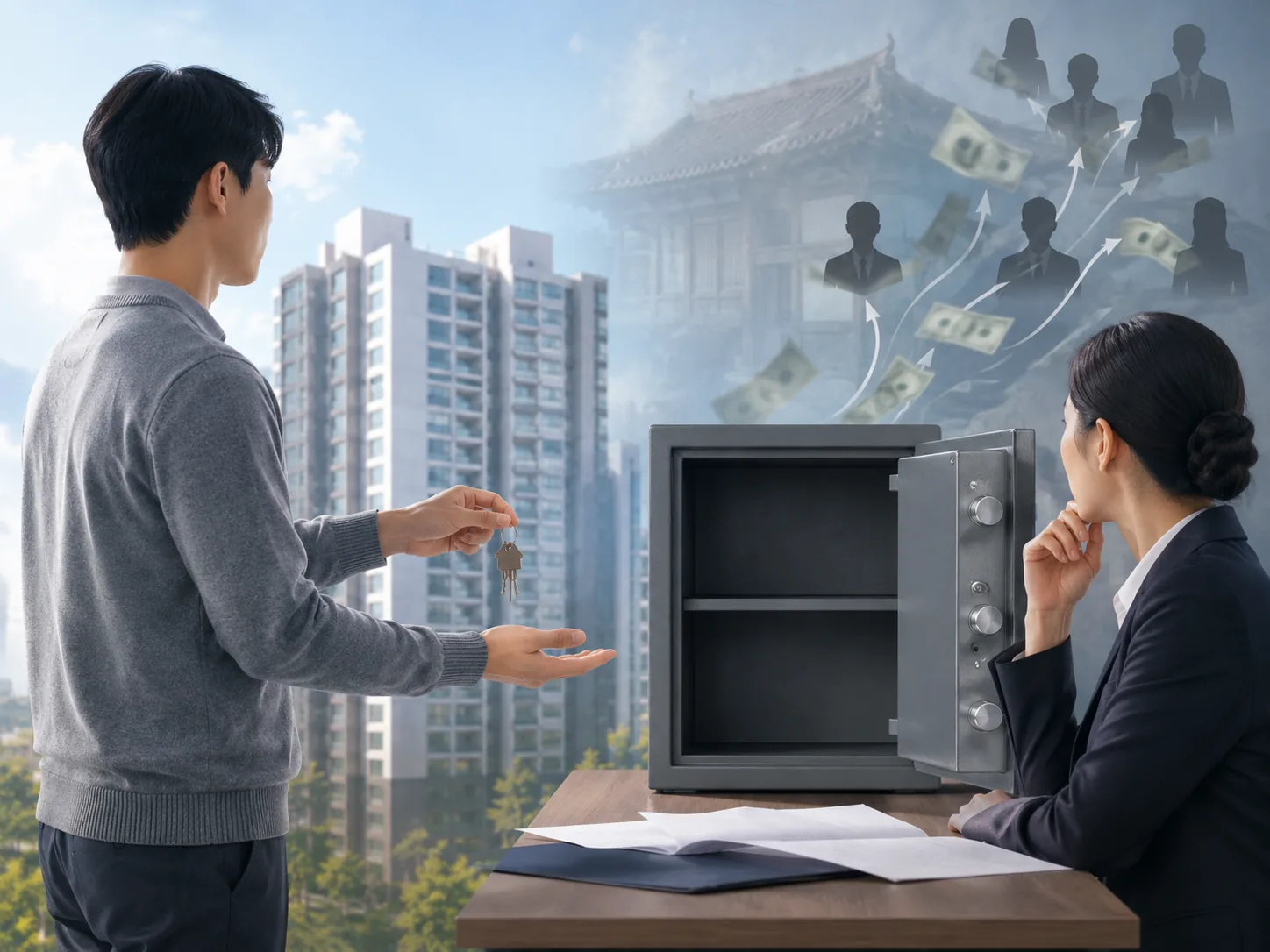
But what if the landlord does not give the money back?
If you have read this far, one question has probably occurred to you: “What happens if the landlord does not return the jeonse deposit?” Or more directly: “Why would I trust a landlord with hundreds of millions of won?”
That is exactly the point. It is the central pathology of modern Korea’s jeonse system.
A jeonse deposit is not sealed in a separate vault for the duration of the lease. The landlord may have deposited it, spent it on a business, used it to buy another property, or used money from the next tenant to repay the previous tenant.
The structure can keep turning while home values and jeonse prices hold up or rise and new tenants keep entering. But when the new jeonse price falls below the old deposit and the landlord must find the difference, Koreans call the situation reverse jeonse, or yeokjeonse (역전세). When the home’s value itself falls below the deposit so that even selling the property may not fully repay the tenant, it is often called a “can jeonse,” or kkangtong jeonse (깡통전세).
If this structure is deliberately abused—buying many homes with little repayment capacity, repeatedly pulling in deposits, or entering contracts without the genuine ability or intention to return tenants’ money—it can become jeonse fraud.
And, ironically, the question is not new. In 1796, when No Sang-chu asked for the return of his sejeon, his landlord’s answer was essentially: “I already spent it.”
Thatched houses became apartments. Sejeon became the modern jeonse deposit. Korea built banks, mortgages, jeonse loans and deposit-return guarantees. Yet after centuries, the simplest risk of the system remains.
When I move out, will the landlord who took my money actually have it?
Jeonse is a distinctive Korean housing system that has survived by changing its economic role while resting on that basic trust. When that trust breaks, the very feature that makes jeonse attractive becomes its greatest danger.
Today’s Korean expression
Expression: 전세
Romanization: jeonse
Meaning: A major Korean housing-lease arrangement in which a tenant places a large lump-sum deposit with a landlord, lives without paying monthly rent for the contract period, and receives the deposit back when the lease ends.
When it is used: In phrases such as “I live under jeonse,” “the jeonse deposit went up,” or “I renewed my jeonse contract.”
Example: 지금은 월세가 아니라 전세로 살고 있어요.
Translation: I currently live under a jeonse lease rather than paying monthly rent.
Sources
- Korea Housing Finance Corporation, Housing Finance Research Institute, “A Study on Semae Customs in Late Joseon as a Prototype of Jeonse” — late-Joseon semae, No Sang-chu’s diary and sejeon non-return records / 2024 / accessed 2026-08-20
- Encyclopedia of Korean Culture, “Tenant Farming System” — in-kind tenant rents and collection practices in Joseon / accessed 2026-08-20
- Encyclopedia of Korean Culture, “Interest” — premodern lending of money and grain and interest practices / accessed 2026-08-20
- Bank of Korea, Weighted Average Interest Rates of Deposit Banks — changes in savings-deposit rates after 1998 / accessed 2026-08-20
- Korea Housing Finance Corporation, annual jeonse-loan guarantee supply — jeonse-loan guarantee supply from 2004 to 2009 / 2010-01-05 / accessed 2026-08-20
- Korea Research Institute for Human Settlements, “Jeonse Leverage (Gap Investment) Risk and Policy Responses” — jeonse-leverage purchases and deposit non-return risk / 2023-02-13 / accessed 2026-08-20