
For a foreign visitor starting a trip in Korea, getting around inside a city is surprisingly simple.
Buy a Tmoney card at a convenience store, top it up with cash, and tap it on buses and subways. Beep. So far, easy.
Now leave Seoul. Maybe you want to go to Busan, Jeonju, Sokcho, or even an island.
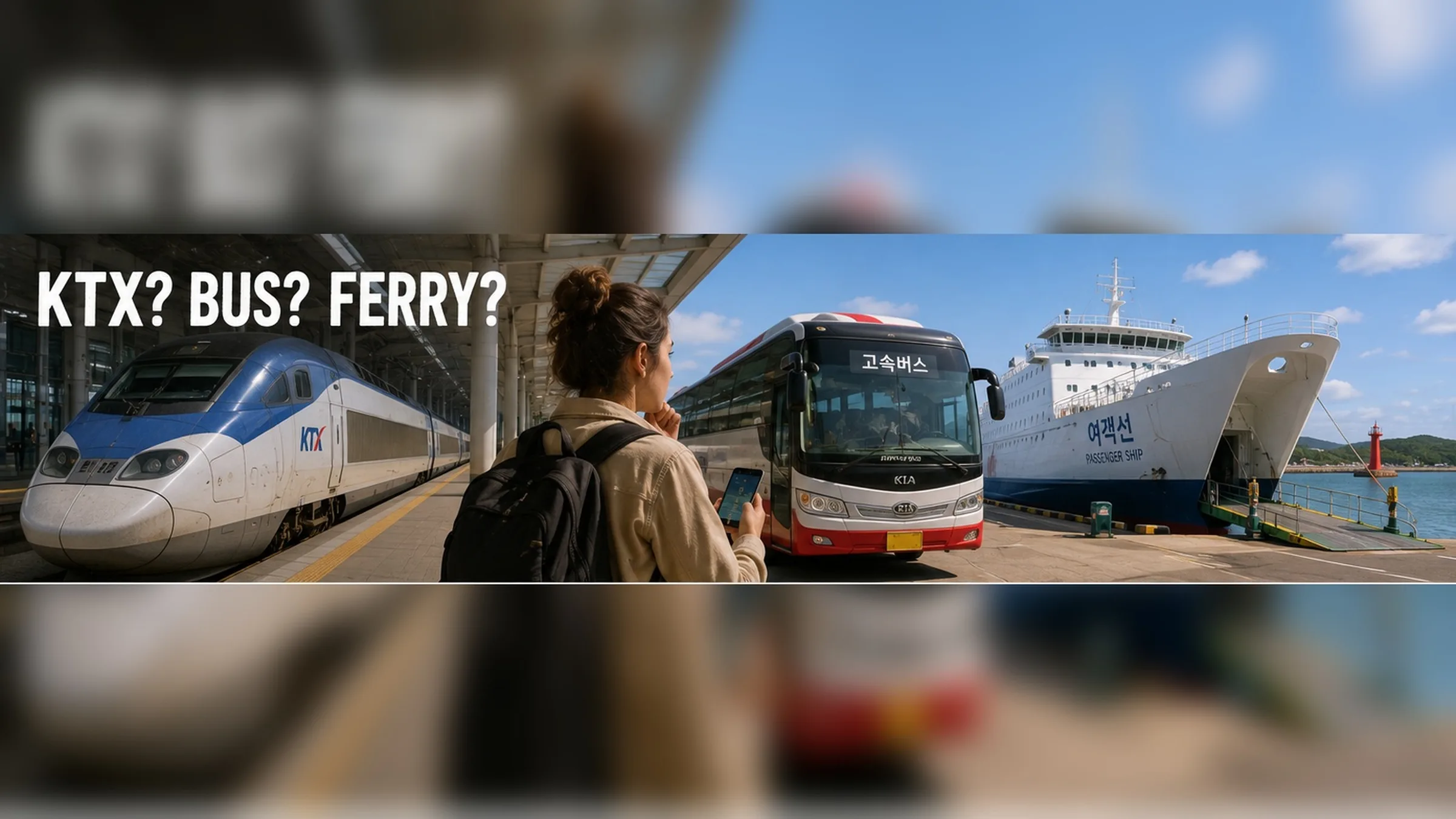
From this point, Tmoney alone is not enough. For long-distance travel in Korea, it is easiest to think in three categories: trains, express/intercity buses, and ferries.
For a foreign traveler, the difficulty scale is simple. KTX → easy. Express bus → learn a few things. Ferry → possible, but I would not actively recommend it for a first trip to Korea.
Let us take them one by one.
Seoul to Busan? Just take the KTX
If I had to recommend one long-distance option to a first-time foreign visitor, the easiest answer would be the KTX, Korea’s high-speed rail.
Depending on the train, Seoul to Busan is roughly two and a half hours, Seoul to Daejeon about an hour, and Seoul to Dongdaegu around one hour and forty minutes. Times vary, but the network connects major cities quickly.
It also has one major advantage for foreign visitors: booking is easy.
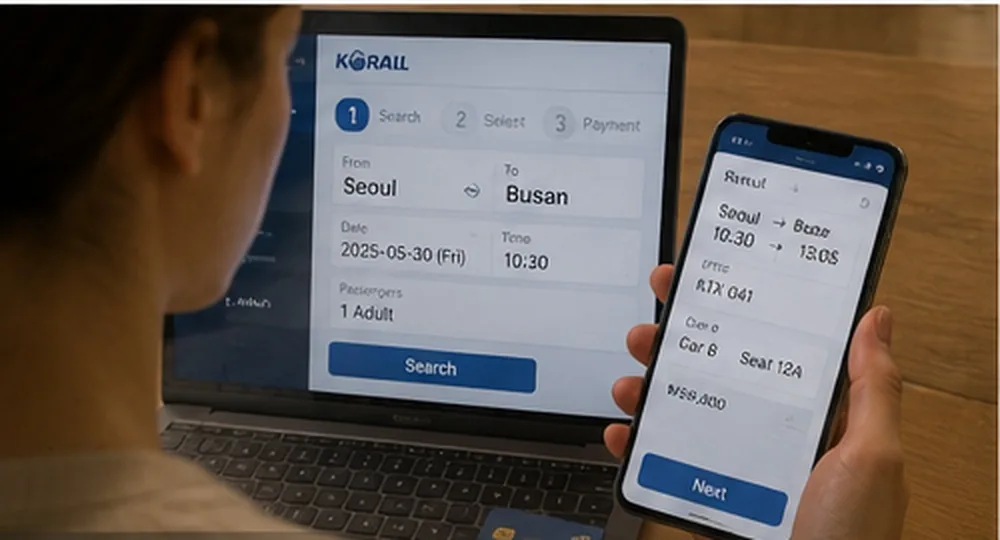
KORAIL’s official foreign-language website and KorailTalk provide multilingual access, and there are official ways to pay with cards issued overseas. A foreign card may need online authentication such as 3D Secure.
The process is straightforward. Choose Seoul as the departure station, Busan as the destination, pick the date, time, train and seat, then pay by card. Save the mobile ticket and you are done.
If you are only visiting Korea for a few days, you do not need to install every app Koreans use. The official foreign-language website is enough.
KTX is easy at the station too
If you dislike online booking, you can go to the station. Major stations such as Seoul, Yongsan and Busan have ticket counters and vending machines.
It is still better to book ahead on weekends and holidays. Korea has two enormous travel events every year: Seollal and Chuseok.
Koreans themselves fight for train tickets during those holidays, and KORAIL often operates special advance-booking periods.
So if you visit Korea during a major holiday, do not assume, “There will probably be a ticket at the station.” Koreans cannot find one either.
But the KTX does not go everywhere
Even with a strong rail network, not every tourist destination sits beside a station. Small cities in Gangwon, regional towns in Jeolla, mountain areas and small coastal cities can be easier to reach by bus.
That brings us to Korea’s second major long-distance option: express and intercity buses.
For Koreans, the two are slightly different. Express buses mainly link major city terminals via expressways, while intercity buses connect a wider range of cities and regional destinations.
A visitor does not need to master the distinction on day one. If the KTX looks awkward for your destination, check the buses.
Korean express buses have classes
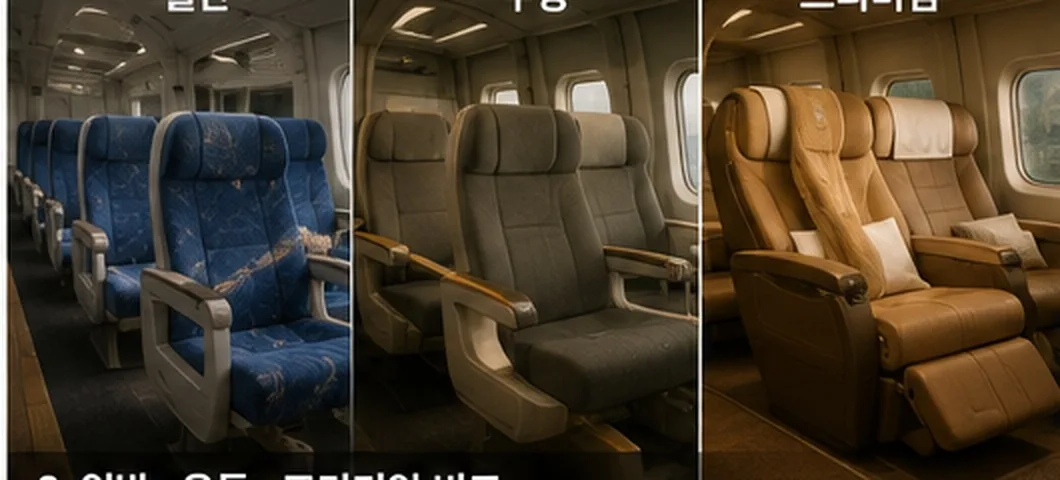
When searching for an express bus, you will see terms such as standard, deluxe, and premium. They cost different amounts because the seats are different.
A standard coach is closest to the bus most travelers already know, usually a 2+2 seating layout, and it is the cheapest.
For long trips, many Koreans choose the deluxe bus. It normally uses a 2+1 layout, with wider seats and more space between rows.
For a journey of two or three hours or more, the extra comfort is often worth the price difference. A Korean friend might simply tell you, “Pay a little more and take deluxe.”
And then there is the premium bus
Above that is the premium express bus, a class introduced in 2016.
When it was introduced, Korea’s Ministry of Land, Infrastructure and Transport highlighted vehicles with fewer seats than deluxe coaches—around 21 seats—plus more space, deeply reclining seats, personal screens, power outlets and more private seat structures.
You can sit back, recline, put your feet up and charge your phone. Some vehicles have curtains or partitions. It can feel almost like a small capsule moving down the expressway.
In very simple terms: standard = cheap. Deluxe = comfortable and reasonably priced. Premium = pay more to be as comfortable as possible. Not every route offers all three classes.
How a foreign traveler buys a bus ticket
The integrated express-bus booking site KOBUS provides foreign-language menus. Depending on the route, intercity buses can also be booked through services such as Bustago or Tmoney-related platforms.
For foreign travelers, the most frustrating step for years was payment. You could find an English menu, choose the route, time and seat—and then discover that your foreign card would not go through.
In 2026, access to overseas-card payment is expanding, but support can still vary by service and route. A practical approach is to check the route on KOBUS and, if payment fails, look at foreigner-friendly services such as Klook or Go Hanpass that support overseas cards.
If you are still stuck, go to the terminal and buy it there. There are ticket counters and machines. Sometimes, while traveling, a human being defeats the machine.
Korean long-distance buses usually have no toilet
There is one thing foreign travelers should know: Korean express and long-distance intercity buses generally do not have onboard toilets.
No toilet from Seoul to Busan? The bus stops on the way at a highway service area.
On medium and long routes, buses commonly make a rest stop after a period of driving. And Korean highway service areas are more interesting than many visitors expect.
They are not just toilets. They have restaurants, convenience stores, coffee, hot dogs, walnut cakes, fish cakes, sotteok-sotteok and sometimes regional specialties.
So you get off intending to use the toilet and somehow return carrying food.
The most important thing at a service area
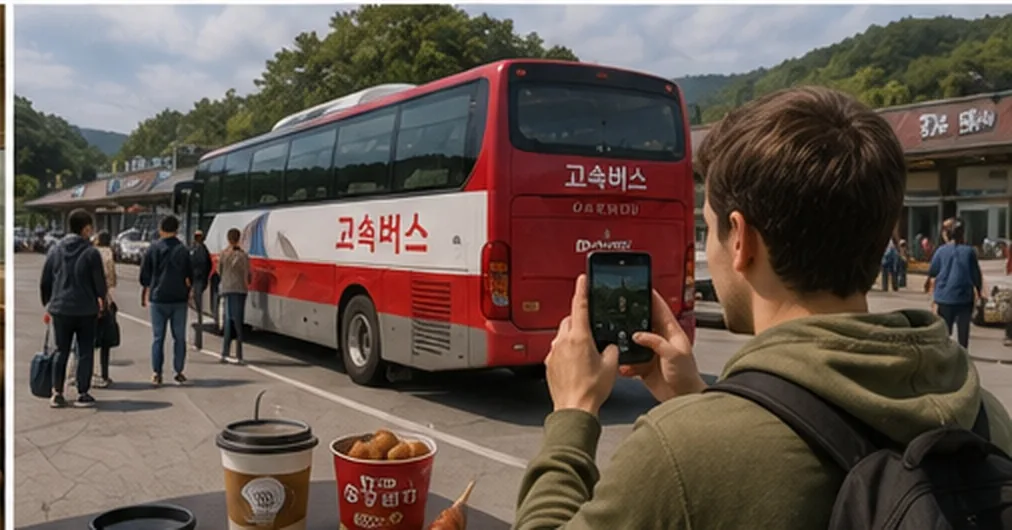
Before choosing a snack, check one thing first: the bus you arrived on.
If the driver tells you the break time, be back before it ends. A parking lot may contain dozens of similar-looking coaches, so remember the company, license plate and parking spot, and take a photo if possible.
Korea has an old joke about this: “If you miss your bus at the service area, you have to get a job there and spend the rest of your life as a service-area worker.”
Obviously that is not true. The service area will not confiscate your passport and force you into labor. One thing is true, though: your bus can leave without you.
So do not risk your entire life for a bag of walnut cakes. The service area is part of the trip, but it is not your destination.
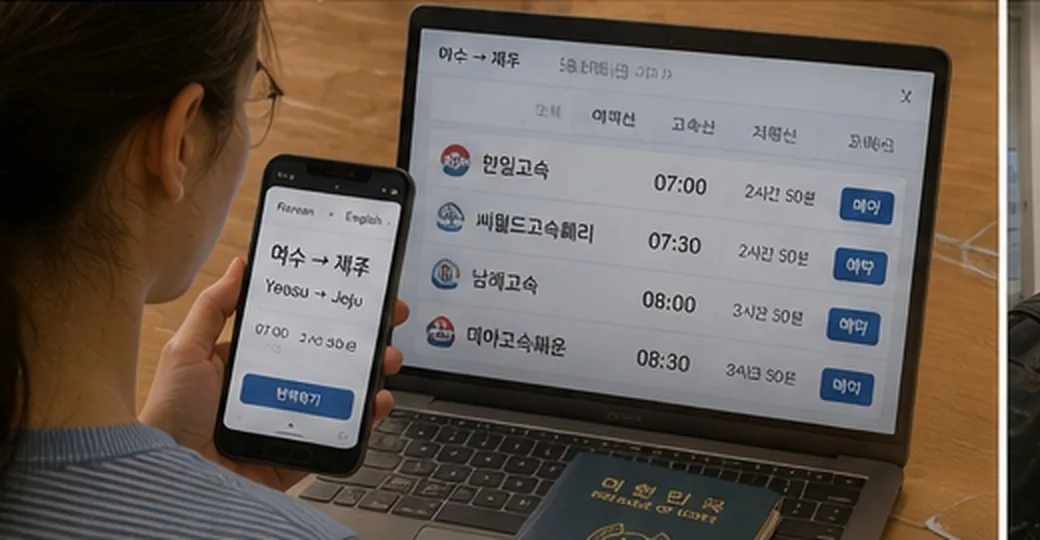
Now raise the difficulty: ferries
You have taken the train and the bus. Now suppose you want to visit a Korean island. Time for a ferry.
Here is the conclusion first. I would not strongly recommend ferries to a foreign traveler on a first trip to Korea. Not because they are unsafe. Coastal ferries are ordinary transportation in Korea.
The problem is that booking can be annoying. And this is not only a foreigner problem. Koreans sometimes get annoyed too.
Why can ferries be annoying?
Rail has the large KORAIL system, and express buses have fairly integrated booking. Ferries are more fragmented.
The departure port can change depending on the island. The operator can be different. The booking website can be different. Timetables and ports differ, and bad weather can delay or cancel sailings.
Some operator websites have limited foreign-language support, and payment methods can vary. You may find the operator, turn on translation, choose a sailing, get stuck at payment and think, “I should have just flown.”
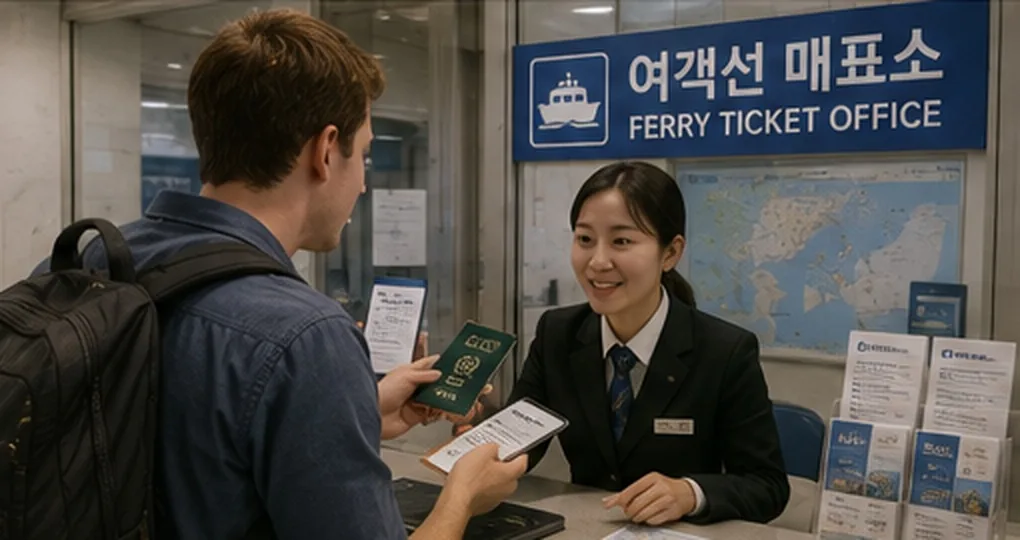
The most practical way if you really want a ferry
If the island is the purpose of the trip, then of course you may need the ferry. If online booking works, book in advance.
If you have a Korean friend or helpful accommodation staff, asking how to book—or asking for help—is perfectly reasonable. Koreans also search the internet when they see an unfamiliar ferry route.
If you are already staying near the port and the route has spare seats, buying the ticket directly at the terminal the day before can also be easier. Showing the destination, date and passport may be simpler than fighting an online form for half an hour.
During peak seasons or on popular routes such as Ulleungdo or Jeju, however, do not rely on walk-up tickets. If the ferry is essential, check availability and reserve ahead.
Bring your passport for the ferry
Foreign passengers on Korean domestic ferries should carry a passport or another accepted foreigner ID because identity checks are part of the boarding process.
And do not plan to sprint up one minute before departure. You need time to reach the terminal, confirm the ticket and ID, find the vessel and board. If you are taking a vehicle aboard, arrive even earlier.
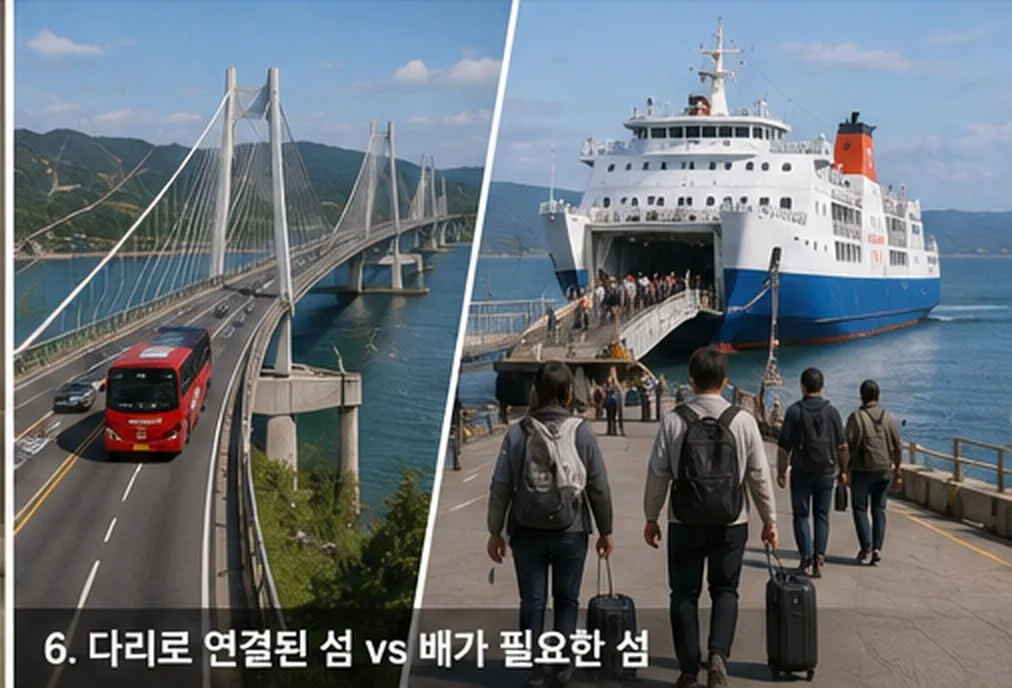
Surprisingly, you may not need many ferries in Korea
Korea has seas on three sides and a huge number of islands, yet an ordinary trip can involve surprisingly few ferries.
Many islands close to the mainland are now connected by bridges, so cars and buses can simply drive across. Well-known islands or island regions such as Geoje, Jindo, Wando, Ganghwa and Anmyeondo can be reached by road.
Of course, not every major island has a bridge. Jeju has no bridge, and neither does Ulleungdo. Most visitors fly to Jeju, while destinations such as Ulleungdo genuinely require ferry planning.
So do not automatically think, “It is an island, so I need a boat.” Check the map for a road connection first. You may be able to arrive by bus or car.
Ferries still have their own kind of fun
Ferries can be inconvenient, but once you board, the journey itself becomes part of the trip: go to the port, collect the ticket, show your passport, wait for the announcement and walk onto the vessel.
Watching the harbor recede, the mainland disappear and an island emerge hours later feels completely different from arriving by plane.
So it is useful to think of Korean ferries as transport you choose because the destination requires it, or because you want to experience the journey itself—not simply because it is the most convenient option.
You can even decide that a slightly inconvenient reservation is part of the experience. That romantic idea tends to fade around the third time you re-enter the booking form.
In the end, choose by destination
Long-distance travel in Korea is not especially difficult once you sort it by destination.
Going from Seoul to a major city such as Busan or Daegu? Check the KTX first. It is fast, easy to book, multilingual and well equipped for foreign-card payment.
Going somewhere without a convenient train, or want to spend less? Check express or intercity buses. Standard is cheap, deluxe is comfortable, premium is more comfortable, and a highway service area becomes a little piece of Korean travel in the middle.
Going to an island? First check whether there is a bridge. If a ferry is really necessary, find the route and operator and reserve ahead. If the system is too difficult, ask a Korean for help or use a terminal counter when the route and availability allow. And bring your passport.
Korea has many rail companies, bus companies and ferry operators if you look at the machinery behind the system. A traveler does not need to understand all of it.
Inside cities: Tmoney. Between cities: KTX or buses. When you truly need to cross the sea: a ferry.
And when you reach a highway service area, remember one thing. Buy sotteok-sotteok. Buy walnut cakes. But take a photo of your bus license plate first.
Missing the bus will not literally turn you into a service-area employee. Still, there is no need to spend your Korean trip waiting for the next bus and wondering, “Why did I buy one more hot dog?”
Sources
- KORAIL — multilingual booking and railway guidance for foreign travelers.
- KORAIL notice — foreign booking and overseas-card payment guidance.
- VISITKOREA, Express Bus & Intercity Bus — express/intercity buses, service areas and booking.
- VISITKOREA, Korea Transportation Guide — long-distance transport payment and booking for foreign visitors.
- Ministry of Land, Infrastructure and Transport — premium express-bus introduction and seat specifications.
- VISITKOREA ferry information — domestic ferry ID, booking and sailing information.