

“Ugh, this is so kingbatne.”
It means you are annoyed.
Except you might not be genuinely angry.
From here, things get a little kingbatne.
A friend beats you in a game.
Fine.
But at the end they go out of their way to dance right in front of you.
“Wow, 개킹받네ㅋㅋㅋ.”
You are annoyed.
But you are also laughing.
And this is the most important thing to understand about 킹받네.
Yes, the “king” really is King
킹받네 comes from
King + 열받네 (yeolbatne, “I’m getting pissed/annoyed”).
That is where the expression comes from.
열받네 is a very common Korean expression for being irritated or angry.
Then Korean internet slang started using a wordplay where 킹, literally “king,” was put in front of something to emphasize it more strongly.
Strongly agree.
→ 킹정.
Ridiculously good.
→ 킹잘한다.
In that way,
열받네.
→ 킹받네.
was born.
So King here really does mean “king,” but
it does not mean that somebody “received a king.”
It is basically an internet-twisted way of saying “This is fucking pissing me off.”
And if Koreans add 개 on top of that,
개킹받네.
That is one more layer of emphasis stacked on top.

But translating it simply as “I’m fucking angry” sounds wrong
Imagine your friend secretly eats one of your snacks.
It is not something worth a real fight.
Then, while you are watching, they eat the very last piece and say,
“Wow, delicious.”
They say it.
Kingbatne.
Your friend claims they did not study at all and then gets 100 points.
“I swear, I just guessed.”
Kingbatne.
You practiced a game hard, and your friend tries it once and immediately plays better than you.
On top of that,
“This is easy.”
they say.
Extremely kingbatne.
All of these are irritating.
But nobody is angry enough to call the police.
In fact, it is funny.
That is why 킹받네 works strangely well with Korean laughter text such as ㅋㅋㅋ.
“Ah, this is so kingbatneㅋㅋㅋㅋ.”
You are annoyed, but you are laughing.
On paper it looks strange, but in real conversation it is completely natural.

Someone can be so good that it becomes kingbatne
This is the even funnier part.
The other person does not even need to do anything wrong for you to feel kingbatne.
Someone sings unbelievably well.
“Why are they this good? Kingbatne.”
A photo comes out absurdly well.
“Seriously, another perfect shot. So kingbatne.”
Your friend throws on random clothes and somehow looks better in them than you do.
“Why does it look good only on you? Kingbatne.”
Here, it is almost
“I’m jealous and annoyed, but I have no choice but to admit it.”
that kind of feeling.
So if you translate 킹받네 simply as angry, almost all of this nuance disappears.
You are not genuinely furious.
Being annoyed simply because the other person is too good can also be kingbatne.
Cute things can be kingbatne too
Something even stranger is possible.
A dog causes trouble.
It unrolls toilet paper all over the room.
Then it wags its tail without even realizing it did something wrong.
“Seriously, this is kingbatne.”
Does that mean you truly hate the dog?
No.
If anything, it is cute.
But it did cause trouble.
So it is cute and irritating at the same time.
Those two feelings arrive together.
It works similarly with people.
A friend says shameless nonsense with so much confidence that it becomes funny.
“Look at that face. So fucking kingbatneㅋㅋㅋ.”
Are you laughing because you dislike them,
or do you dislike it because it is funny?
At that point, even you may not know.
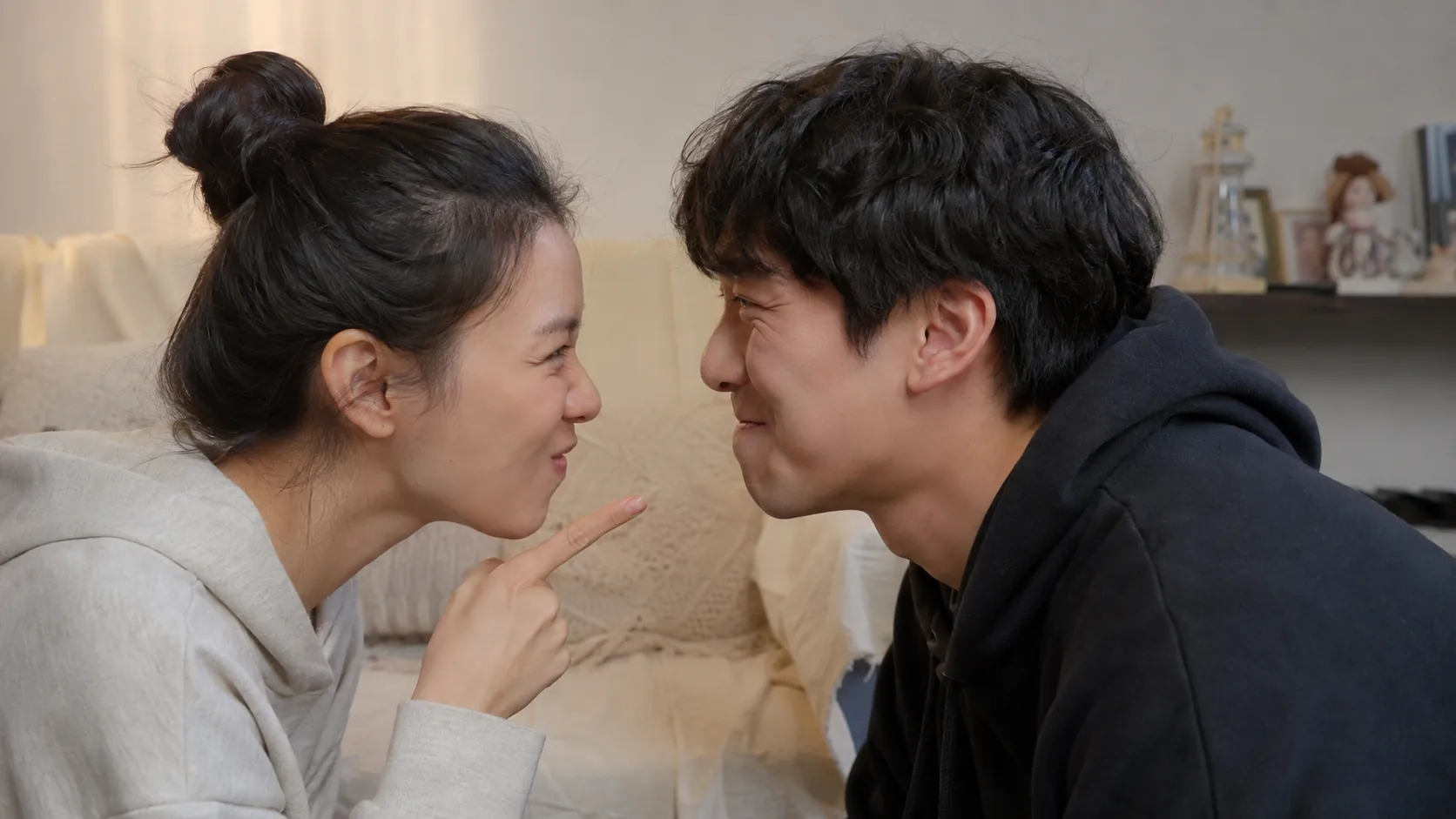
Yeolbatne and kingbatne mean related things, but they feel different
“I’m seriously pissed off right now.”
That can be quite serious.
Your boss crossed a line.
Someone did not pay back money they owe you.
A real fight broke out.
In those situations, 열받는다 can simply mean real anger.
But
“I’m seriously kingbatne right now.”
if you say that, the atmosphere changes a little.
Depending on the situation, it can still mean that you are genuinely angry,
but the word itself already carries an internet-meme flavor,
so it sounds a little more playful,
a little more exaggerated,
and a little funnier.
So in the middle of a genuinely serious fight,
“You’re making me kingbatne right now.”
if you say that,
the other person might laugh for a moment.
Then you become even more kingbatne.
Kingbatne often contains a feeling of “annoyingly smug”
Kingbatne situations have a strangely common ingredient.
It is not simple dislike.
They are annoyingly smug.
Your friend is too good, which is annoying.
They are shameless, which is annoying.
They are cute after causing trouble, which is annoying.
They know you are losing and keep teasing you, which is annoying.
So this conversation makes sense.
“Do you hate them?”
“No.”
“Then why are you kingbatne?”
“I just am.”
That actually explains it.
You do not need to dislike someone for them to make you kingbatne.
Someone you like can make you kingbatne too.
Even if your favorite idol uploads a photo that is absurdly handsome,
“Seriously, this is kingbatne.”
you can say that.
Of course, in that case it is almost a compliment, not an insult.
A compliment disguised as irritation.
Korean internet humor likes this kind of thing quite a lot.
That is why you have to look at the expression too
Someone
“You’re seriously kingbatne.”
said that.
If you only read the sentence, it sounds like an insult.
But what if they said it while smiling?
It is very likely a joke.
“Heyㅋㅋㅋ, you’re seriously kingbatne.”
Between close friends, that can sound perfectly natural.
On the other hand, if someone with a stiff expression says,
“Stop seriously pissing me off.”
the atmosphere is completely different.
In the end, translating 킹받네 with one word is not enough.
The expression.
The relationship.
The situation.
And even the
ㅋㅋㅋㅋ
that comes after it all matter.
The hardest part when translating it into another language
Depending on the situation,
annoying
so irritating
this is pissing me off
can all work as translations.
But every one of them is missing something.
That is because 킹받네 can sometimes contain all of these meanings at once.
“You’re annoying.”
“But this is funny.”
“You’re so smug.”
“But I admit you’re good.”
“I hate this.”
“Actually, I don’t really hate it.”
Throwing all of that out like one word is what 킹받네 does.
So if a Korean friend smiles and says,
“아 너 진짜 킹받는다.”
you do not need to be too hurt by it.
They may genuinely mean that they dislike you,
but more often,
there is a good chance they mean that you are doing something fucking annoying right now.
And if you keep teasing them even after hearing that?
Then you can use the expression with perfect accuracy.
“아 씨 개킹받네.”
Sources
- Careet, “Understanding 킹받네” — King + 열받네 structure and mixed positive/negative uses / 2021-10-15 / accessed 2026-08-15
- Reddit r/Korean, “I looked high and low but i can’t figure it out what 킹받다 is” — real learner question about dictionary and subtitle mismatch / accessed 2026-08-15
- Reddit r/Korean, “How would you translate the slang 킹받아 into English?” — discussion of joking irritation and “I hate that I laughed at that” nuance / accessed 2026-08-15
- Chosun Ilbo, “Cute enough to be ‘kingbatne’?” — compound formation and mixed irritation/attraction usage / 2021-12-04 / accessed 2026-08-15