
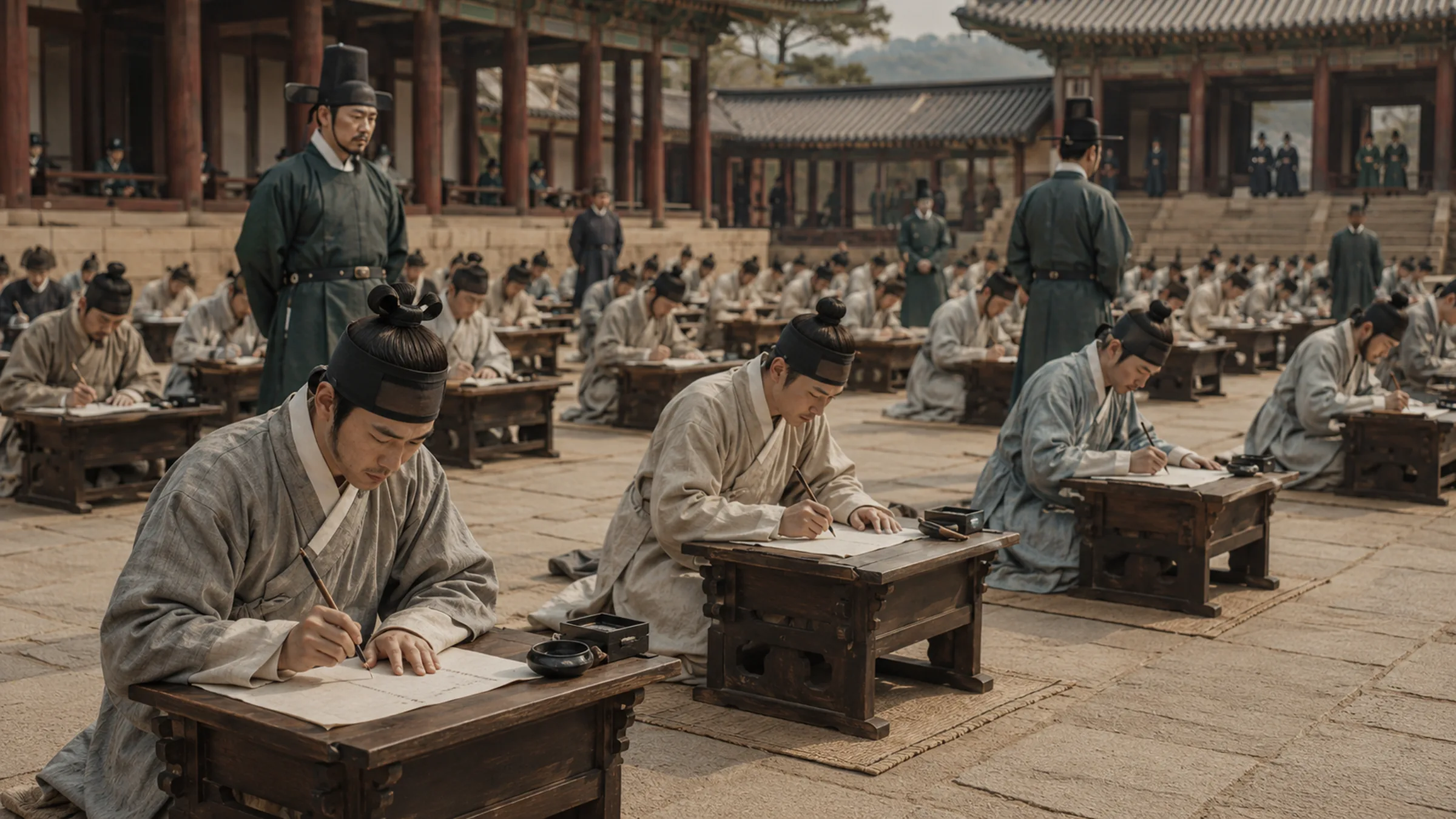
How do you become a civil servant in Korea? Today, the most familiar answer is: take an exam. Korea runs open competitive recruitment for Grades 5, 7 and 9, with written subjects and interviews varying by occupational track. Pass, and you can be appointed through the state’s formal process. To Koreans, this feels completely ordinary. But consider a stranger question: why should a state choose the people entrusted with important public work through examinations at all? A king could appoint whoever he liked. A person born into a powerful family could simply receive a government office, called gwanjik (官職, government office). Offices could be sold. Or a state could identify talented children, educate them itself, and turn them into administrators. Civilizations around the world did all of these things. Yet Korean history keeps returning to one particular answer from very early on: make them take an exam. Test who understands the classics, who writes well, who can propose solutions to state problems. For military candidates, test archery and horsemanship. The subjects changed with the centuries, but more than a thousand years later, Koreans are still heading into examination halls. So where did Korea’s long history of public-service examinations begin?
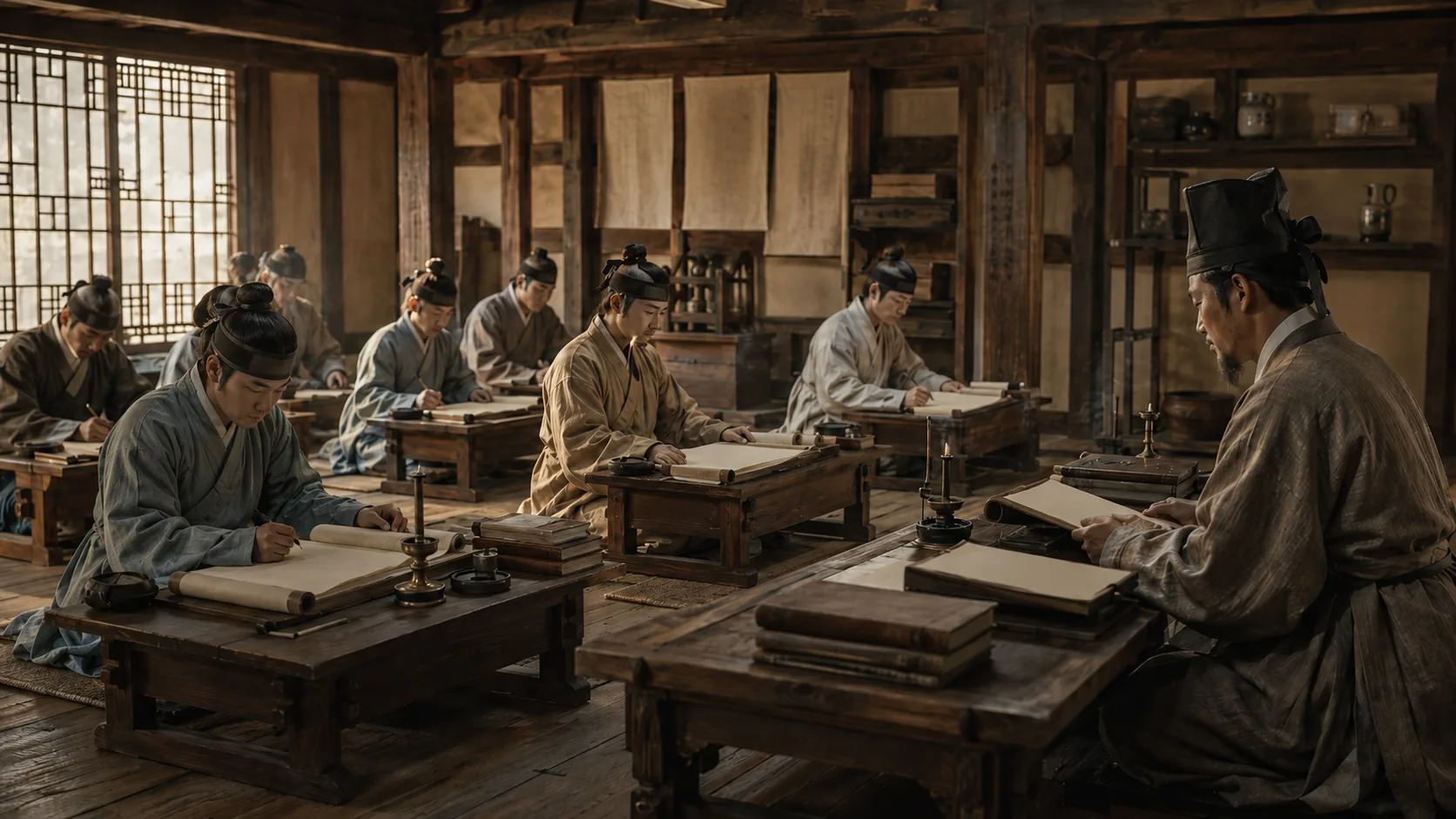
788: Silla begins judging how well people have read
The story reaches back to Unified Silla. In 788, under King Wonseong, the state introduced Dokseo Sampumgwa (讀書三品科, dokseo sampumgwa, “three-grade reading examination”). It assessed scholarly achievement in three grades according to how well a student had read and understood Confucian texts, then used the result in official recruitment. Those who had read the Quli and Classic of Filial Piety were placed in the lower grade; those who also knew the Analects entered the middle grade; and those proficient in works including the Zuo Commentary, Book of Rites and Wen Xuan, while also strong in the Analects and Classic of Filial Piety, entered the upper grade. Exceptional command of the Five Classics, historical works and the Hundred Schools could even earn special advancement. This was not the same thing as a modern open civil-service examination. It was closely tied to students educated at the state academy, and it was not a nationwide competition in which anyone could sit the same paper and be ranked for office. Still, an important idea had entered state policy: official recruitment should look not only at birth, but also at what a person had learned and how well. Silla, however, had a much stronger system: golpumje (骨品制, hereditary bone-rank system). Birth determined social rank and also restricted how high a person could rise in office.
Doing well in an academic assessment did not let someone freely break through those barriers. Put simply, Silla had introduced an examination principle, but birth still outweighed the exam.
How were Europe and the Middle East choosing officials at the same time?
The year 788 was also the age in which Charlemagne was expanding the Frankish realm in Europe, while the Abbasid Caliphate governed a vast empire centered on Baghdad. They too had to collect taxes, write documents, enforce law and move armies. They needed administrators. But the way those people were recruited was quite different.
Europe — nobles and the Church mattered more than exam halls
Early medieval Western Europe had nothing like a modern nationwide open competitive civil-service examination. Kings entrusted administrative work to nobles, vassals, powerful local figures, members of the royal court and clergy. A large share of the educated people able to read and produce Latin documents belonged to churches and monasteries. If a ruler needed someone literate enough to handle records, the usual answer was not to announce a national exam, but to draw from existing networks of educated people around the crown, aristocracy and Church. “The state hires whoever scores highest on the exam” was not a basic operating principle of Western European administration at the time.
The Abbasid Caliphate — a sophisticated bureaucracy without a national open exam
The Middle East looked different again. The Abbasid Caliphate already possessed increasingly complex dīwāns, or government departments. Finance, taxation, military administration, correspondence and record-keeping became specialized, supported by developed classes of secretaries and officials. In other words, the Islamic world was not lacking professional bureaucracy. Quite the opposite: it needed sophisticated administration to govern enormous territories. The difference lay in recruitment. Educated secretaries, administrative experience, bureaucratic families and relationships with court circles mattered greatly. This was not the same as linking academic attainment to a distinct state examination in the way Silla attempted with Dokseo Sampumgwa. Even in the same century, how advanced a bureaucracy was and how that bureaucracy recruited people were two separate questions.
958: Goryeo opens a full state examination system
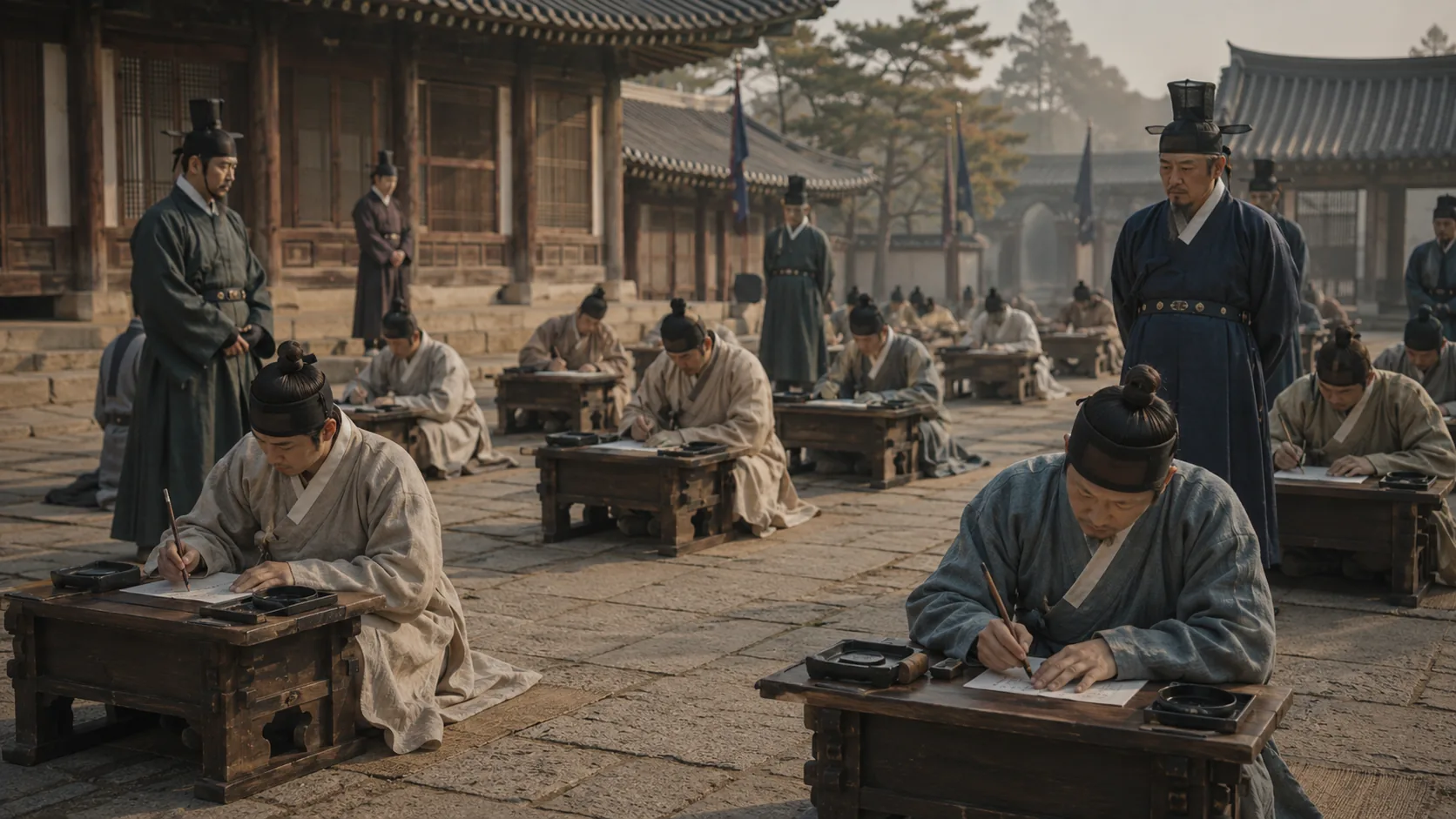
About 170 years later, in 958, a major change took place under Goryeo’s King Gwangjong. Ssang Gi, a man from Later Zhou who had come to Goryeo, recommended the adoption of gwageo-je (科擧制, gwageo-je, state examination system). Gwangjong accepted the proposal. Korea’s first sustained state examination system for recruiting officials began. The first examination tested poetry, rhapsody, eulogistic writing and policy responses, and produced only seven successful candidates across the composition, classics and specialist tracks. Seven people is a tiny number. The important part was not the number. It was that the king had begun institutionalizing a system in which the state held an examination and selected successful candidates as gwanri (官吏, gwanri, government officials). Goryeo’s system drew from the examination bureaucracy that had developed in China, but compared with contemporary Europe and the Middle East, its recruitment logic was strikingly different.
Gwangjong was not suddenly trying to invent fair hiring
It would be misleading to read Goryeo’s gwageo as if it were a modern meritocratic recruitment campaign. Gwangjong had powerful political reasons. In early Goryeo, hojok (豪族, hojok, powerful local clans) possessed military force, wealth and local authority. If the king could only staff his government from these established families, royal power would remain dependent on them. The examination system offered a channel for identifying and promoting new people. In other words, the exam was both a recruitment system and a tool for strengthening royal authority. From the beginning, a state examination was not merely an educational institution. It was also a political mechanism capable of altering the balance of power.
What were Europe and the Middle East doing in the 10th century?
In 10th-century Western Europe, kings and emperors existed alongside powerful nobles, lords, churches and vassals. Family, landholding, loyalty, religious institutions and personal relationships with rulers all mattered in appointment. This was not a system in which a king announced a state-wide examination and ranked applicants by score. Across the Middle East, Abbasid administrative traditions and the bureaucracies of various Islamic states continued to develop, with secretaries, financial officers, viziers and specialized departments running large polities. Again, the key question is not whether bureaucracy existed. Goryeo had bureaucracy; Middle Eastern states had bureaucracy; European kingdoms had administrative structures. The difference was how people entered them. In Goryeo, examination success was becoming an important gateway into state service.
Goryeo’s examination system had one major gap
Goryeo’s examinations were divided into several fields. Jesulgwa (製述科, jesulgwa, composition examination) evaluated poetry, prose and responses to assigned topics. Myeonggyeonggwa (明經科, myeonggyeonggwa, Confucian classics examination) tested memory and understanding of the Confucian canon. There were also japgwa (雜科, japgwa, specialist examinations) for technical fields. One thing, however, stands out: a stable mugwa, a state military examination, never became established in Goryeo. It is not true that Goryeo never held one at all. A military examination was conducted once, in 1390 under King Gongyang, but it did not function as a sustained recruitment system across the dynasty. Goryeo certainly had both mungwan (文官, mungwan, civil officials) and mugwan (武官, mugwan, military officials). The civil branch, munban (文班), and military branch, muban (武班), were together called yangban (兩班, yangban, “the two official branches”); later, yangban broadened into a term for a social status group.
But even though the two branches appeared side by side in the name, their real political standing was not equal.
In Goryeo, the pen outranked the sword
Goryeo strongly favored munsin (文臣, munsin, civil officials). Musin (武臣, musin, military officials) faced limits on political promotion, disadvantages in land allocation and, at times, even the loss of top military command to civil officials. Several figures now remembered in connection with war — Seo Hui, Gang Gam-chan, Yun Gwan and Kim Bu-sik — were in fact civil officials. This does not mean Goryeo considered its army unimportant. The kingdom fought repeated frontier wars and confronted powerful neighbors such as the Khitan and Jurchen. Yet the political elite order remained heavily tilted toward civil officials.
In contemporary Europe, the pattern often ran the other way
In 11th- and 12th-century Western Europe, the warrior aristocracy held substantial political status. Knights and fighting nobles were not simply salaried professional soldiers. They overlapped strongly with a ruling class that controlled land, commanded dependents, supplied military force and participated in politics. So while Goryeo could place civil officials in positions of military command, much of Europe saw armed nobles themselves form a central part of the political elite. Medieval societies could therefore treat holders of military power very differently. In Goryeo, that tension eventually exploded.
1170: the discrimination erupts
By the reign of King Uijong, military officials’ resentment had built for years through political discrimination, limits on promotion, economic grievances and contempt from civil officials. One famous incident became symbolic. During a royal martial display, the civil official Han Roe struck the elderly senior commander Yi So-eung in the face and knocked him down the steps. Even a daejanggun (大將軍, daejanggun, senior military commander) could be publicly humiliated. In 1170, military figures including Jeong Jung-bu and Yi Ui-bang launched the Musin Jeongbyeon (武臣政變, Musin Jeongbyeon, military coup of 1170). Civil officials were killed and King Uijong was deposed. Goryeo then entered roughly a century of musin jeonggwon (武臣政權, musin jeonggwon, military rule). It would be wrong to say, “the soldiers rebelled because there was no military exam.” The causes included political discrimination, military command arrangements, land and economic grievances, Uijong’s style of rule and repeated humiliation by civil officials. Yet from the standpoint of elite recruitment, the episode reveals a striking imbalance. Goryeo had systematically cultivated civil elites through examinations, while military officials lacked an equally powerful route for political ascent. In the end, they reached the top not through an examination hall, but through a coup.
1392: Joseon operates civil, military and specialist examinations
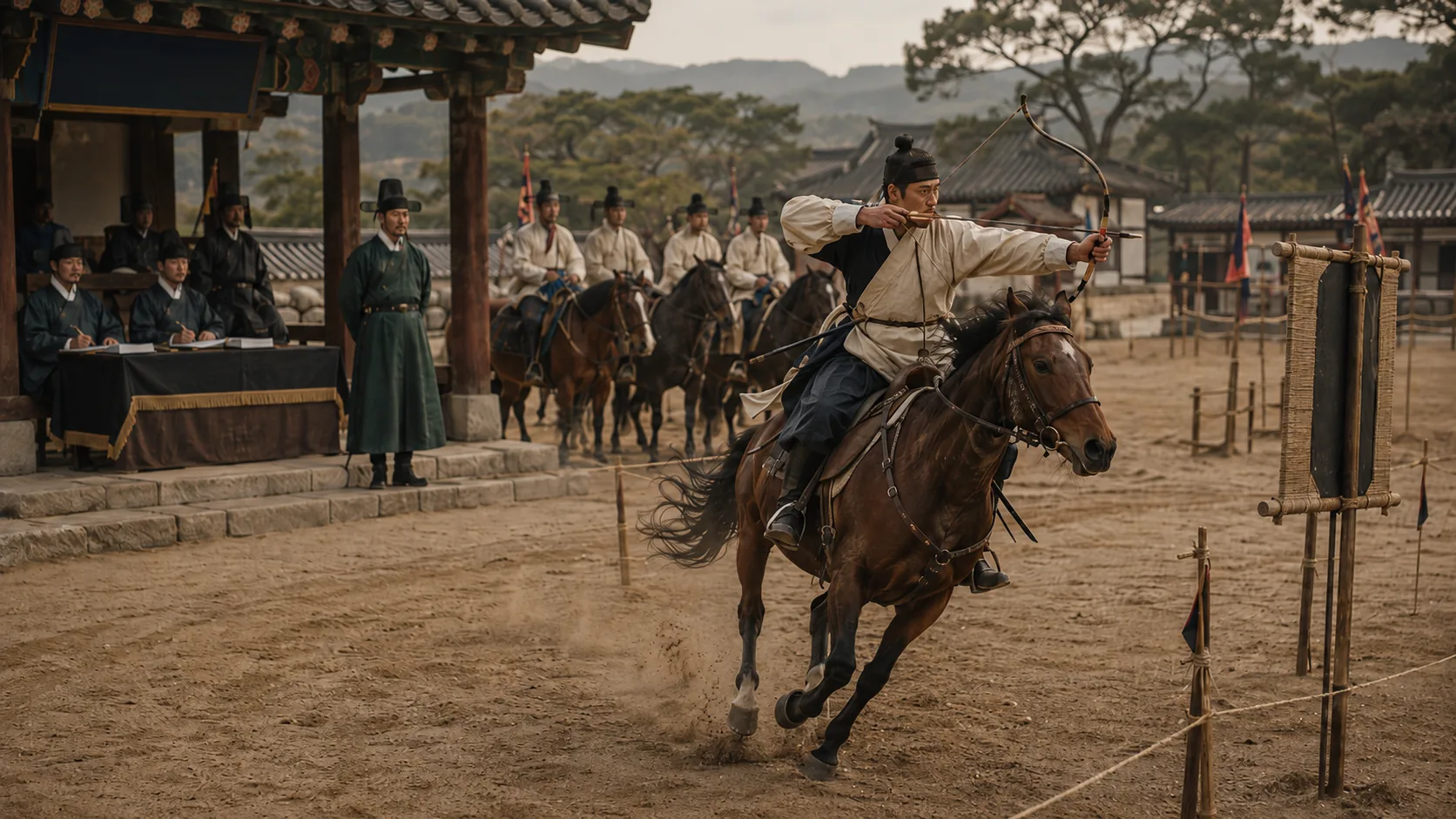
Joseon was founded in 1392 and inherited Goryeo’s examination tradition while systematizing recruitment further. Its state examinations were broadly divided into mungwa (文科, mungwa, civil examination), mugwa (武科, mugwa, military examination) and japgwa (雜科, japgwa, specialist examinations). The mungwa recruited civil officials. The mugwa recruited military officials. The japgwa selected technical officials in fields such as interpretation, medicine, astronomy and calendrical science, and law. These were not identical to today’s occupational tracks in a modern civil service. Yet the underlying structure — the state dividing its personnel needs into fields and recruiting through examinations — feels surprisingly familiar.
Being yangban did not automatically make you an official
It is easy to misunderstand Joseon’s yangban (兩班, yangban) if it is treated as a simple equivalent of hereditary European nobility. Being born into a prestigious family gave enormous advantages. You were more likely to receive education, own books, study with good teachers and possess the economic freedom to spend years preparing for exams instead of earning a living. Those differences mattered greatly. But being born into a yangban family did not automatically make someone a high official. One of the strongest routes upward was mungwa geupje (文科及第, mungwa geupje, passing the civil examination). Elite families therefore carefully remembered which ancestors had passed the mungwa. Joseon was a status society, but it also contained intense gwanjik gyeongjaeng (官職競爭, gwanjik gyeongjaeng, competition for government office). The exam existed, but the starting line was not equal.
There were also ways into office without taking the exam
The gwageo was not the only route into Joseon government. One important route was eumseo (蔭敍, eumseo, appointment through family privilege), which gave certain descendants of high-ranking officials an opportunity to enter office based on family status. Another was cheongeo (薦擧, cheongeo, appointment by recommendation), in which officials recommended people judged to possess ability and character. Joseon therefore recruited through several channels: examinations, family privilege and recommendation. Even so, one of the most prestigious and legitimizing achievements within the political elite remained gwageo geupje (科擧及第, gwageo geupje, passing the state examination).
What did the civil examination actually ask?
The mungwa was not simply a test of memorizing Confucian sentences word for word. Candidates were judged on their understanding of classical texts, their ability to construct coherent writing and their capacity to propose solutions to state problems. One particularly interesting format was the chaengmun (策問, chaengmun, policy question). The king or state presented a problem: How should national defense be strengthened? How should taxation be administered? How can the livelihood of the people be stabilized? Candidates had to write policy arguments in response. In modern terms, part of the exam resembled a policy essay. Doing well was not merely a matter of memorizing books.
In the military examination, candidates really did shoot arrows
The mugwa was, as its name suggests, the examination for military officials. It tested actual martial skills: archery, horsemanship and other military techniques. But physical skill alone was not enough. Candidates also needed knowledge of military matters and strategy. The state was not merely searching for people good at fighting; it needed military officials capable of leading troops. In modern analogy, Joseon’s mugwa combined elements of a practical skills test, a military ability assessment and a military-studies examination.
At the same time, offices in France could be bought

Now look outward again. While young Joseon scholars spent years studying Confucian texts for the mungwa, parts of Europe operated according to very different cultures of officeholding. In France under the Ancien Régime, the sale of offices became especially extensive. The monarchy sold many types of office to raise revenue, and under certain conditions some offices could be passed to descendants. By the 17th century, some offices were treated much like family property. This does not mean every French public position was purchased. Royal appointment, aristocratic privilege, patronage and professional careers all existed alongside venality. Still, the contrast with Joseon is revealing. In Joseon, someone might spend years studying before writing an examination paper. In France, someone might acquire a particular office by paying for it. One system drew an important part of an officeholder’s legitimacy from examination success; the other could also draw legitimacy from royal authority, social position and a property-like office. This is not a ranking of which society was “better.” It shows different ways of creating the people who ran the state.
The Ottoman Empire trained people directly for the state
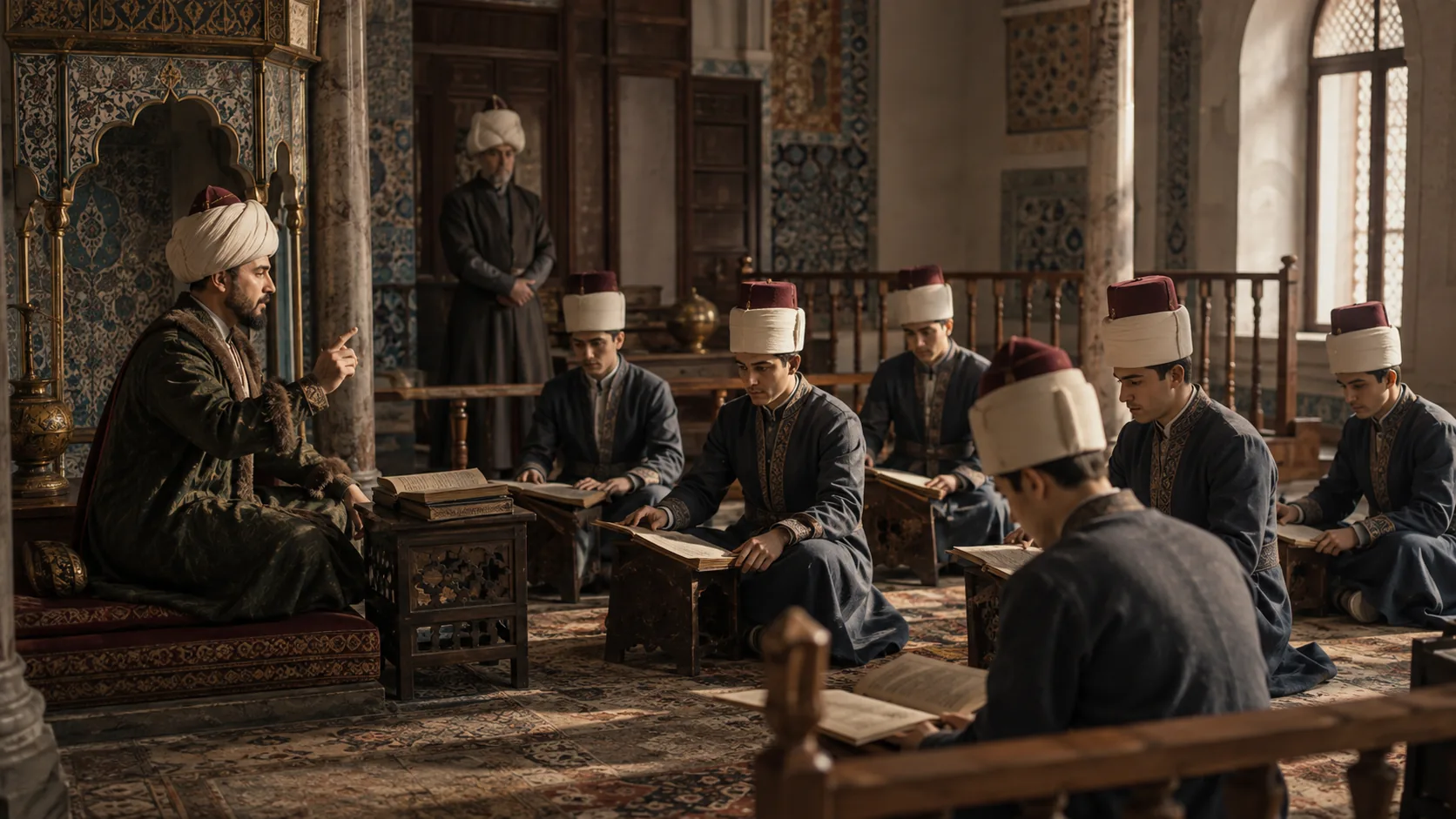
The Ottoman approach differed even more sharply from Joseon’s. The empire maintained Enderun, an imperial palace school designed to train administrative and military elites. The state selected talented people, educated them and prepared them for service in administration and command. Among those recruited through systems including the devşirme, particularly promising candidates could advance through palace education into high office or military leadership. Joseon’s logic could be summarized as: Study.
Take the exam.
Pass, and the state may appoint you. The Ottoman logic was much closer to: The state selects you.
The state educates you.
The state turns you into the kind of official or commander it needs. Joseon leaned toward an exam-selection model; the Ottoman system leaned toward a state-selection-and-training model. Both were powerful centralized states, but they recruited and cultivated elites in different ways.
In the Mughal Empire, the emperor assigned rank
The Mughal Empire of India also operated an enormous administrative and military structure. Under the Mansabdari system, consolidated under Akbar, the emperor assigned officials and commanders a mansab, or rank. Rank was linked to personal standing, remuneration and military obligations. The zat rank developed as an indicator of personal status, while sawar related to the cavalry establishment an officer was expected to maintain. This differed considerably from Joseon, where success in the gwageo carried major qualification and prestige. If the Mughal question was closer to “What rank and responsibility will the emperor assign this person?”, the Joseon question placed much greater emphasis on “Can this person pass the state examination?” Centralized states existing in the same centuries could therefore build their elites in very different ways.
So was Joseon a perfectly meritocratic society?
No. The existence of examinations did not mean everyone competed under equal conditions. Status restrictions existed. Gender restrictions existed. Educational opportunity varied dramatically with family wealth. Routes such as eumseo and cheongeo also allowed entry outside the examination system. Problems in the administration of the examinations accumulated over time as well. Describing Joseon’s gwageo as “a perfectly fair modern civil-service exam invented centuries early” would badly distort the history. Yet a real comparative distinction remains: for centuries, proving one’s qualification for core state office through examination performance carried extraordinary prestige. That culture endured for hundreds of years.
1894: the centuries-old gwageo system ends
In 1894, the Gabo Reform (甲午改革, Gabo Reform) began. As Joseon attempted to transform its old status order and institutions, the mungwa and mugwa were abolished, bringing the traditional gwageo system to an end. Counting from Goryeo’s adoption in 958, a major pillar of examination-based official recruitment had lasted more than nine centuries. And at almost the same moment in world history, something curious was happening: Korea was dismantling its old examination system just as Europe was increasingly embracing the idea of recruiting civil servants through open competitive examinations.
Britain strengthens open competitive examinations in the 19th century
In mid-19th-century Britain, patronage in civil-service appointments was increasingly criticized. Who you knew and who recommended you could have enormous influence on public employment. The Northcote–Trevelyan Report of 1854 recommended reforming that system and using open competitive examination to assess merit. The first Civil Service Commissioners were appointed in 1855. The timelines cross in a striking way. Joseon had spent centuries preparing officials through examinations; roughly forty years before gwageo was abolished, Britain was beginning to build a competitive examination system suited to a modern state. The two systems had very different purposes and social foundations. Joseon’s examinations operated inside a Confucian dynastic order. British reform developed to improve administrative effectiveness and professionalism and to reduce the damage caused by patronage. Yet both confronted a similar question: can the state select people by assessing ability rather than relying on bloodline or the personal favor of those in power?
In the Republic of Korea, examinations again become central to civil-service recruitment
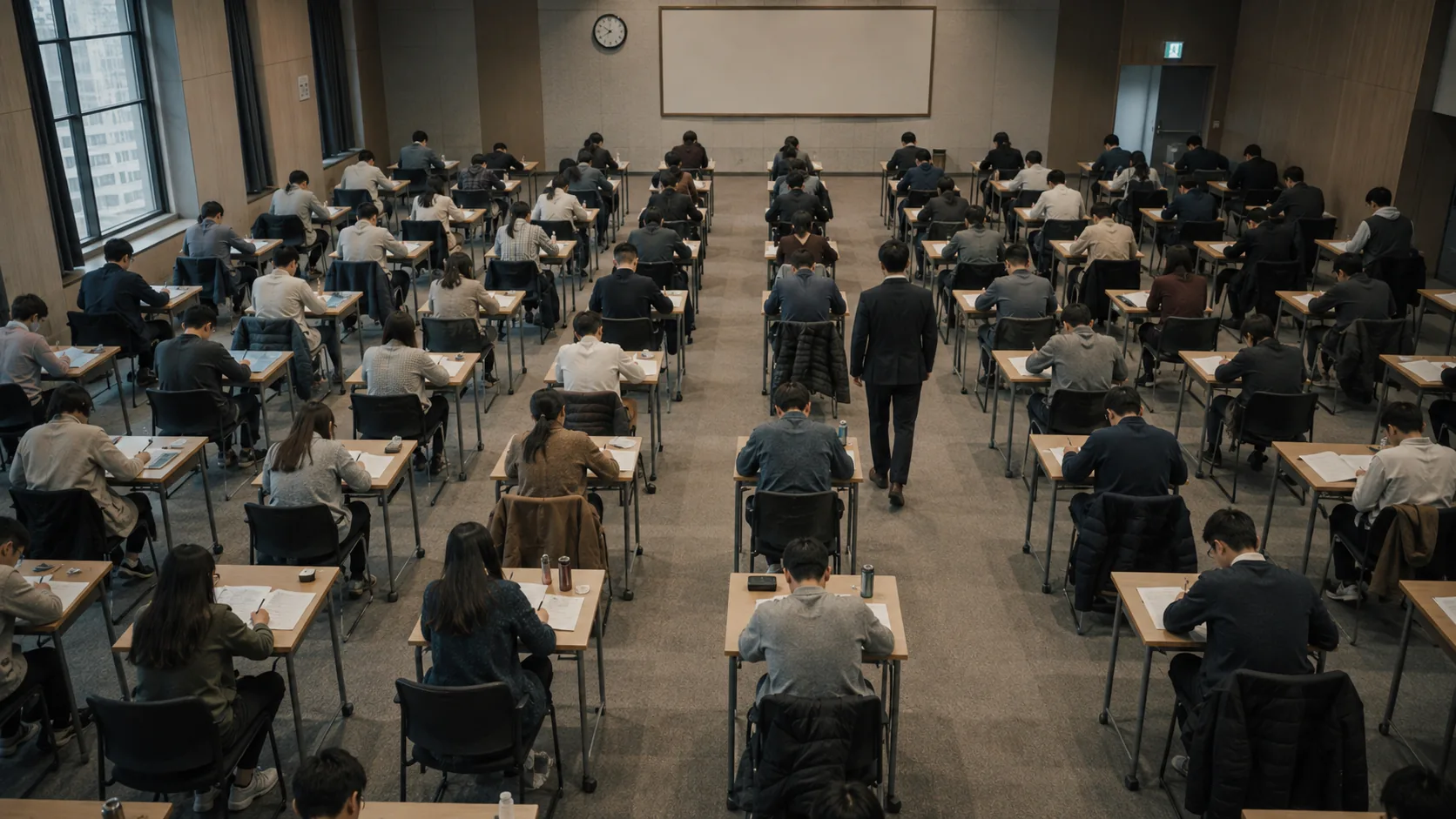
The Republic of Korea was established in 1948. In 1949, the National Public Officials Act (國家公務員法) and decrees governing higher and general civil-service examinations laid the foundations of modern Korean state recruitment. Early appointments still used several different methods. After amendments to the National Public Officials Act in 1963, the principle of new recruitment through open competition became clearer, and in 1973 educational and career restrictions for open competitive examinations were abolished. Today Korea runs Grade 5, Grade 7 and Grade 9 open competitive recruitment examinations (公開競爭採用試驗), among others. In 2026, the Ministry of Personnel Management is again administering national open recruitment for Grades 5, 7 and 9. Depending on grade and occupational track, assessment may include the PSAT, constitutional law, specialist subjects, written examinations and interviews. Almost everything is different from a thousand years ago. There is no king, no yangban and no bone rank. Memorizing Confucian classics does not qualify someone for general administration, and shooting a bow does not automatically make someone a military official. Yet something about the exam hall still looks strangely familiar: the state sets subjects and standards, people prepare for them, candidates are assessed according to common criteria, successful names are announced, and public work is entrusted to those who pass.
The exams kept changing, but the question remained
In Silla in 788, students read Confucian texts. In Goryeo in 958, candidates composed poetry and prose and addressed problems of government. Joseon civil candidates sat the mungwa; military candidates shot arrows and rode horses in the mugwa. In France, some offices could be purchased. The Ottomans selected talented people and trained them directly for state service. Mughal emperors assigned officials and commanders rank. Britain began making open competitive examination a pillar of its modern civil service in the 19th century. Today, large numbers of Koreans once again prepare for state examinations. The subjects have completely changed, the range of people able to compete has changed, and the object of an official’s loyalty has shifted from a king to the Constitution and the public. But one question remains: who should be entrusted with the work of the state? One of Korea’s recurring answers to that question is very old: make them take an exam. The exams were never perfect and they were never always fair. Status and family mattered, and alternative routes into office existed. Even so, the idea that passing a state-defined examination could prove a person’s qualification for official service has endured in Korean history with remarkable persistence. A limited experiment in Silla became a full gwageo system in Goryeo, then expanded in Joseon into a vast structure of civil, military and specialist examinations. That system disappeared in 1894.
A completely different state and society later emerged, yet Koreans once again compete in examination halls for the right to take on public work. For 1,200 years, the questions on the test kept changing. The question of how a state should choose its people still has no final answer.
Today’s Korean expression
Expression: 과거(科擧)
Romanization: gwageo
Meaning: The historical state examination system used to recruit officials in Goryeo and Joseon. It is pronounced the same as 현대 Korean 과거(過去), meaning “the past,” but the Chinese characters and meaning are different.
When to use it: When discussing historical examinations for government office in Korean history.
Example: 그는 조선시대 과거에 급제해 관리가 되었다.
Translation: He passed the state examination during the Joseon period and became an official.
Sources
- National Institute of Korean History — Dokseo Sampumgwa — The nature and grading standards of the 788 system.
- National Institute of Korean History — Goryeo gwageo — The 958 introduction, Ssang Gi and the first examination.
- National Institute of Korean History — Examinations in Goryeo — Examination categories and the single military examination of 1390.
- National Institute of Korean History — Musin Jeongbyeon — Background to the 1170 coup and the Han Roe–Yi So-eung incident.
- National Institute of Korean History — Joseon examination documents — Gwageo, eumseo, cheongeo and examination administration.
- National Institute of Korean History — Gabo Reform measures — Abolition of the civil and military examinations in 1894 and new recruitment principles.
- Encyclopaedia Iranica — DĪVĀN — Specialization of Abbasid administrative departments and bureaucracy.
- Cambridge Core — The Price of Offices in Pre-Revolutionary France — Venality of office under the French Ancien Régime.
- TDV İslâm Ansiklopedisi — ENDERUN — Enderun as a school for Ottoman administrative and military elites.
- Cambridge Core — From the mamluks to the mansabdars — The Mughal Mansabdari system and zat/sawar ranks.
- UK Civil Service Commission — A Better Civil Service — The 1854 Northcote–Trevelyan Report and appointment of Civil Service Commissioners in 1855.
- Ministry of Personnel Management — History of Civil Service Examinations — First exams in 1949, open competitive recruitment principle in 1963 and removal of education/career restrictions in 1973.
- Korea’s Civil Service Recruitment System — 2026 Open Competitive Examinations — Confirmation of 2026 Grade 5, 7 and 9 national recruitment. Checked 2026-08-21.